
Clearer, Brighter, More Even-Looking Skin
Understand dark spots, melasma, uneven skin tone and pigmentation without trying to change your natural skin colour. Learn what actually works, what takes time, and which treatments can damage your skin.
What Does Pigmentation Look Like?
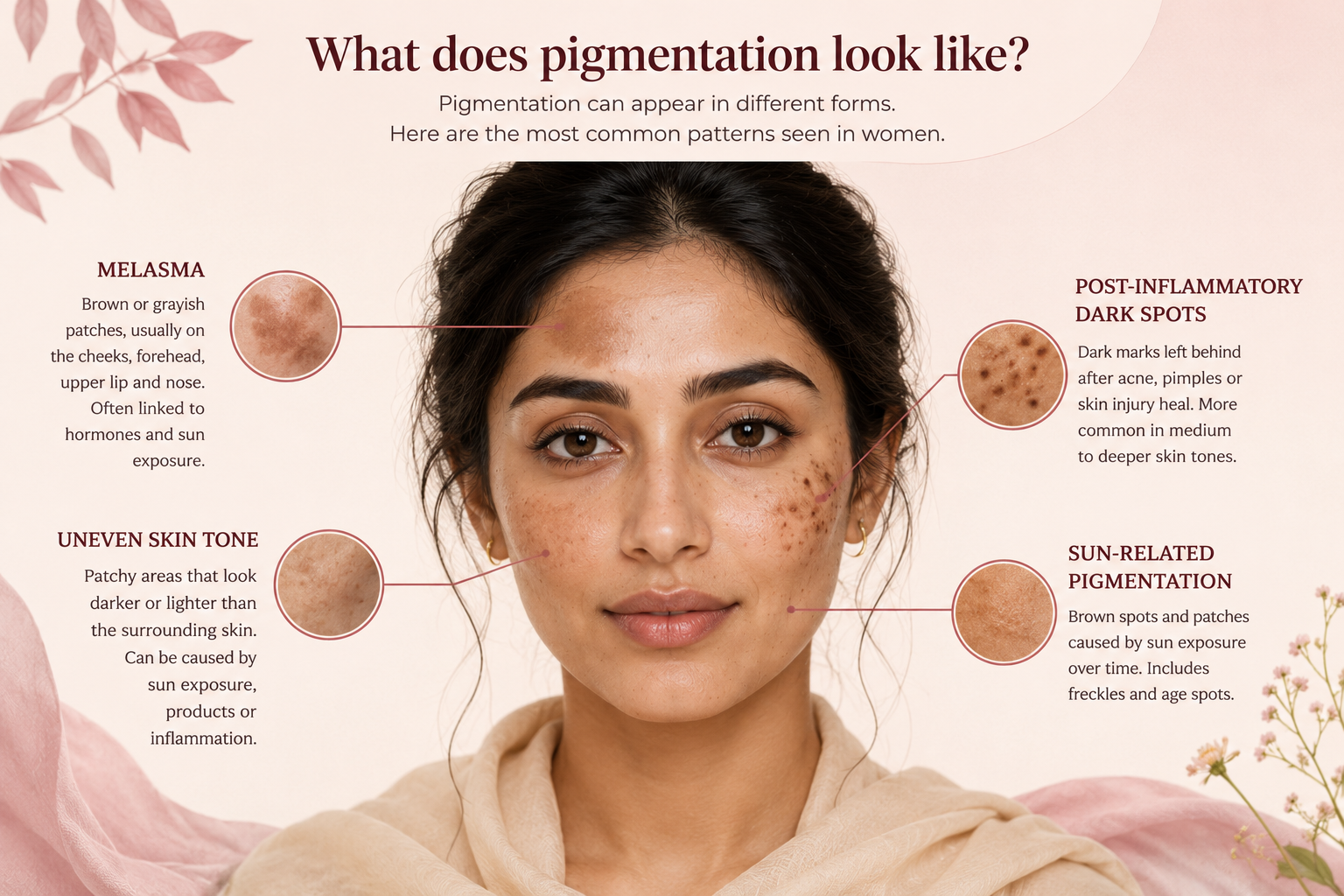
Pigmentation does not look the same in every woman. It may appear as individual dark marks, larger patches, a generally uneven complexion or areas that become darker after sunlight, acne, irritation or inflammation.
Identifying the pattern matters because melasma, acne marks, sun-related pigmentation and other causes may need different approaches.
First Understand Why Your Skin Is Darker
These guides explain the basics before you spend money on serums, creams or procedures.
Skin Brightening — What Actually Works?
What “brightening” really means, realistic expectations, sunscreen and evidence-based treatment.
→Hyperpigmentation & Uneven Skin Tone
Why excess pigment develops and how inflammation, hormones and sunlight can contribute.
→Melasma in Women
Hormonal pigmentation, pregnancy-related melasma, sun exposure, treatment and recurrence.
→Dark Spots on the Face
Learn how acne marks, melasma, sun spots and other pigmentation patterns can differ.
→Not Sure What Type of Pigmentation You Have?
Use Find My Pigmentation to answer a few simple questions about where the pigmentation is, what it looks like and when it started. We’ll guide you toward the most relevant AuratSehat information.
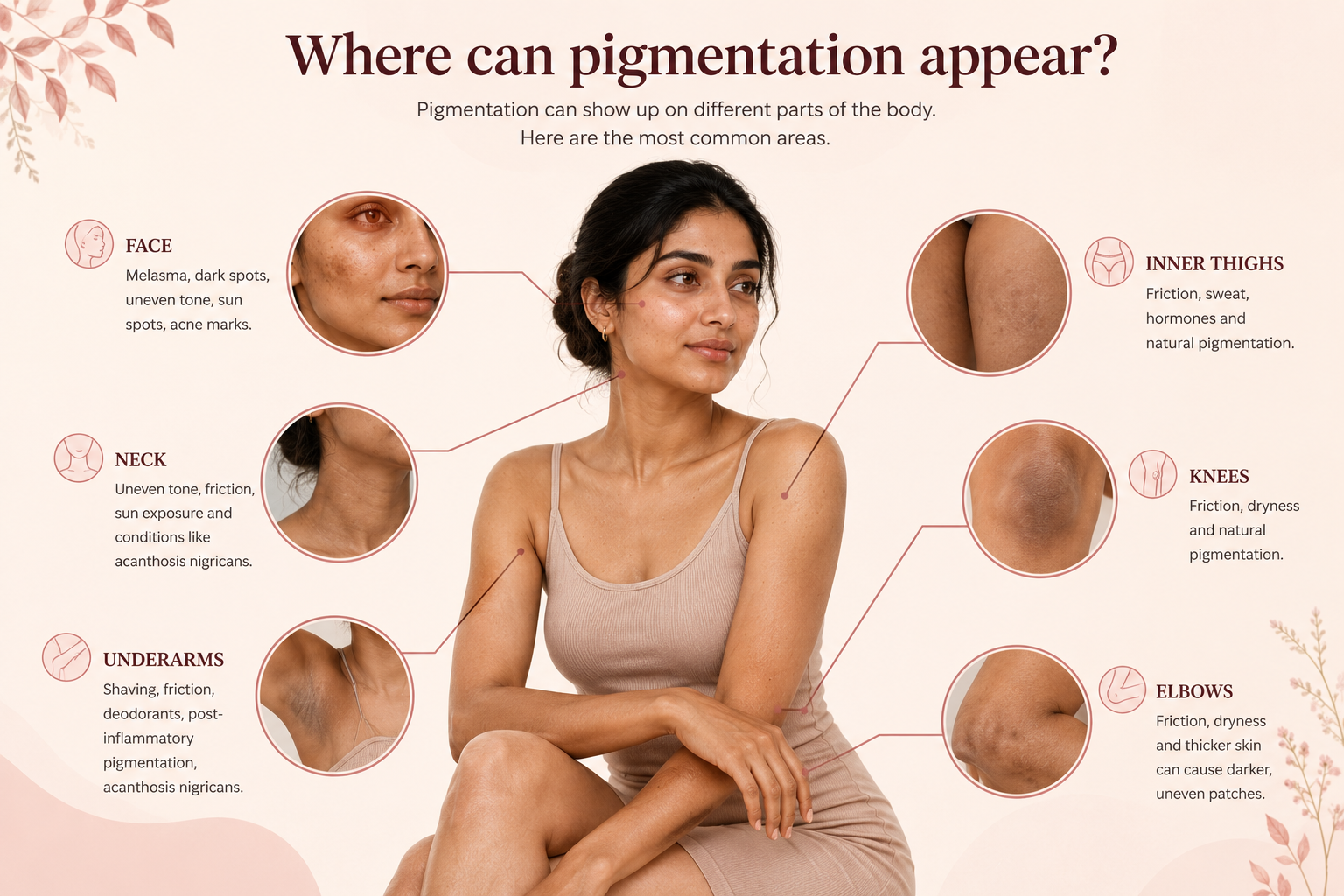
The Location Can Give Important Clues
Pigmentation on the face may behave very differently from darkening of the neck, underarms or inner thighs.
Some areas are commonly affected by friction or irritation, while others can sometimes be associated with conditions such as acanthosis nigricans.
Face
Dark spots, uneven tone, melasma and other causes of facial pigmentation.
Dark Neck
Friction, normal variation and when acanthosis nigricans may need evaluation.
Dark Underarms
Shaving, irritation, friction, products and possible underlying causes.
Inner Thighs & Private Part
Friction-related darkening and when persistent changes deserve assessment.
Knees & Elbows
Why these naturally thicker areas can look darker and what may actually help.
Sun Tan & Sun-Damaged Pigmentation
Tanning and pigmentation triggered or worsened by ultraviolet exposure.
What Actually Works for Pigmentation?
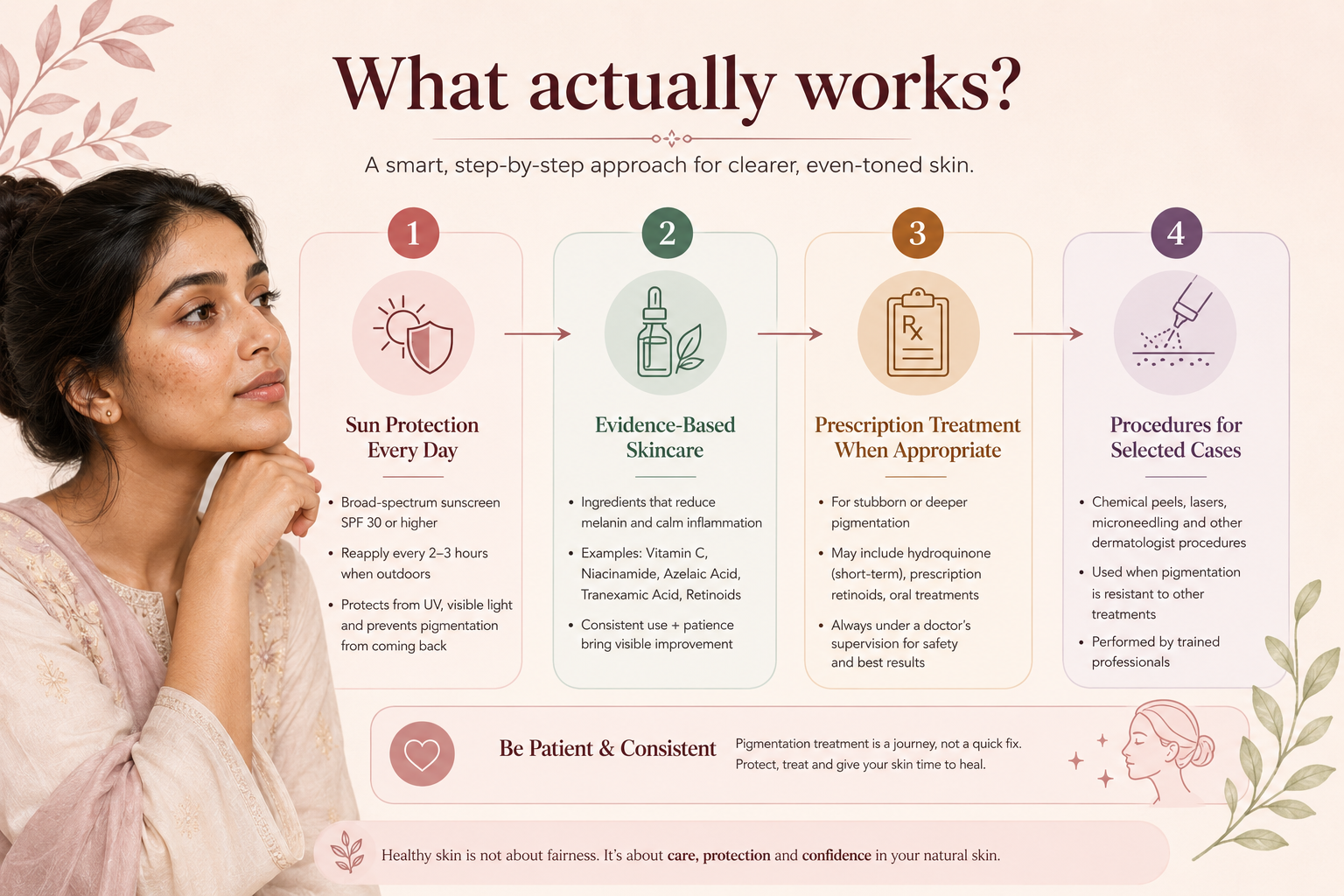
Pigmentation treatment is usually a process rather than one miracle cream. Good treatment starts with preventing new pigment from forming, then gradually treating existing excess pigment.
Prescription creams and procedures can be useful for selected women, but stronger treatment is not automatically better.
Sun Protection
Reduce UV-triggered darkening and protect treatment results.
Evidence-Based Skincare
Use appropriate ingredients consistently instead of constantly changing products.
Prescription Treatment
Some pigmentation responds to medical treatment under appropriate supervision.
Selected Procedures
Peels, lasers and other procedures can help selected cases but are not for everyone.
Best Ingredients for Pigmentation
Vitamin C, niacinamide, azelaic acid and other commonly used ingredients explained.
Hydroquinone & Prescription Treatments
When stronger treatment may be appropriate and why prolonged unsupervised use can be harmful.
Chemical Peels, Lasers & Procedures
What procedures can and cannot do, especially in naturally brown skin.
Thinking About Glutathione for Skin Whitening?
Tablets, liposomal supplements and IV drips do not deliver glutathione in the same way. Understand what the evidence actually shows, how much oral glutathione may reach the bloodstream, realistic whitening results, safety and options available in Pakistan.
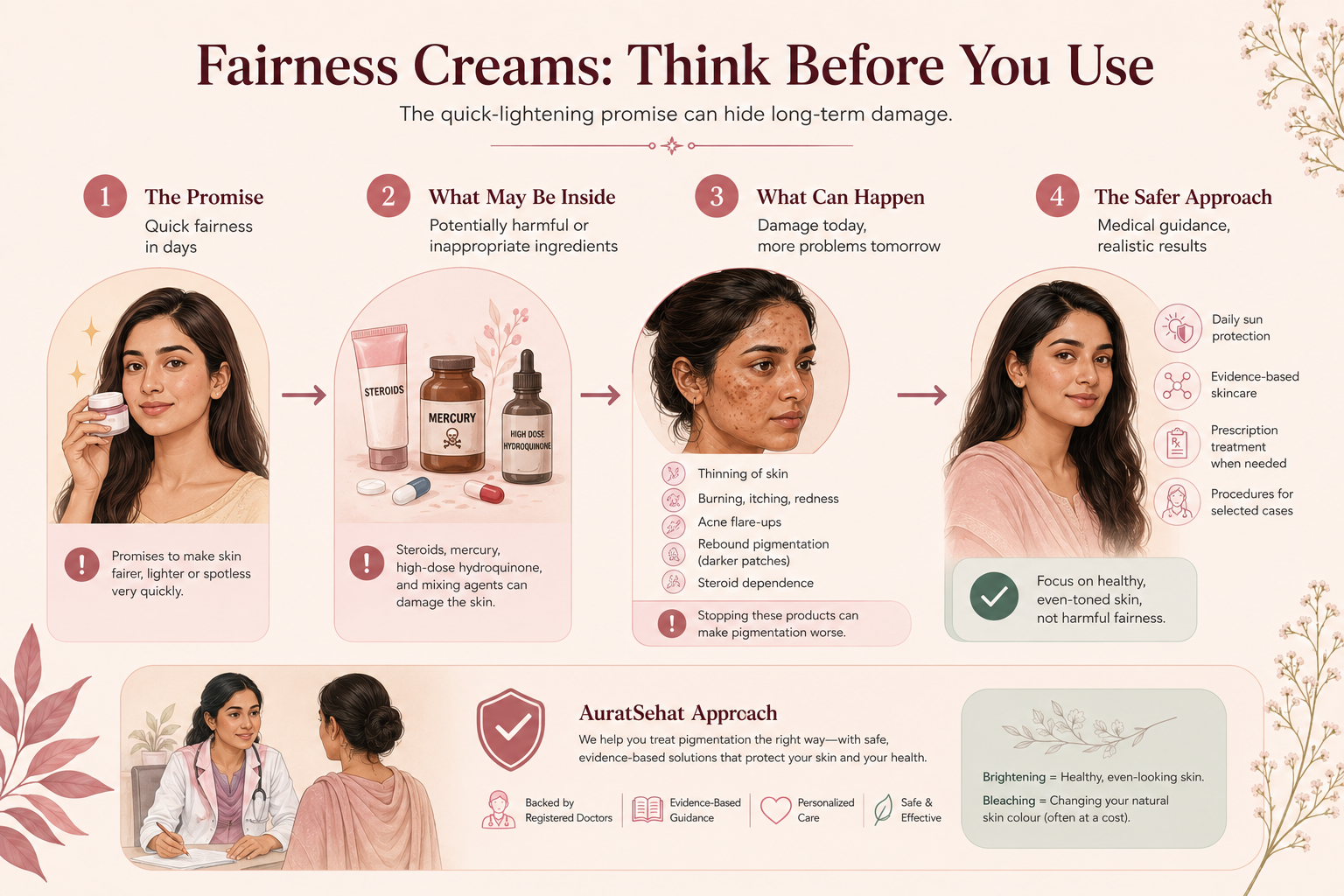
Before You Use a Fairness Cream, Know What Is Inside It
Wanting clearer or more even-looking skin is understandable. The problem is that some products promising very rapid lightening may contain strong or inappropriate ingredients that can damage the skin when used incorrectly.
Are Your Dark Spots Left Behind by Acne?
Acne-related dark marks have their own guide. Treating the acne itself is important because new breakouts can keep producing new pigmentation.
Not Sure What Is Causing Your Pigmentation?
Pigmentation can have several causes, and the right treatment depends on the pattern, location, products you have already used and whether there are other skin or health changes.
Ask a Doctor for FreeAuratSehat provides educational information and does not replace an individual assessment by a qualified healthcare professional. Pigmentation that appears suddenly, changes significantly, causes symptoms or occurs with other health changes may need medical evaluation.