
Back & Chest Acne
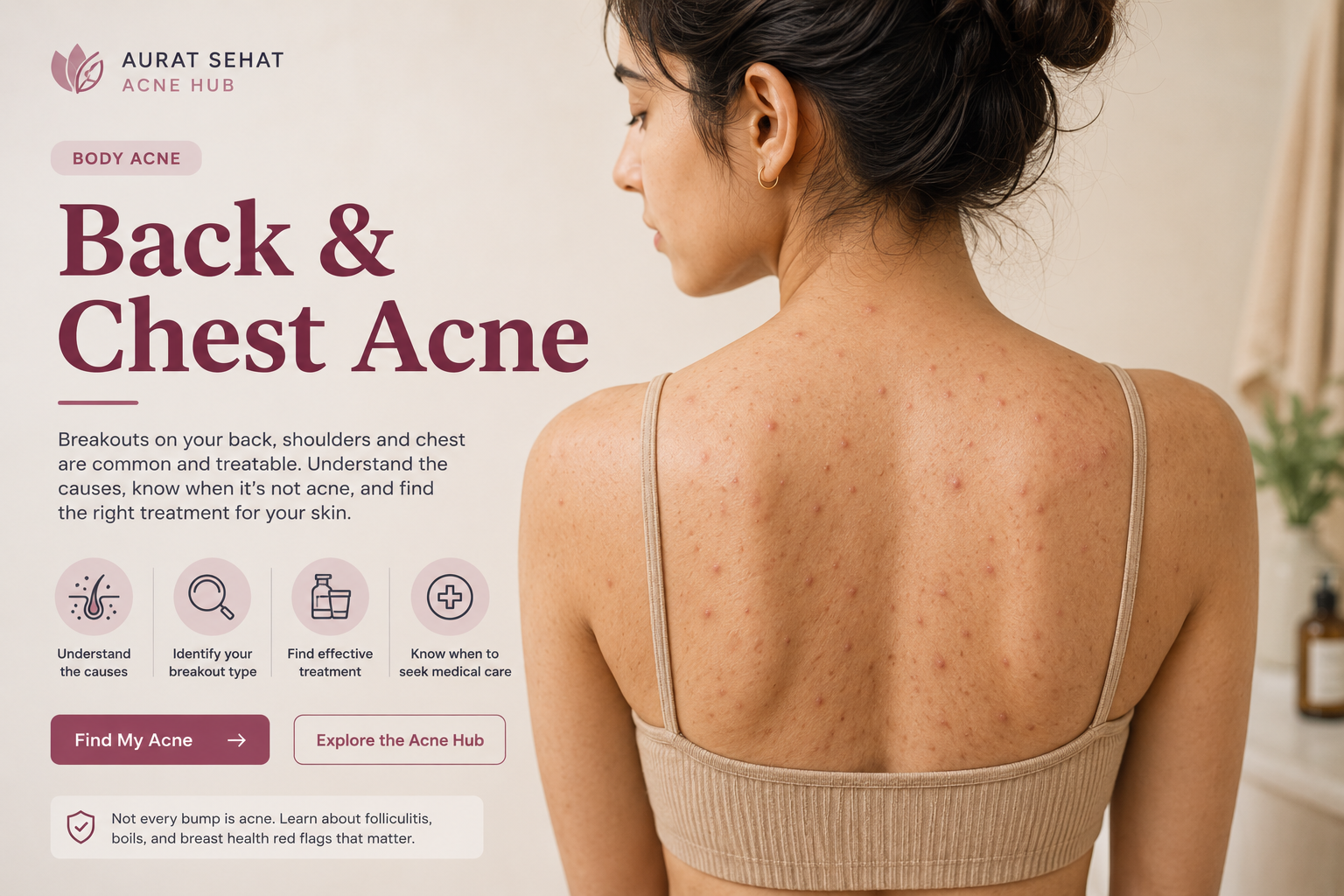
Breakouts on your back, shoulders or chest are common — but not every bump on the body is acne.
Truncal acne can include blackheads, whiteheads, red pimples, pustules and deeper painful nodules. Sweat, friction, clothing, hair products and acne biology can all contribute.
Folliculitis, boils, carbuncles, hidradenitis suppurativa and some breast conditions can look similar, so recognising when a bump does not behave like ordinary acne matters.
What does back & chest acne look like?
Acne on the trunk can look very similar to facial acne, although larger areas of skin may be involved.
Blackheads & whiteheads
Clogged follicles may appear as open blackheads or small, flesh-coloured or white bumps.
Red papules & pustules
Inflamed follicles can produce red tender bumps or pimples with visible white or yellow pus.
Deep nodules
Large, painful lumps beneath the skin may represent deeper inflammatory acne and carry a greater risk of scarring.
Marks after acne
Inflamed body acne can leave persistent red, brown or grey marks even after the active lesion settles.
Is it actually acne?
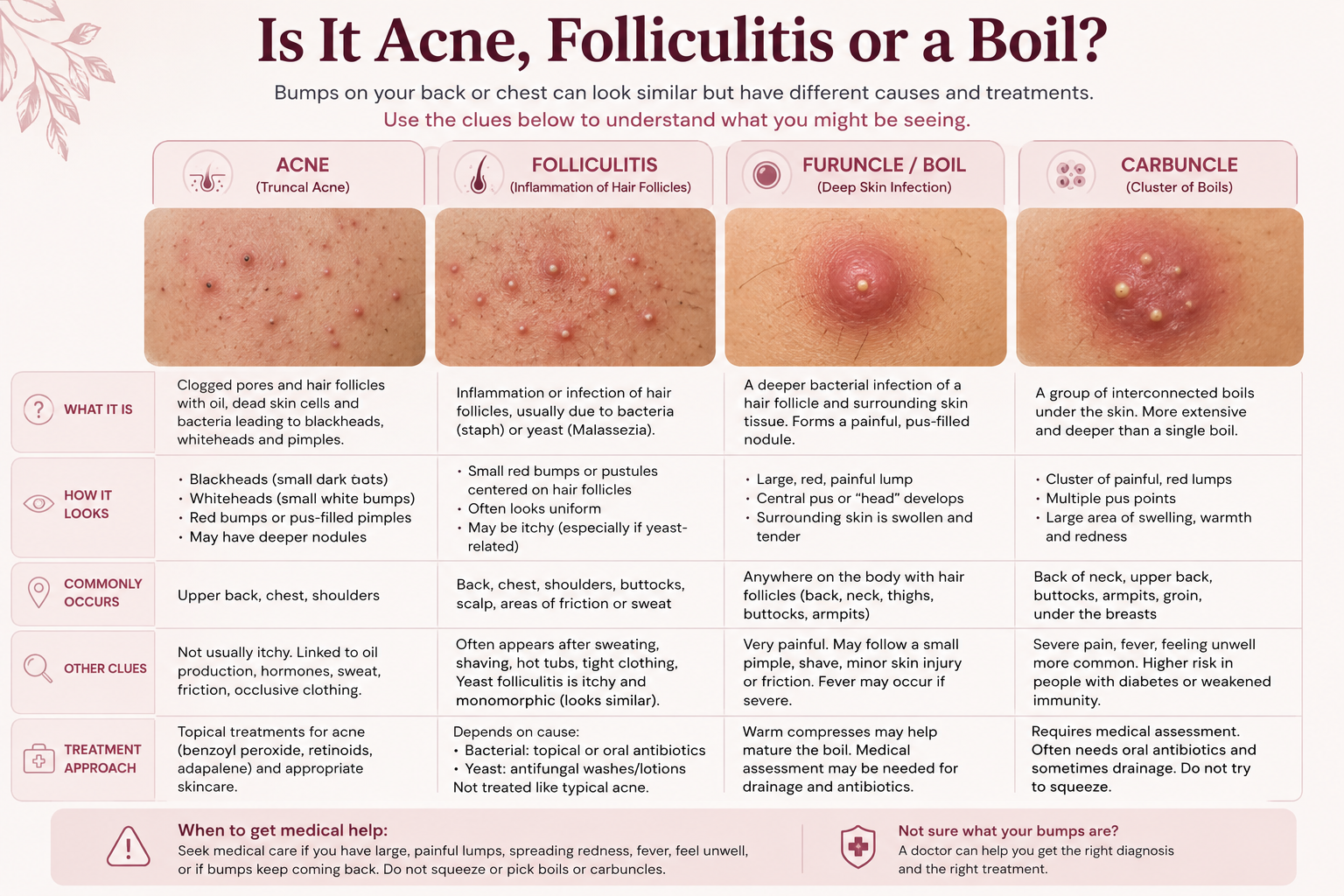
Bumps on the back and chest can come from several different conditions. Treating every pustule as acne may delay the right treatment.
Truncal acne
Typical acne may include several different lesion types at the same time — blackheads, whiteheads, red pimples, pustules and sometimes deeper nodules.
The presence of comedones is particularly useful because blackheads and whiteheads point more toward acne than many of its mimics.
Folliculitis can look like an acne outbreak
Folliculitis is inflammation of hair follicles. It can produce multiple red bumps or small pustules centred around individual hairs.
It may be caused by infection, irritation or other factors and can affect the back, chest, shoulders and other hair-bearing areas.
Compared with ordinary acne, folliculitis lesions may appear more uniform and may be itchy rather than predominantly tender.
Very itchy, similar-looking bumps?
Malassezia folliculitis is associated with yeast involving the hair follicles. It often causes many relatively similar small bumps or pustules, commonly on the upper trunk.
It can be mistaken for acne, but treatment differs — which is one reason that persistent itchy “body acne” deserves a proper diagnosis.
A large painful pus-filled lump may be a boil
A furuncle, commonly called a boil, is a deeper infection involving a hair follicle and surrounding tissue.
It may become intensely painful, swollen and red and can develop a central collection of pus.
A boil should not simply be treated by adding more acne products or aggressively squeezing it.
Several connected boils can form a carbuncle
A carbuncle is a deeper cluster of interconnected boils. The affected area may be larger, more swollen and painful, with multiple points of drainage.
Carbuncles are infections rather than ordinary acne and may require medical treatment.
Could repeated boils be hidradenitis suppurativa?
Recurrent painful lumps in skin folds should not automatically be labelled acne or simple boils.
Hidradenitis suppurativa (HS) can cause deep, painful nodules and abscess-like lesions, particularly in areas such as:
- under the breasts
- the armpits
- the groin
- other areas where skin repeatedly rubs together
Over time, recurrent disease can lead to drainage, tunnels beneath the skin and scarring.
Why do breakouts happen on the back & chest?
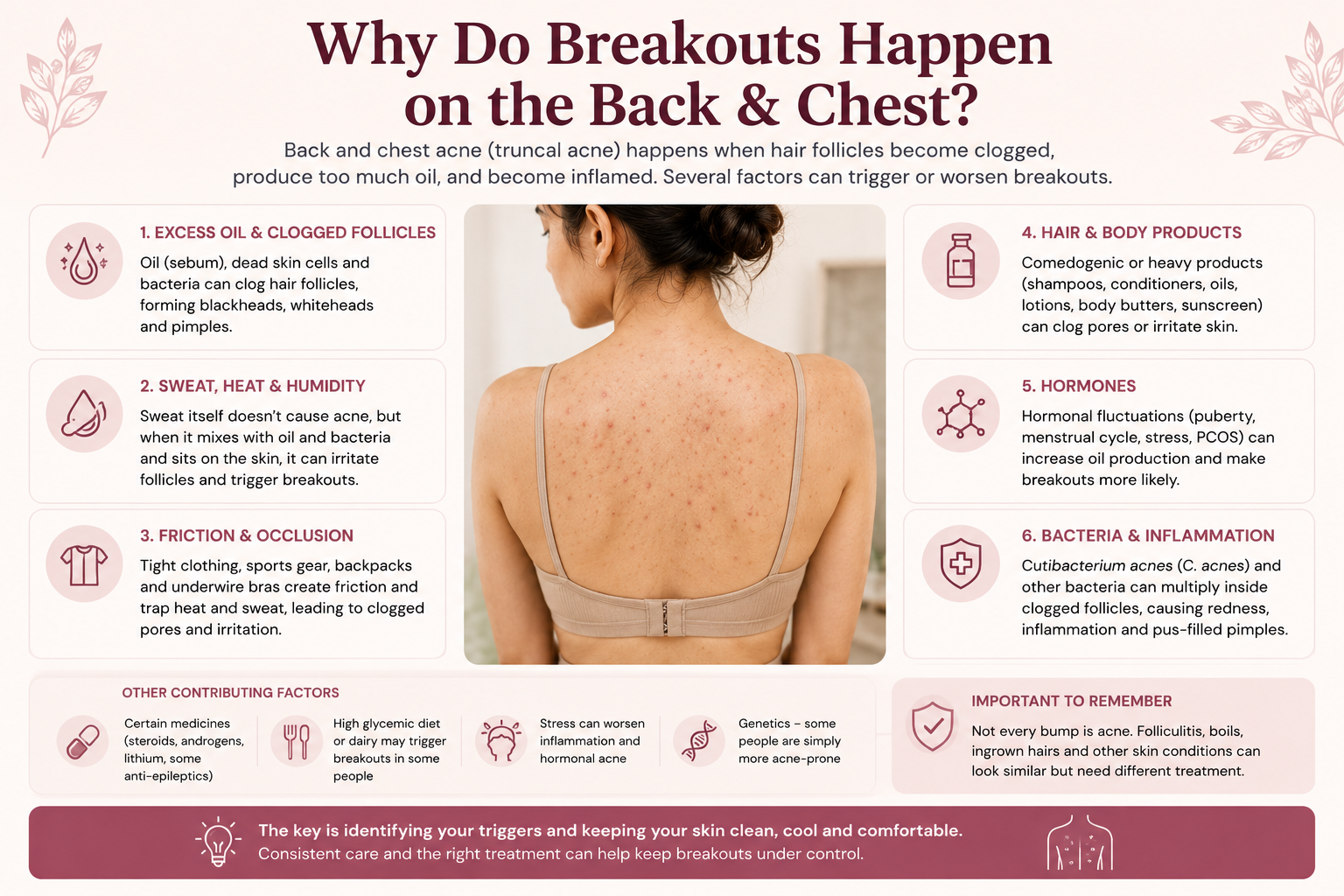
The back and chest contain many sebaceous follicles, making them naturally acne-prone areas. Several factors can then increase blockage or inflammation.
Oil & clogged follicles
Sebum and dead skin cells can accumulate in follicles, producing comedones and inflammatory acne.
Sweat, heat & humidity
Sweat itself is not simply “dirty acne,” but prolonged heat, moisture and sweat trapped against the skin can aggravate susceptible follicles.
Friction & occlusion
Tight clothing, backpacks, sports equipment and repetitive rubbing can worsen acne in areas under pressure.
Bras & clothing
Tight or non-breathable bras and clothing may trap heat, sweat and friction against the chest, shoulders and back.
Hair & body products
Conditioners, hair oils, body creams, sunscreens and other products that remain on acne-prone areas may contribute to clogged follicles in some people.
Hormonal susceptibility
Hormones and androgen activity can influence oil production and acne tendency, although body acne by itself does not diagnose a hormonal disorder.
What should I do after sweating or exercise?
Exercise itself does not mean you will develop acne. The problem is more often prolonged contact with sweat, friction and occlusive clothing or equipment.
Change damp clothing
Try not to remain in sweaty sportswear for prolonged periods after exercise.
Shower when practical
A gentle shower can remove sweat, oil and product residue without requiring harsh scrubbing.
Reduce repetitive friction
Pay attention to backpack straps, sports pads, tight tops and anything repeatedly rubbing the same acne-prone area.
Don’t scrub aggressively
Body acne is not caused by being unclean. Abrasive scrubbing can irritate already inflamed skin.
A spot on the breast isn’t always “breast acne”
Superficial pimples and follicular bumps can occur on the skin of the breast just as they can elsewhere on the chest.
But breast symptoms deserve a little more caution because infections, inflammatory conditions and other breast problems can sometimes initially look like a skin bump.
Superficial acne or folliculitis
A small surface-level bump associated with other similar pimples may simply arise from a follicle in the skin.
Breast abscess
A breast abscess is a collection of pus caused by infection and usually presents as a painful breast lump or swelling. It needs medical assessment rather than acne treatment.
Mastitis
Mastitis can cause breast pain, warmth, swelling and redness and may be associated with fever or feeling unwell. It is particularly common during breastfeeding.
Under-breast recurrent lumps
Repeated deep painful lumps or abscess-like lesions beneath the breasts may be compatible with hidradenitis suppurativa and should not simply be labelled acne.
Breast symptoms that deserve medical assessment
- a new or unexplained breast lump
- significant breast warmth, redness, swelling or tenderness
- fever, chills or feeling systemically unwell with breast inflammation
- a painful enlarging collection that may represent an abscess
- bloody or otherwise unexplained nipple discharge
- new nipple inversion, ulceration or persistent nipple/areolar change
- skin dimpling, tethering or a peau-d’orange appearance
- breast inflammation that persists or fails to settle as expected
These warning signs do not mean that every breast bump represents something serious. The point is simply that a persistent or unusual breast lesion should not automatically be self-diagnosed as acne.
How is back & chest acne treated?
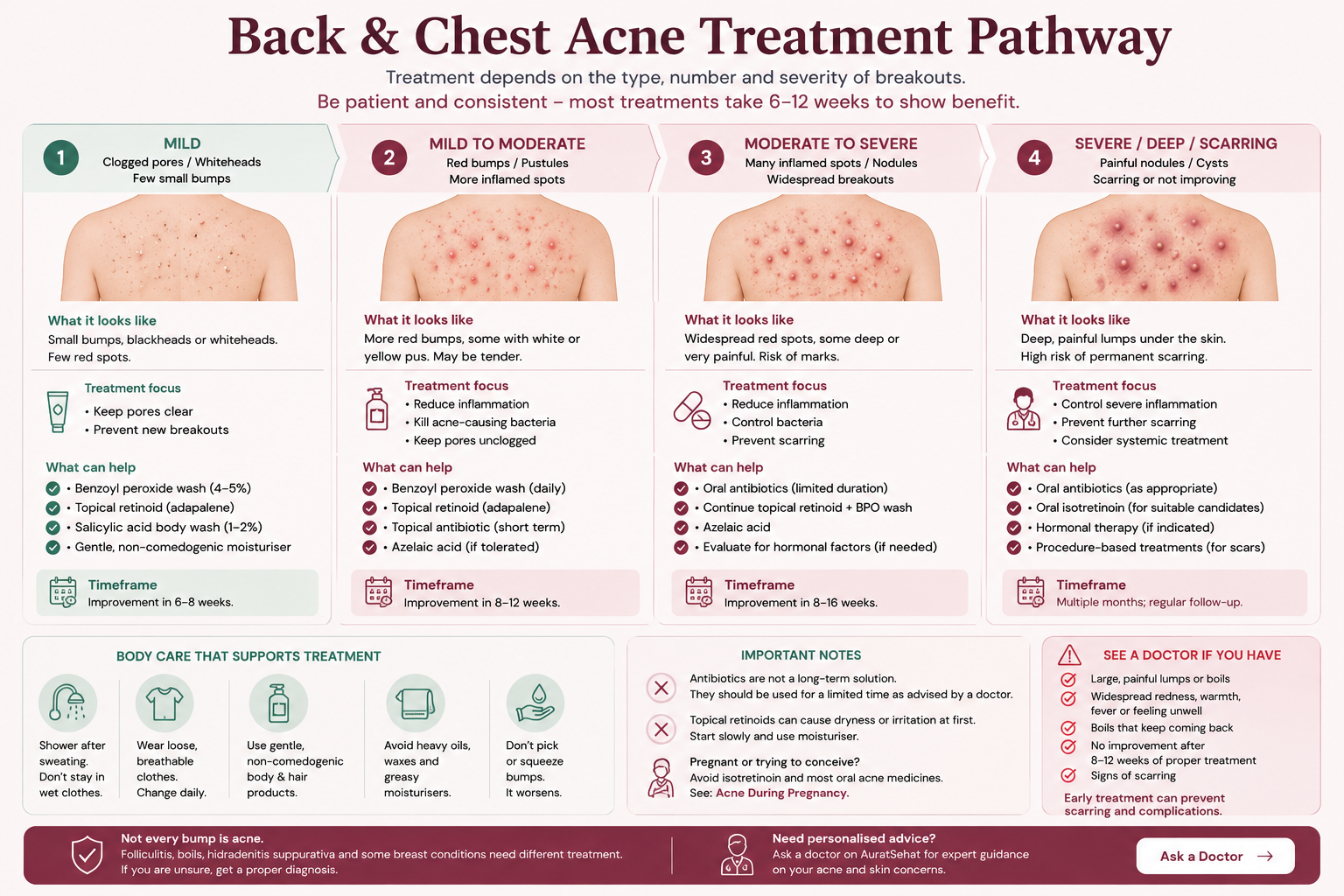
Treatment depends on whether the main problem is clogged pores, inflammatory acne or deeper disease. Larger body areas also make washes and other spreadable treatments particularly useful.
① Mild clogged-pore acne
When the main features are small bumps, blackheads or whiteheads, treatment focuses on keeping follicles clear.
Options may include:
- benzoyl peroxide wash
- a topical retinoid such as adapalene
- salicylic acid products in appropriate formulations
- appropriate non-comedogenic moisturising and body care
② Red pimples & pustules
Inflammatory truncal acne may benefit from a combination of therapies rather than relying on one product alone.
Depending on severity, treatment may involve:
- benzoyl peroxide
- a topical retinoid such as adapalene
- azelaic acid
- selected topical antibiotics when medically appropriate
③ Widespread or more inflammatory body acne
Large areas of inflamed back or chest acne can be difficult to treat with topical products alone.
A clinician may consider an oral antibiotic such as doxycycline in appropriate patients while continuing an effective topical regimen.
If lesions are especially itchy, very uniform or behave differently from ordinary acne, confirming that the problem is not folliculitis becomes particularly important before escalating acne treatment.
④ Deep, painful or scarring truncal acne
Deep nodules, extensive inflammatory acne or developing scars justify earlier medical assessment.
For appropriately selected severe, persistent or scarring acne, isotretinoin may be considered under medical supervision.
Want the full medicine-by-medicine approach?
Our dedicated treatment guide explains how topical medicines, oral treatments and severity-based treatment decisions fit together.
Acne Treatment Guide →A simple back & chest acne routine
1. Cleanse gently
Use a gentle cleanser or an appropriate acne wash rather than repeatedly scrubbing the skin.
2. Treat the whole acne-prone area
Acne treatment often works better when applied consistently across the affected zone rather than only dabbed onto each visible pimple.
3. Moisturise if needed
Retinoids, benzoyl peroxide and other acne treatments may irritate or dry the skin. A suitable moisturiser can improve tolerance.
4. Review products touching your back
Hair conditioner, oils, body butter and other products may remain on the shoulders or upper back after use.
Pregnant or trying to conceive?
Oral isotretinoin must not be used during pregnancy, and topical retinoids such as adapalene and tretinoin are generally avoided during pregnancy.
Some oral antibiotics used for acne are also unsuitable during pregnancy, so review your medicines with a doctor if pregnancy is possible or planned.
What about dark marks & scars?
Back and chest acne can leave marks for months after active inflammation settles.
Flat brown, grey or red marks
These are usually post-inflammatory colour changes rather than true scars.
Acne Marks & Dark Spots →Indented or raised scars
Permanent changes in skin texture are true acne scars. Raised scars can be particularly relevant on the chest and shoulders.
Acne Scars →When should I see a doctor?
Consider medical assessment if:
- you have deep, painful or widespread acne
- body acne is beginning to scar
- the bumps are extremely itchy or all look unusually similar
- you develop a large painful boil or carbuncle
- boils keep returning
- there is spreading redness, warmth, fever or feeling unwell
- recurrent lumps occur under the breasts or in the armpits
- you have a new breast lump or unusual breast/nipple change
- appropriate acne treatment has not improved the problem
- you are unsure whether the condition is acne at all
Start by identifying the pattern
Answer a few simple questions about where your breakouts occur, what they look like and how they behave, then explore the most relevant AuratSehat guide.
Medical note: This article provides general health education and is not a substitute for diagnosis or individual treatment from a qualified healthcare professional.