Acne Hub
Understand your skin.
Find the right care.
Evidence-based guidance, practical skincare advice and clear information to help you understand acne, recognise different patterns and decide what to do next.
♡ Ask a Doctor for FreeInformation for education and better conversations with your doctor.
Not sure what your acne looks like?
Answer a few simple questions about your breakouts, where they appear, what they feel like and how they behave. Your answers can help you understand which acne pattern fits you most closely.
This tool does not diagnose skin conditions. It helps you understand what your answers may fit most closely.
My Acne
Start with what matters to you
What brings you here?
Acne can mean different things to different people. Start with the question that matters most to you.
Identify my acne
Not sure what kind of acne you have? Start with the Acne Finder.
Why do I get acne?
Understand the factors that can contribute to breakouts.
How can I treat it?
Explore acne types, skincare and treatment guides.
When should I see a doctor?
Know when acne needs professional assessment or treatment.
Acne basics
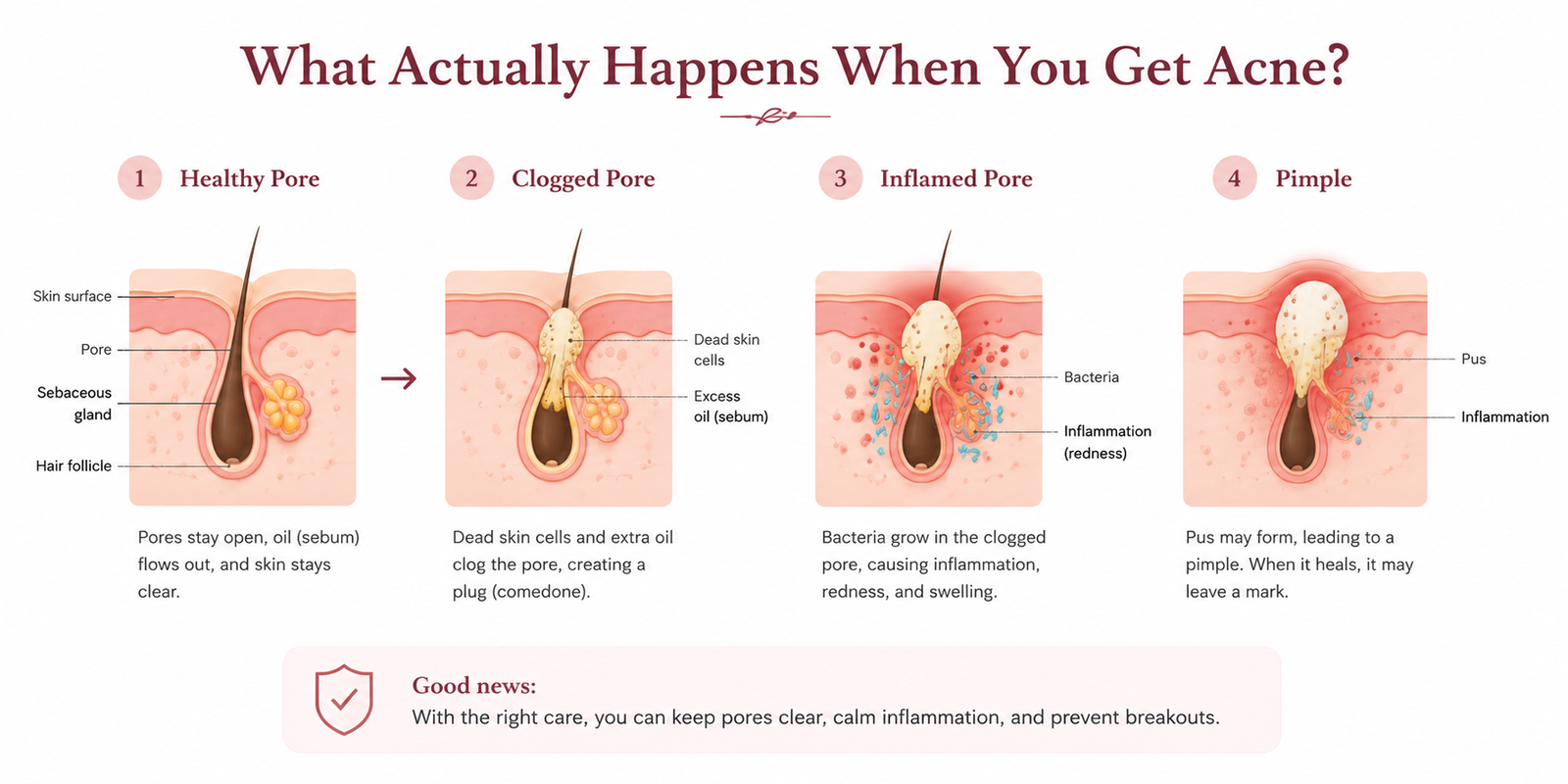
What actually happens when you get acne?
Acne usually begins inside a hair follicle. Oil, dead skin cells and inflammation can turn a normal pore into a visible breakout.
Know your breakouts
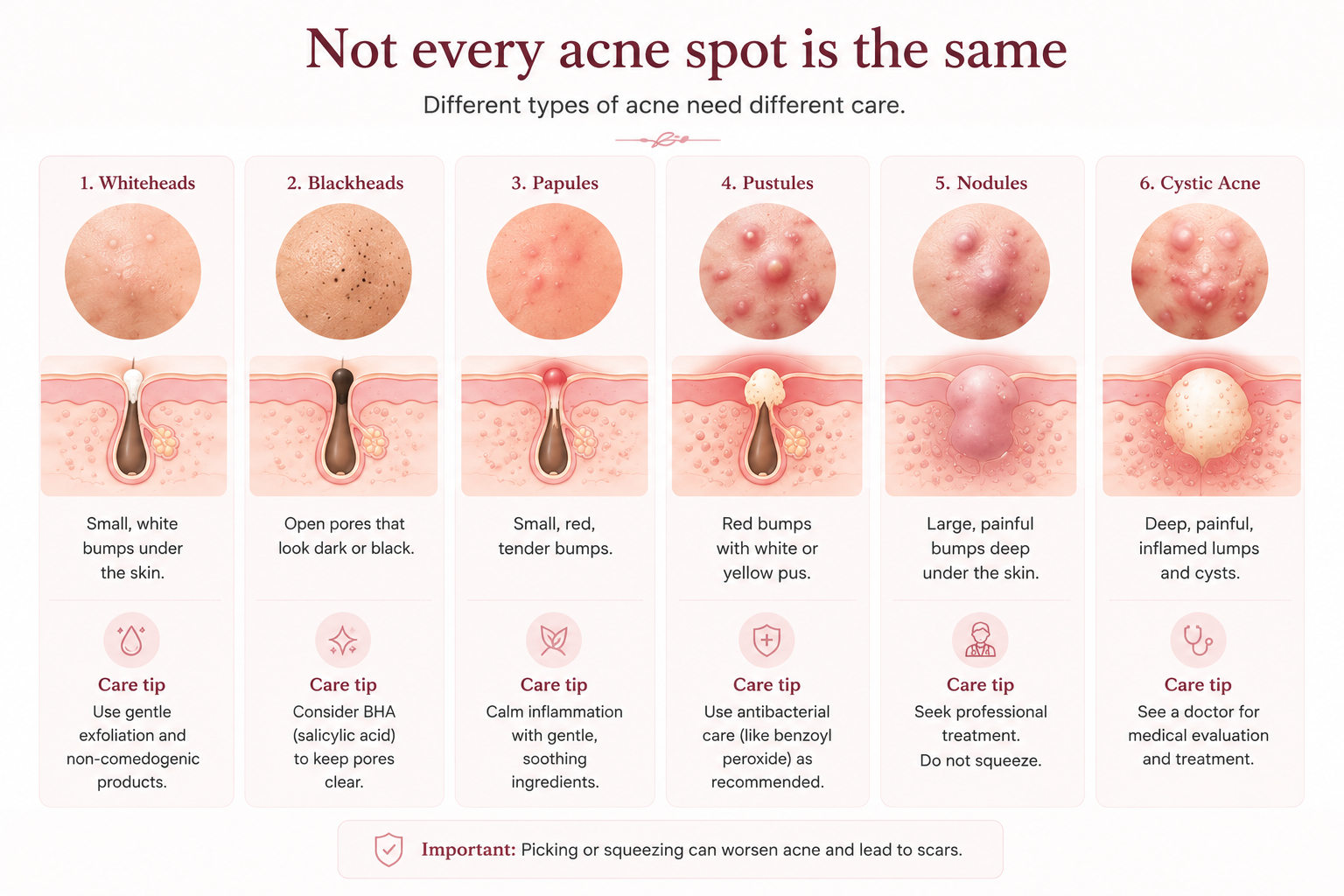
Not every acne spot is the same
Whiteheads, blackheads and inflamed spots can look very different. Deeper, painful lesions may need professional treatment to reduce the risk of scarring.
Look beyond the pimple
Why does acne happen?
Acne is usually caused by several factors working together. It is not simply a problem of being unclean or having poor hygiene.
Extra oil
Increased sebum can contribute to clogged pores and breakouts.
Clogged pores
Dead skin cells can build up inside follicles and form comedones.
Inflammation
Inflammation contributes to red, swollen and painful lesions.
Hormonal changes
Hormonal fluctuations may increase oil production in some people.
Genetics
A family tendency can influence how likely someone is to develop acne.
Skin & hair products
Some products can contribute to breakouts in acne-prone skin.
Stress & sleep
Stress and disrupted sleep may worsen acne for some people.
Individual factors
Medications, hormones and other personal factors can influence acne.
Especially important for women
Could your acne be hormonal?
Hormonal changes can influence oil production and contribute to acne. Some women notice recurring breakouts around their menstrual cycle.
A hormonal pattern does not automatically mean you have a hormonal disorder. Your overall symptoms and medical history matter.
Learn more about hormonal acne
Learn how to recognise hormonal acne, why breakouts may worsen around your menstrual cycle, when PCOS may need consideration and which treatments can help.
Read Hormonal Acne Guide →
Let’s clear up the confusion
Common acne myths
Acne advice online can be confusing. Here are a few common ideas worth reconsidering.
“Acne means your skin is dirty.”
FactAcne is not caused simply by dirt. Excessive washing or scrubbing can irritate the skin.
“Squeezing pimples makes them disappear faster.”
FactPicking can increase inflammation and the risk of marks and scars.
“Acne is only a teenage problem.”
FactAcne can continue into adulthood or first appear in adulthood.
“If a product burns, it must be working.”
FactIrritation does not mean an acne treatment is working better.
What comes next?
Understanding the acne treatment pathway
Acne treatment is not one-size-fits-all. The right approach depends on the type, severity, duration and response to treatment.
Understand
Identify the pattern and severity of your acne.
Build a routine
Keep cleansing and skincare gentle and consistent.
Use treatment
Treatment depends on your acne pattern and severity.
Give it time
Acne treatments usually need consistent use before improvement is clear.
Get help
Persistent, severe or scarring acne may need medical care.
AuratSehat Acne Library
Find the Guide You Need
Start with the type or pattern of acne you are dealing with, then explore what happens after acne and how treatment, skincare and pregnancy can change what you should do next.
Understand your acne
Recognise the pattern, location and type of breakout you may be dealing with.
Hormonal Acne in Women
Breakouts around your chin, jawline or menstrual cycle? Learn which clues may suggest hormonal influence and what else should be considered.
Blackheads & Whiteheads
Understand how clogged pores form, why blackheads are not simply dirt and which treatments can help prevent new comedones.
Papules & Pustules
Red, tender or pus-filled pimples are signs of inflammatory acne. Learn why they develop and how treatment differs from clogged pores.
Nodular & Cystic Acne
Deep painful lumps carry a greater risk of scarring. Learn how nodules and cyst-like lesions differ from ordinary pimples.
Adult Acne in Women
Acne can persist after adolescence or appear for the first time in adulthood. Explore hormonal, skincare and other possible influences.
Jawline & Chin Acne
Recurring lower-face acne can have several explanations. Learn when hormones may contribute and which other triggers matter.
Back & Chest Acne
Breakouts on the shoulders, chest and back may be acne, but folliculitis and boils can sometimes look similar.
After acne
Understand what is left behind after a breakout and whether it is a mark or a true scar.
Acne Marks & Dark Spots
Flat brown, grey or red marks can remain long after a pimple disappears. Learn why they form and what can help them fade.
Acne Scars
Indented or raised scars involve a change in skin structure. Learn about scar types and which professional treatments may help.
Treat & care for acne
Move from recognising your acne to choosing treatment, building a routine and managing acne safely during pregnancy.
Acne Treatment Guide
Compare topical and oral acne treatments and learn how treatment changes according to acne type, severity and scarring risk.
Acne Skincare Routine
Build a practical morning and evening routine using gentle cleansing, moisturiser, sunscreen and appropriately selected acne treatment.
Acne During Pregnancy
Acne can still be treated during pregnancy, but medication safety matters. Learn which common treatments are used and which should be avoided.
Know when to get help
When should you see a doctor?
You don’t have to wait until acne becomes severe. Professional advice can be useful when acne is persistent, painful, scarring or difficult to identify.
- Deep or painful acne
- Acne leaving scars or persistent dark marks
- Breakouts not improving with appropriate care
- Acne affecting confidence or daily life
- You are unsure whether the spots are actually acne
AuratSehat
Still not sure what your acne needs?
Your skin doesn’t have to be a guessing game. Start with the Acne Finder or ask a doctor for guidance.