
Nodular & Cystic Acne
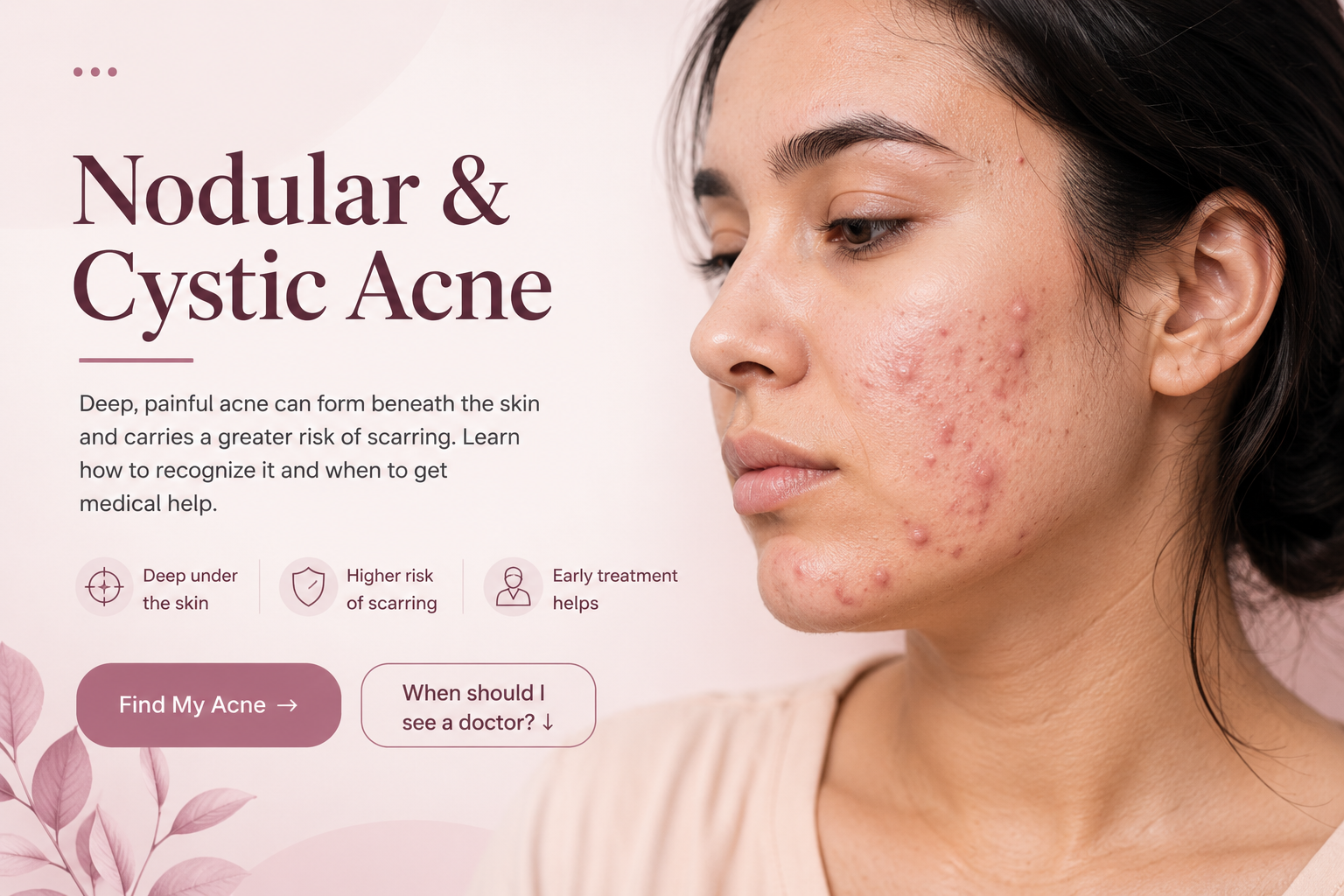
Deep, painful acne is different from an ordinary pimple. Nodules and cyst-like acne lesions develop deeper inside the skin, may last for weeks, and have a greater chance of leaving scars.
Is it nodular or cystic acne?
Both are forms of deep inflammatory acne. Instead of remaining close to the skin surface, inflammation extends further into the surrounding tissue.
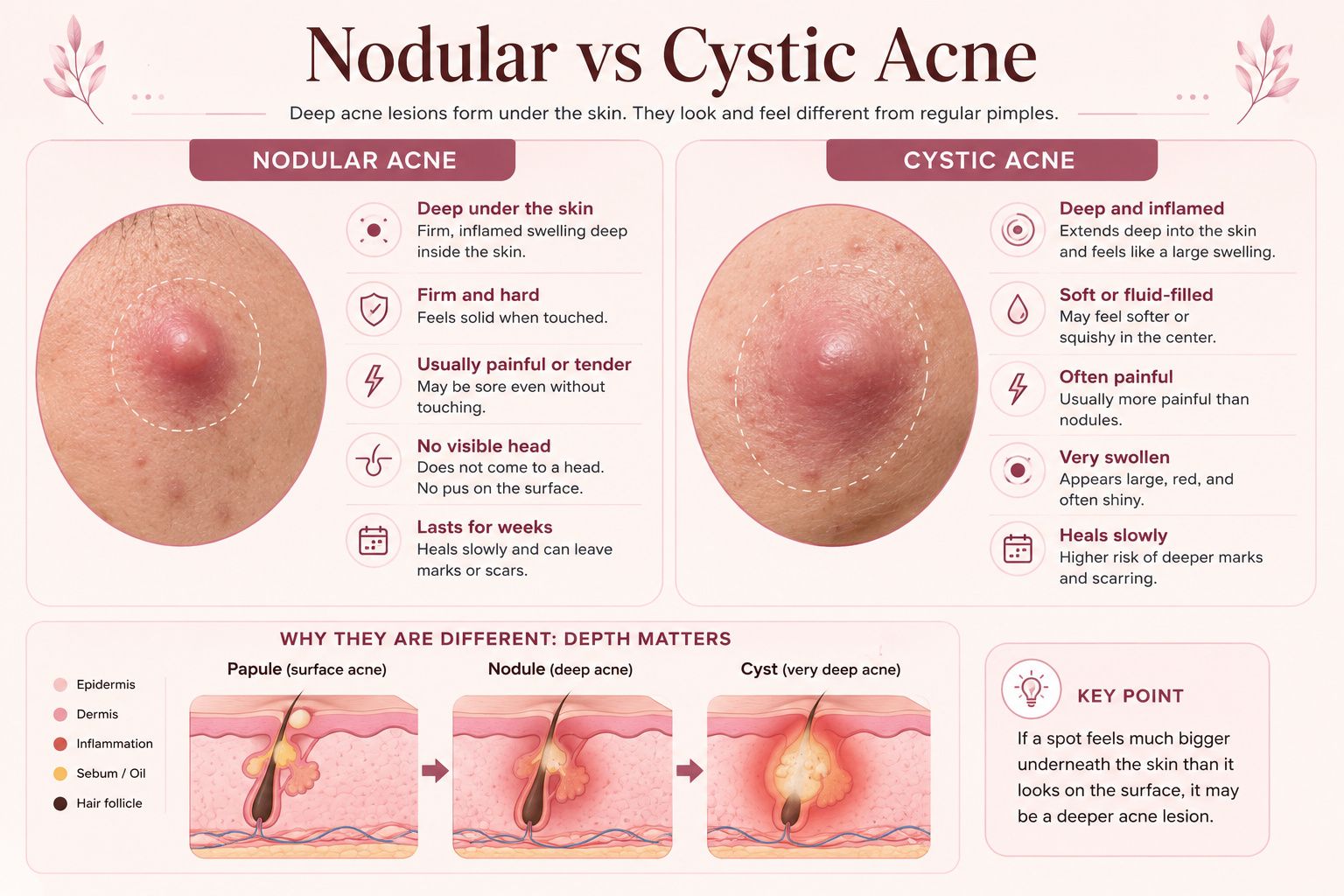
Nodular acne
Usually feels like a firm, deep and tender lump underneath the skin. A visible white or yellow head may never form.
Cyst-like acne
May feel deeper, softer or more fluctuant and can appear as a large, painful inflamed swelling.
Not sure what type of acne you have?
Use the AuratSehat Acne Finder to compare your skin pattern with blackheads, whiteheads, inflammatory acne, hormonal acne and deeper acne.
Find My Acne →How does deep acne develop?
Acne begins when a hair follicle becomes blocked by oil and dead skin cells. In deeper inflammatory acne, the follicle becomes increasingly inflamed and its contents can affect surrounding skin tissue.
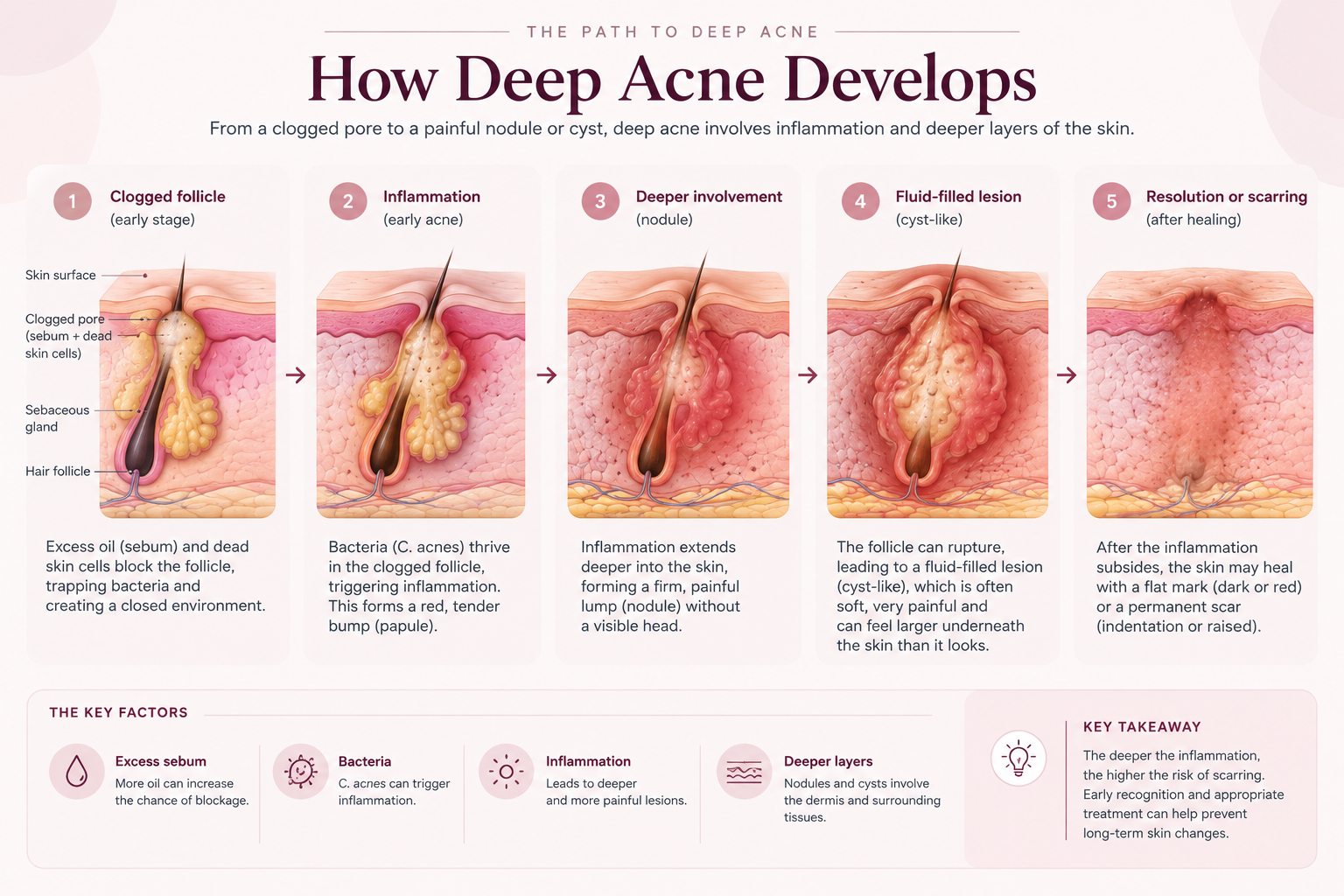
This deeper inflammation explains why a nodule can feel much larger underneath the skin than it looks on the surface — and why repeatedly squeezing it can make inflammation and scarring worse.
What does deep acne usually feel like?
- Large bumps or lumps beneath the skin
- Pain or tenderness even without touching
- Lesions that remain for days or weeks
- Several deep lesions appearing repeatedly
- Redness and swelling around the lesion
- Dark or red marks after the inflammation settles
- Indentation or raised scars after repeated episodes
Deep acne can occur on the cheeks, jawline, chin, temples, chest, shoulders and back. In some women, recurring lesions around the lower face and jaw may also have a hormonal pattern.
What can contribute to nodular or cystic acne?
Oil and clogged follicles
Increased sebum production together with blocked follicles creates the environment in which acne inflammation develops.
Hormonal influence
Androgens can stimulate sebaceous glands. This can contribute to acne during adolescence, around menstrual cycles and in some hormonal conditions.
Inflammation
Deep inflammatory reactions can extend beyond the follicle and create the characteristic painful lump.
Individual tendency
Genetics, skin characteristics, medications and other factors can influence how severe acne becomes.
How is nodular and cystic acne treated?
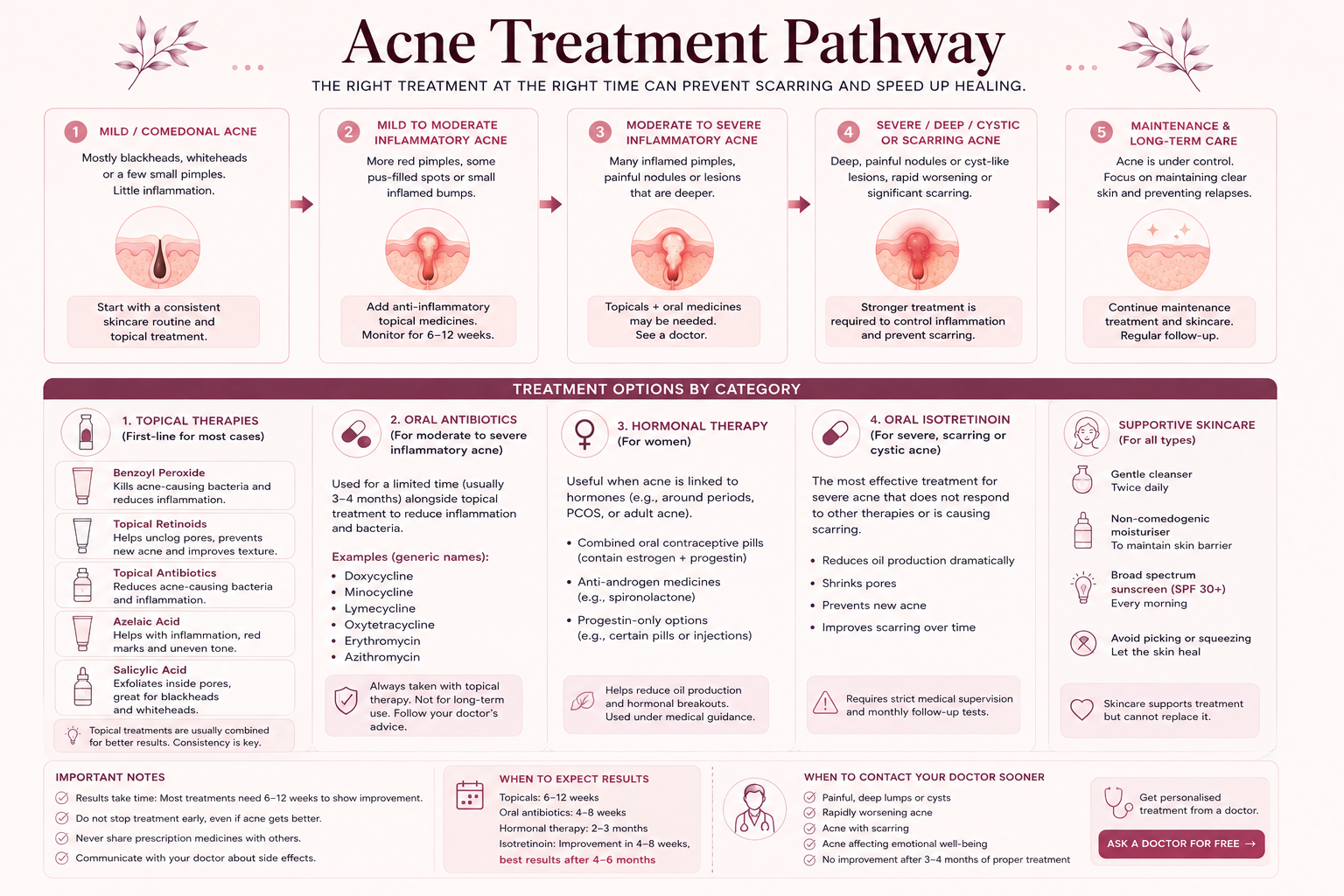
Treatment depends on how many deep lesions are present, how often they recur, whether other acne lesions are present, and whether marks or scars are developing.
Because deep acne has a greater risk of permanent scarring, it is worth treating it more actively than an occasional superficial pimple.
1Build a gentle skincare base
Use a gentle cleanser, a non-comedogenic moisturizer and broad-spectrum sunscreen. Avoid harsh scrubbing, repeatedly drying the skin with alcohol-based products, and squeezing deep lesions.
2Topical acne treatment
Depending on the acne pattern, commonly used topical medicines include benzoyl peroxide and topical retinoids such as adapalene or tretinoin.
Azelaic acid can also be useful in selected patients, particularly when acne is accompanied by post-inflammatory dark marks.
Topical treatment is especially useful for treating the surrounding acne-prone skin and helping prevent new lesions, rather than simply applying medicine to one large nodule after it has already formed.
3Oral antibiotics for selected inflammatory acne
When acne is significantly inflammatory, a clinician may prescribe a limited course of an oral antibiotic such as doxycycline or another appropriate tetracycline-class medicine.
Oral antibiotics are generally combined with an appropriate topical acne regimen rather than used alone, and prolonged unnecessary use is avoided because of antibiotic resistance.
4Hormonal treatment when the pattern fits
In some women — particularly those with recurring lower-face or jawline acne, menstrual flares or other signs suggesting hormonal influence — hormonal treatment may be considered.
Options can include certain combined oral contraceptive pills or spironolactone, depending on the individual’s medical history, pregnancy plans and contraindications.
5Isotretinoin for severe or scarring acne
Oral isotretinoin is an important treatment option for severe nodular acne, acne that is causing scars, or acne that has not responded adequately to other appropriate treatment.
It requires medical supervision because dosing, side effects, laboratory monitoring where appropriate, and strict pregnancy prevention requirements must be considered.
Isotretinoin must not be used during pregnancy because it can cause serious fetal harm.
6Treatment of a particularly painful nodule
For a very large, painful inflammatory lesion, a dermatologist may occasionally use an intralesional corticosteroid injection to reduce inflammation more quickly.
This is a clinician-performed treatment and is not something to inject or attempt at home.
Should you pop a deep acne lump?
No. A deep nodule often has no material close to the skin surface that can simply be “popped.” Pressing or digging into it may push inflammation further into surrounding tissue, injure the skin and increase the chance of a lasting mark or scar.
When should you see a doctor?
Consider medical assessment if you have recurring nodules or cyst-like lesions, several painful deep spots at once, acne on the chest or back, worsening pigmentation, or early evidence of scarring.
Understand your acne pattern
Or return to the Acne Hub →