
Acne Treatment Guide
Acne treatment is not one-size-fits-all. Blackheads, inflamed pimples, deep painful nodules and hormonally influenced acne may need different approaches. The first step is understanding what kind of acne you have.
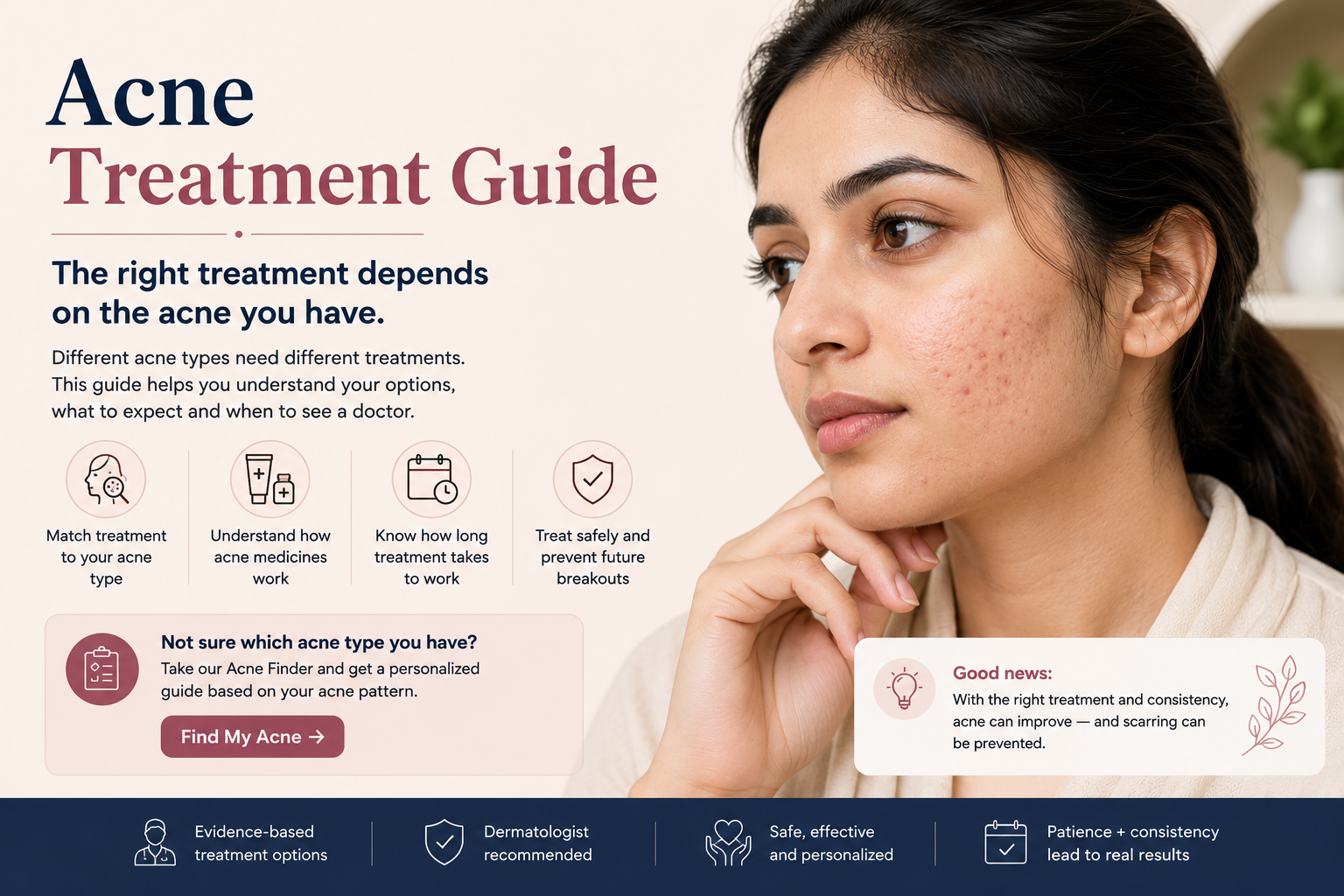
Which acne treatment is best?
There is no single “best” acne medicine. The right approach depends on whether your acne is mainly clogged pores, inflamed pimples, deep nodules or cyst-like lesions, hormonally influenced acne, or a combination of several patterns.
Use the AuratSehat Acne Finder before choosing a treatment pathway.
Match the treatment to your acne type
Acne often contains more than one lesion type at the same time, but identifying the dominant pattern helps guide treatment.
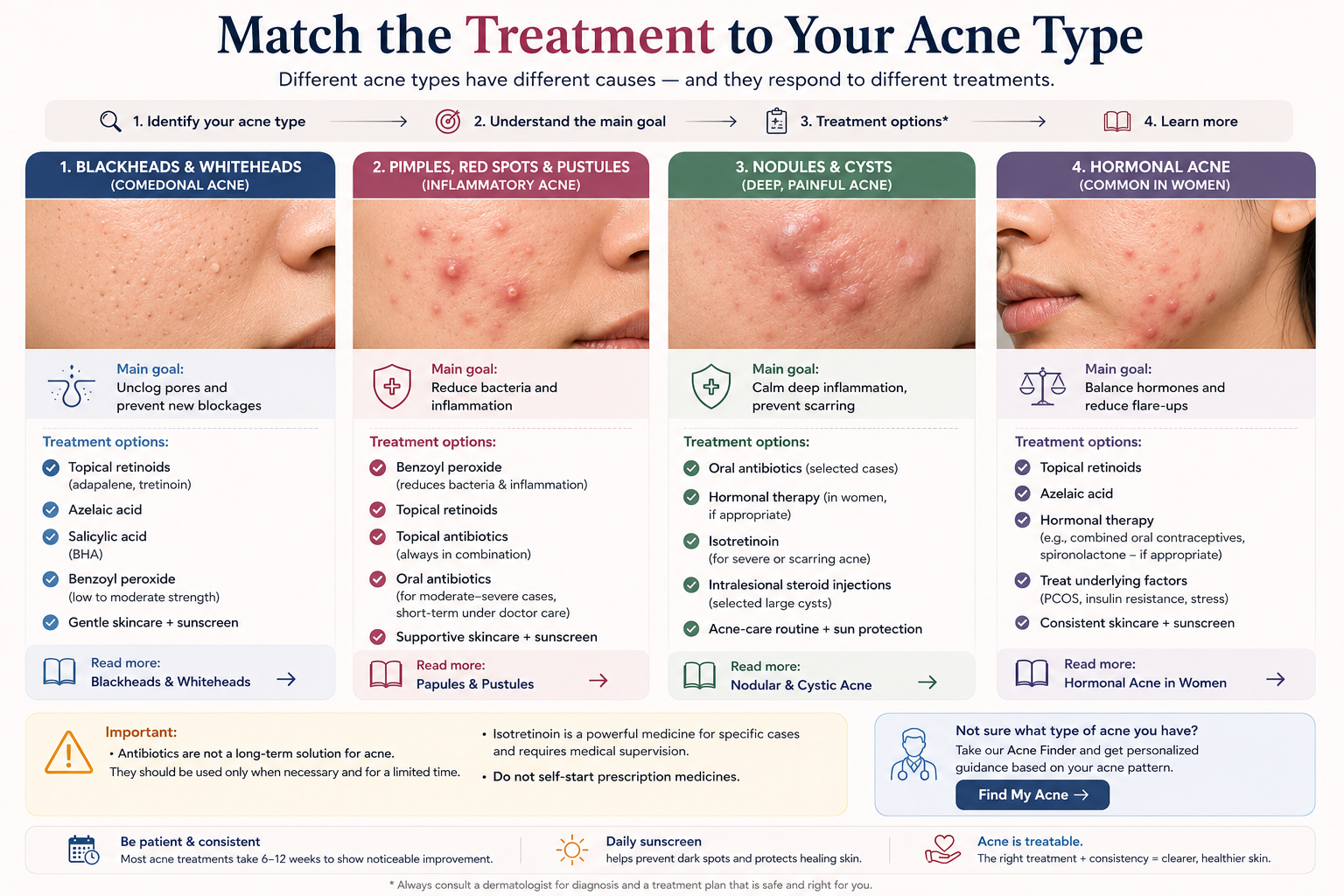
Mostly blackheads & whiteheads
Comedonal acne Clogged poresWhen acne mainly consists of blackheads and whiteheads, treatment focuses on preventing the follicle from becoming blocked.
Options commonly used include:
Adapalene, tretinoin or tazarotene are topical retinoids that help normalize follicular turnover and prevent new comedones.
Azelaic acid can be particularly useful when acne is accompanied by post-acne pigmentation.
Salicylic acid may also help reduce pore blockage, especially in cleansers or appropriately formulated leave-on products.
Red pimples & pustules
Papules Pustules Inflammatory acneInflamed acne usually needs treatment that addresses both follicular blockage and inflammation.
Common topical options include benzoyl peroxide, a topical retinoid such as adapalene, and selected combination treatments.
A clinician may sometimes prescribe a topical antibiotic such as clindamycin, but antibiotic treatment should not become indefinite acne therapy and is generally used appropriately alongside other acne treatment rather than casually on its own.
Deep, painful nodules or cyst-like acne
Nodules Cyst-like lesions Higher scarring riskDeep painful acne deserves earlier medical assessment because the inflammation extends further into the skin and the risk of permanent scarring is greater.
Depending on severity, clinicians may consider combinations of topical treatment with systemic therapy such as doxycycline, selected hormonal therapy in women, or isotretinoin for appropriate severe, scarring or treatment-resistant acne.
Read: Nodular & Cystic Acne
Hormonally influenced acne in women
Recurring Period-related Adult acneSome women have acne influenced by androgen activity or hormonal fluctuations. A jawline location alone does not prove that acne is hormonal.
When appropriate, medical treatment may include combined oral contraceptives or spironolactone, alongside standard topical acne therapy.
Symptoms such as irregular periods, excess facial/body hair or scalp hair thinning may provide additional clues that warrant clinical assessment.
Read: Hormonal Acne in Women
How do acne treatments actually work?
Effective acne treatment usually targets one or more parts of the acne pathway rather than simply “drying out” individual pimples.
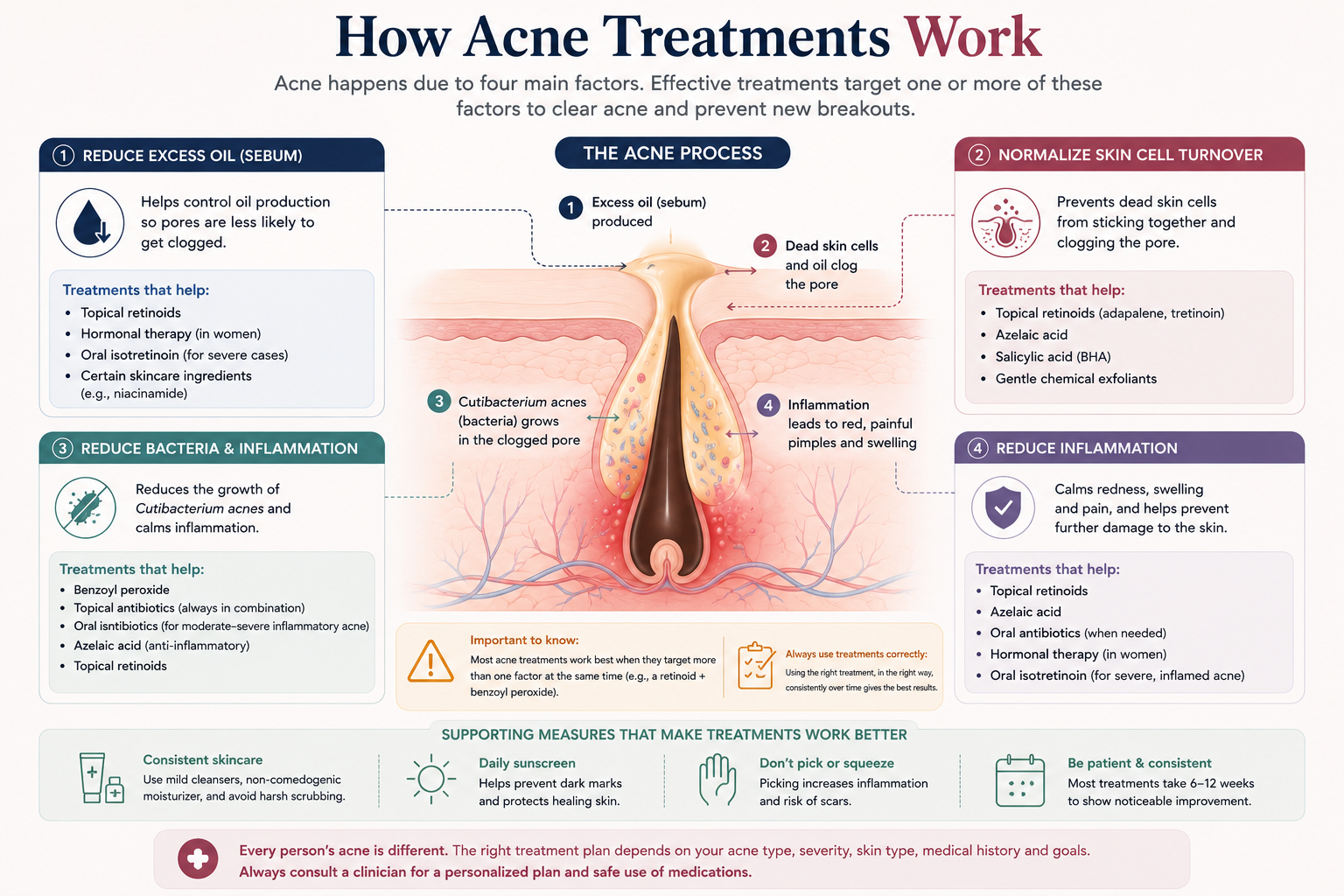
Unclog & prevent blocked pores
Topical retinoids such as adapalene and tretinoin help normalize follicular turnover and prevent formation of new comedones.
Reduce inflammatory acne
Benzoyl peroxide and several prescription treatments help control the inflammatory component of acne.
Reduce bacterial burden
Benzoyl peroxide and appropriately selected antibiotics can affect the bacterial component involved in inflammatory acne.
Reduce hormonal influence
In selected women, treatments such as combined oral contraceptives or spironolactone can reduce androgen-related acne activity.
Acne medicines explained
The names below are generic medicine names. Which treatment, strength and combination is appropriate depends on the acne pattern, skin sensitivity, pregnancy status, other medical conditions and medicines being used.
Benzoyl peroxide is one of the most useful treatments for inflammatory acne. It can reduce acne-causing bacterial burden and inflammation and is frequently combined with topical retinoids or appropriate antibiotic therapy.
Dryness, irritation and peeling can occur, particularly when starting treatment. It can also bleach towels, pillowcases, clothing and hair.
Adapalene is a topical retinoid useful for blackheads, whiteheads and inflammatory acne. Rather than treating only today’s visible spots, it helps prevent future pore blockage.
Irritation and dryness are common early in treatment, so many people need to introduce it gradually.
Tretinoin is another topical retinoid used for comedonal and inflammatory acne. Different formulations and strengths are available and prescription advice may be needed.
Azelaic acid can help active acne while also being particularly useful in people troubled by post-inflammatory dark marks.
It may be considered in situations where other acne treatments are not appropriate or tolerated.
Topical clindamycin is an antibiotic sometimes used for inflammatory acne. It should not simply be continued indefinitely or used casually as long-term solo acne treatment because antibiotic resistance matters.
Doxycycline is an oral tetracycline antibiotic commonly used for selected moderate-to-severe inflammatory acne.
Oral antibiotics are generally used for a limited treatment period and alongside appropriate topical therapy rather than as permanent maintenance treatment.
Spironolactone blocks androgen effects and can be useful for selected women with persistent hormonally influenced acne.
It is a prescription medicine and is not appropriate for everyone. Pregnancy must be considered when prescribing it.
Certain combined hormonal contraceptives can improve acne in appropriate women, particularly where hormonal influence is important.
The decision depends on the person’s medical history and contraceptive needs because combined hormonal contraception is not suitable for every woman.
Oral isotretinoin is an important treatment for appropriately selected severe acne, acne causing scarring or major psychosocial burden, and acne that has not responded sufficiently to standard treatment.
It requires medical supervision because it has important adverse effects and safety requirements.
Isotretinoin can cause severe harm to a developing fetus and must not be used during pregnancy. Pregnancy-prevention requirements and appropriate monitoring are essential for patients who can become pregnant.
The acne treatment ladder
Treatment intensity generally increases with acne severity, persistence, scarring risk and impact on quality of life.
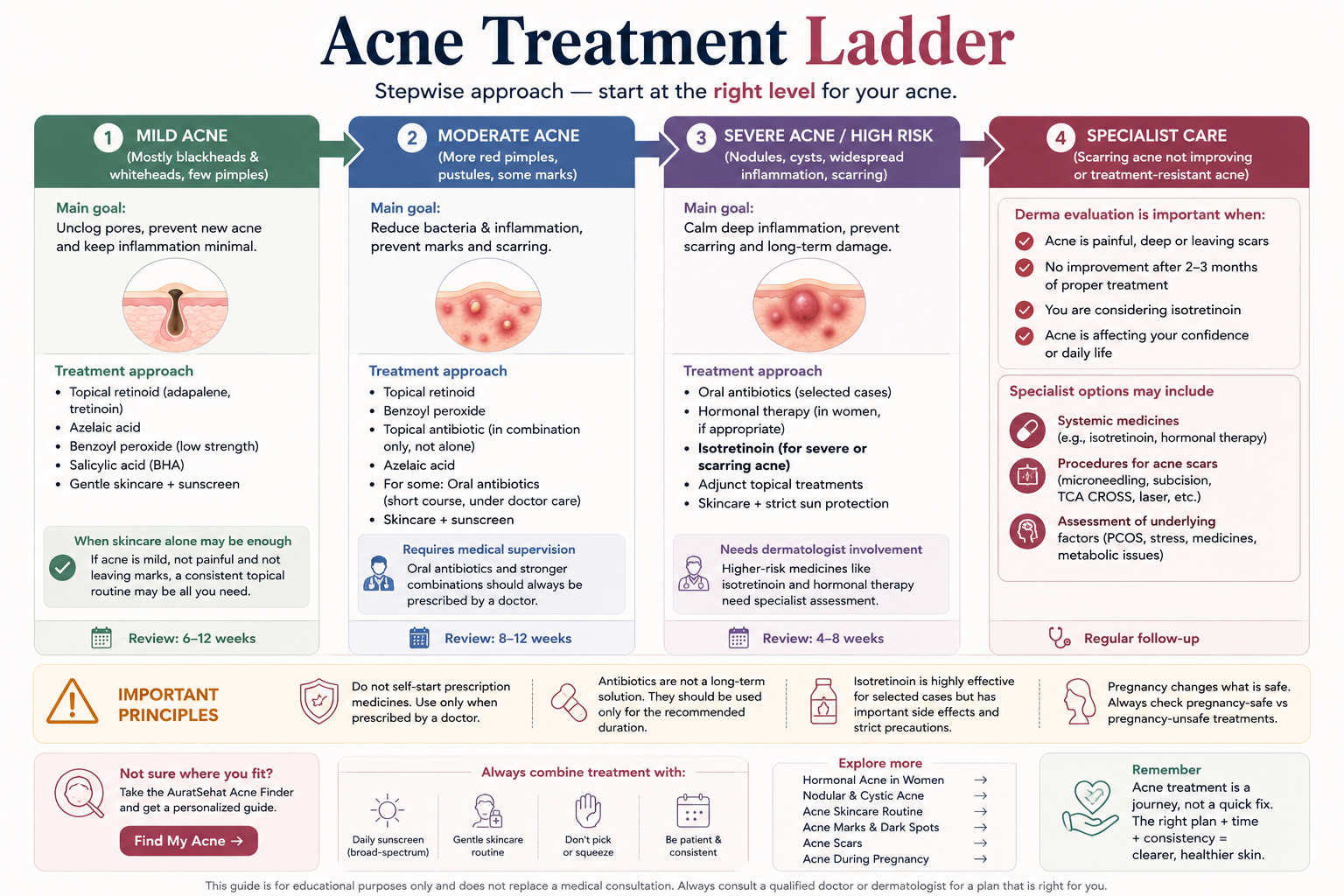
Mild acne
Appropriate skincare plus topical treatment such as a retinoid, benzoyl peroxide or azelaic acid may be sufficient depending on the acne pattern.
Moderate inflammatory acne
Combination topical treatment is often required. Selected people may need a limited course of an oral antibiotic such as doxycycline under medical supervision.
Persistent or hormonally influenced acne
Women with an appropriate pattern may benefit from assessment for hormonal treatment such as spironolactone or a suitable combined oral contraceptive.
Deep, severe or scarring acne
Specialist assessment becomes increasingly important. Isotretinoin may be considered when clinically appropriate.
Why antibiotics shouldn’t become permanent acne treatment
Antibiotics can be very useful for selected inflammatory acne, but acne treatment must also take antibiotic resistance into account.
Not forever
Oral antibiotics are normally used for a defined treatment period rather than indefinitely.
Use combinations wisely
Antibiotic therapy is usually combined with appropriate non-antibiotic acne treatment rather than relied upon alone.
Plan maintenance
Once inflammatory acne improves, non-antibiotic topical therapy may help maintain control.
How long does acne treatment take to work?
Acne usually does not disappear after a few applications. Treatment needs enough time to prevent the next generation of lesions from forming.
| Stage | What you may notice |
|---|---|
| First few weeks | Dryness, irritation or continued breakouts can occur while the treatment routine is being established. |
| 6–8 weeks | Some people begin noticing fewer new inflammatory lesions. |
| Around 12 weeks | This is often a more useful point to assess whether a treatment plan is working. |
| Longer term | Maintenance treatment may be needed because acne can return after successful initial treatment. |
Acne naturally fluctuates. What matters is whether the overall number and severity of new lesions improves over time.
Do you still need skincare while treating acne?
Yes. Prescription or active acne treatments work better when the rest of the routine does not unnecessarily irritate the skin.
Gentle cleanser
Cleanse without aggressive scrubbing. Acne is not caused by having a “dirty face.”
Non-comedogenic moisturiser
Moisturising can improve tolerance of treatments that cause dryness or irritation.
Sun protection
Sunscreen is particularly useful when acne is leaving persistent dark marks or when treatments increase irritation.
Avoid squeezing
Picking and squeezing increases skin injury, inflammation and the chance of persistent marks or scars.
Acne treatment during pregnancy is different
If you are pregnant, trying to become pregnant or think you may be pregnant, review your acne medicines rather than assuming that every topical product is safe.
Oral isotretinoin must not be used during pregnancy.
Topical retinoids such as adapalene, tretinoin and tazarotene are also generally avoided during pregnancy.
Tetracycline antibiotics such as doxycycline require pregnancy-specific consideration and are not routine pregnancy acne treatments.
Treatments such as azelaic acid and selected other options may be considered depending on the individual situation, but pregnancy is a good reason to discuss your acne plan with a qualified clinician.
What if my acne treatment isn’t working?
Before assuming that every acne medicine has failed, check whether the treatment was used consistently and for long enough.
Confirm the diagnosis
Not every facial bump is acne. Folliculitis, rosacea, perioral dermatitis and other conditions can sometimes resemble acne.
Check how the treatment is being used
Applying preventative acne treatment only to individual visible pimples may not control acne developing elsewhere.
Look for contributing factors
Skin products, hair products, hormonal factors, medicines and recurrent friction or occlusion can sometimes contribute.
Escalate when appropriate
Persistent moderate-to-severe acne, deep painful lesions, scarring or significant emotional impact are reasons to seek medical assessment rather than repeatedly switching cosmetic products.
What about acne marks and scars?
Clearing active acne is only part of the story. Many people are left with flat brown, grey, red or pink marks after a lesion resolves.
Flat colour change
Flat brown, grey, pink or red areas are usually post-inflammatory marks rather than true scars.
Read Acne Marks & Dark Spots →Texture change
Indented, pitted, rolling or raised areas represent structural skin change and may require scar-specific treatment.
Read Acne Scars →When should I see a doctor for acne?
Consider medical assessment if:
Acne is deep or painful
Multiple nodules or cyst-like lesions deserve earlier assessment.
Scars are appearing
Don’t wait for extensive permanent scarring before escalating treatment.
Treatment keeps failing
Persistent acne despite an appropriate treatment trial may need a different approach.
Acne is affecting your wellbeing
The emotional and social impact of acne matters even if somebody else considers it “mild.”
Acne treatment FAQs
Can acne be cured permanently?
Acne can often be controlled very effectively, but some people remain acne-prone for years. Maintenance treatment may be needed to prevent recurrence.
Should I use several acne ingredients at once?
Combination therapy is often useful, but introducing multiple irritating products simultaneously can damage the skin barrier and make it difficult to know which product is causing a reaction.
Can I put toothpaste on a pimple?
Toothpaste is not an acne treatment and can irritate the skin. Use products formulated for acne instead.
Does oily skin need moisturiser?
Often yes. Acne treatments can cause dryness even in naturally oily skin. A lightweight non-comedogenic moisturiser may improve treatment tolerance.
Do I need isotretinoin because I have acne?
No. Isotretinoin is an important medicine but it is not necessary for every person with acne. It is particularly considered for appropriately selected severe, scarring, treatment-resistant or highly burdensome acne.
Can acne treatment make acne look worse initially?
Some treatments can cause early irritation and acne can naturally fluctuate during the first weeks. Severe worsening, marked irritation or unusual symptoms should be reviewed rather than simply ignored.
Find your acne pattern first
Answer a few simple questions about what your acne looks like, where it appears and how severe it is. The AuratSehat Acne Finder will guide you toward the most relevant acne information.
Find My Acne →More from the Acne Hub
Not sure which acne pattern you have? Hormonal Acne in Women →
Understand clues that hormones may be contributing. Nodular & Cystic Acne →
Learn about deep, painful and scarring acne. Acne Marks & Dark Spots →
What to do when the pimple disappears but the mark remains. Acne Scars →
Understand ice-pick, boxcar, rolling and raised scars. Explore the Acne Hub →
Browse the complete AuratSehat acne library.