
Acne During Pregnancy
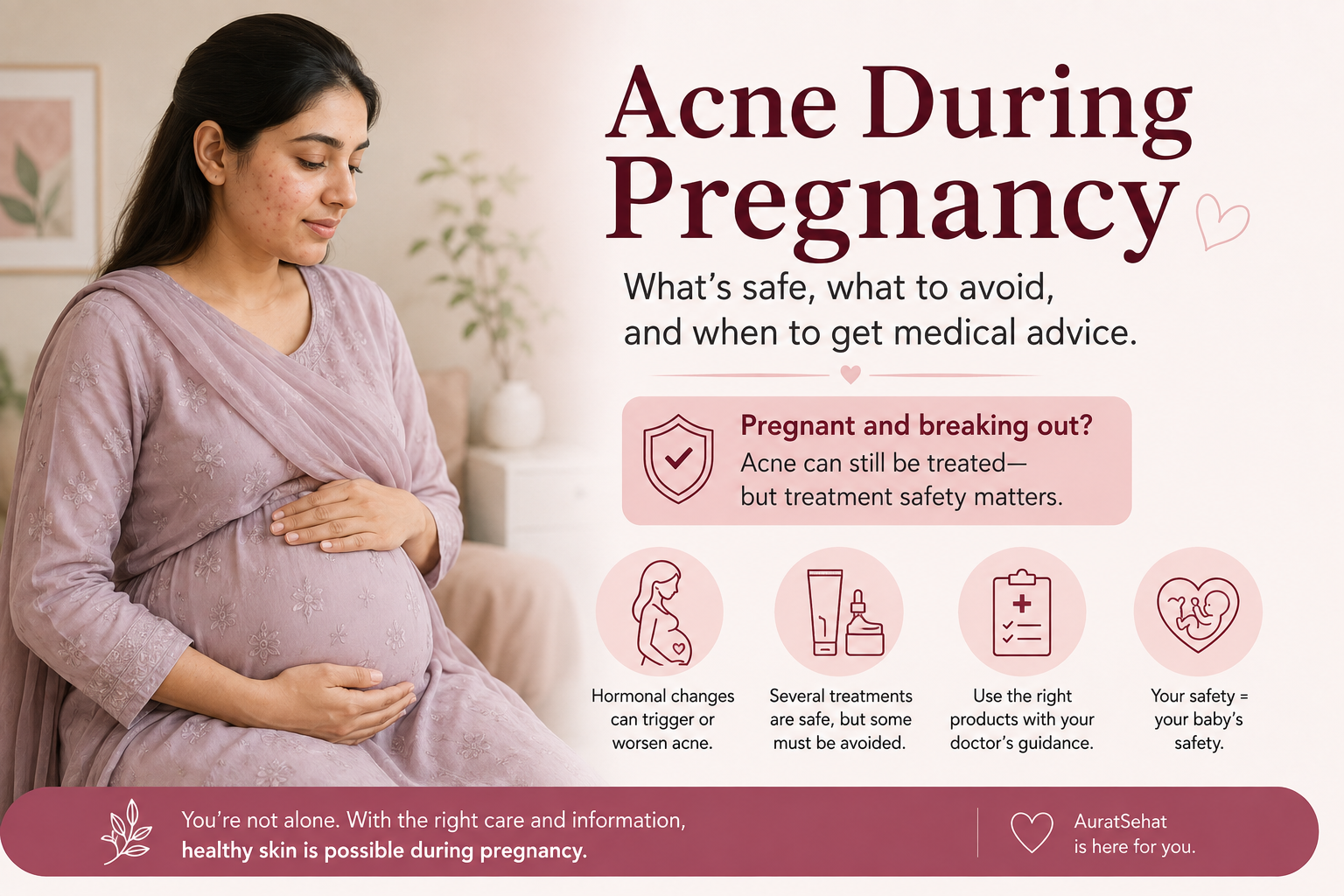
Acne can appear for the first time during pregnancy or existing acne may change. The good news is that acne can still be managed during pregnancy — but choosing treatments carefully matters because some common acne medicines should not be used.
You do not have to simply tolerate acne for nine months. Pregnancy-safe skincare and treatment options are available.
Why can acne change during pregnancy?
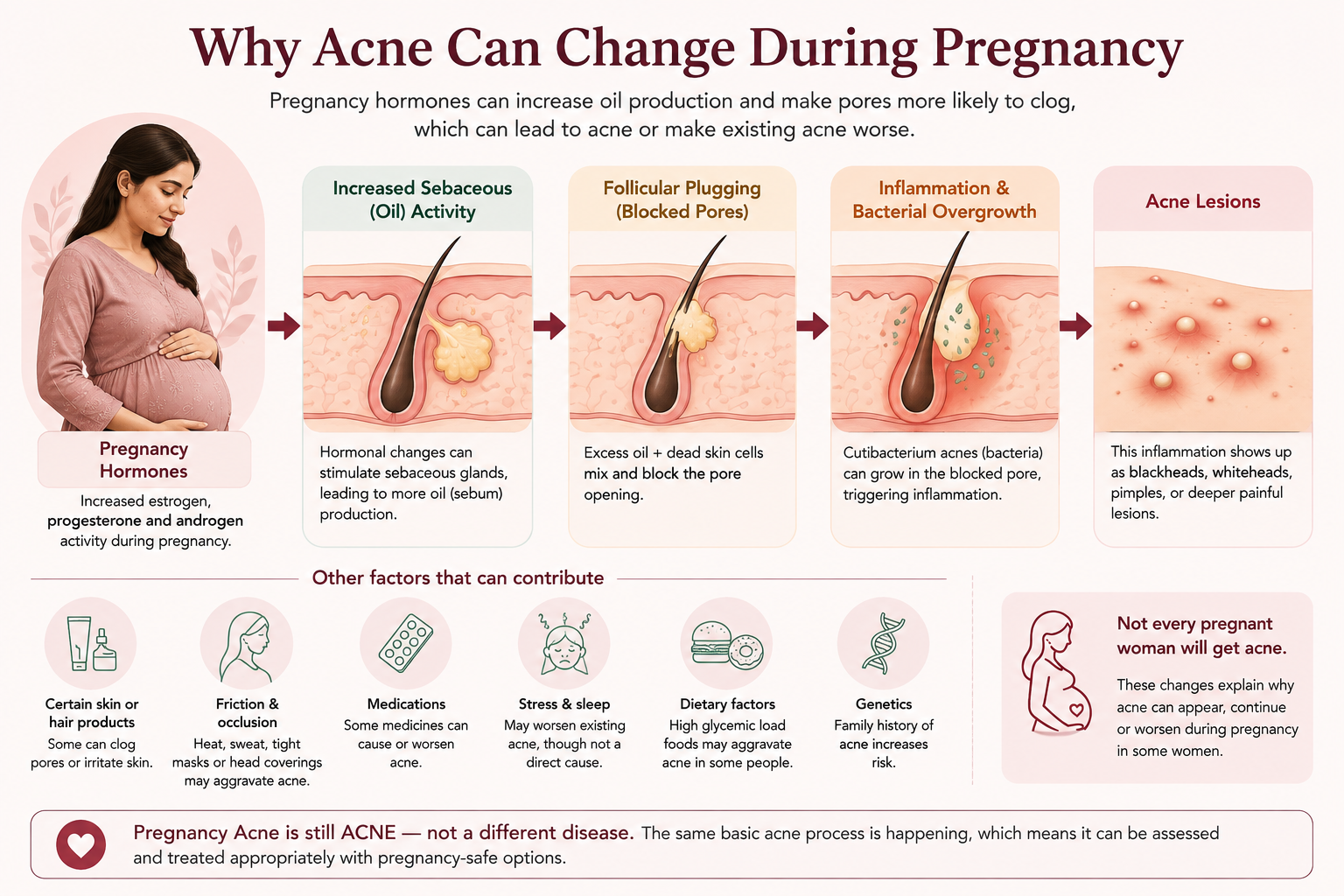
Pregnancy causes major hormonal changes throughout the body. These changes can influence the sebaceous glands and increase oil production in some women. When excess oil combines with dead skin cells inside a hair follicle, pores are more likely to become blocked and inflamed.
This can result in blackheads, whiteheads, red pimples, pustules or occasionally deeper painful acne.
What does pregnancy acne look like?
Pregnancy acne is not a completely separate type of acne. The same basic acne patterns can occur during pregnancy.
Blackheads & whiteheads
Small clogged pores may appear on the forehead, cheeks, chin or other acne-prone areas.
Red pimples & pustules
Inflamed red bumps or pus-filled spots may become more noticeable.
Jawline or chin acne
Some women notice acne concentrated around the lower face, although location alone does not prove that acne is hormonal.
Deep painful acne
Nodules or cyst-like lesions deserve medical assessment because deeper inflammation has a greater risk of leaving scars.
If you are unsure what type of acne you have, use the Acne Finder before exploring the related treatment guides.
How is acne treated during pregnancy?
Treatment during pregnancy has two goals: control the acne while avoiding medicines that could pose unnecessary risk to the developing baby.
This is why a treatment you used before pregnancy may not automatically remain appropriate after you become pregnant.
Options commonly considered during pregnancy
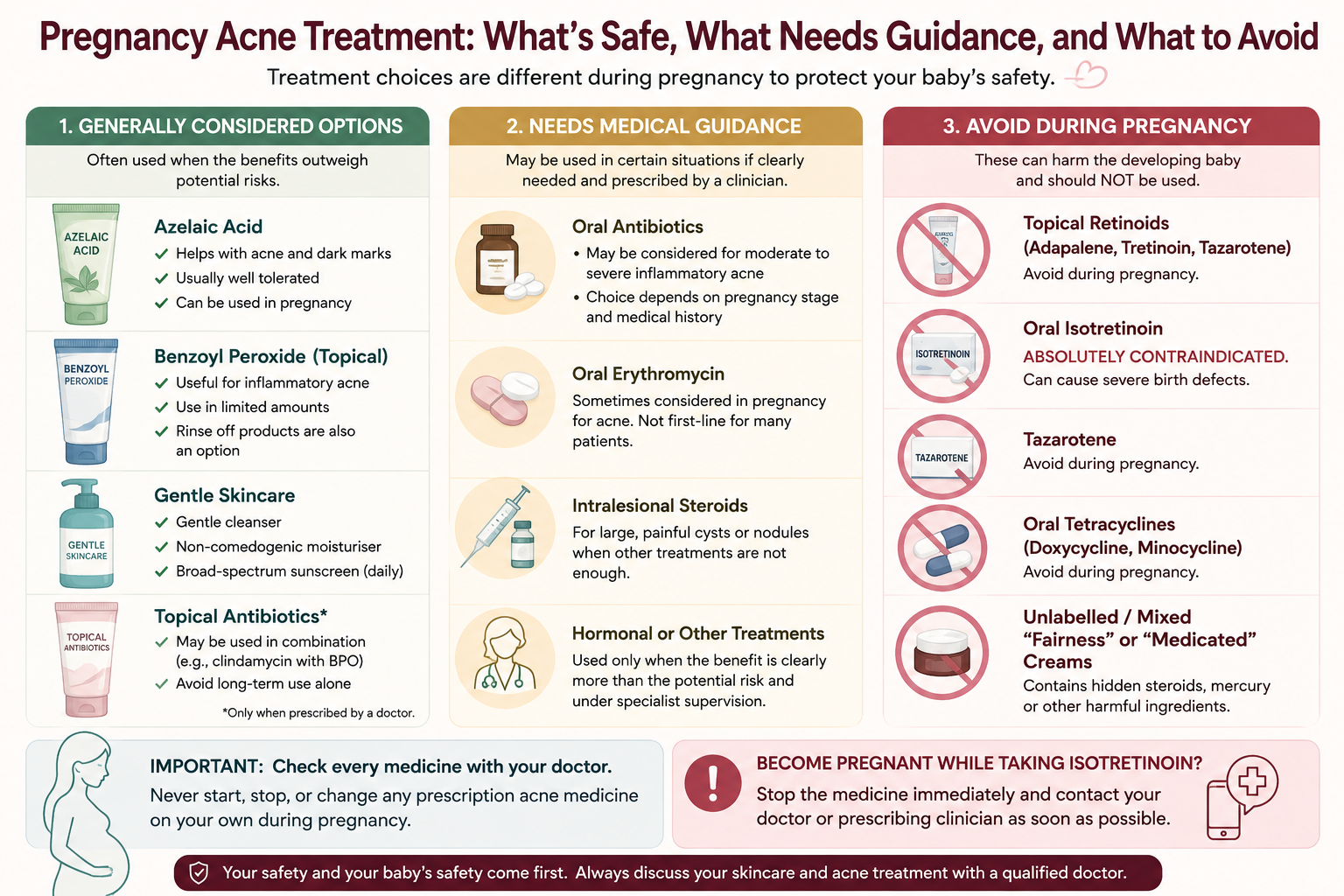
Azelaic acid
Can be useful for acne and post-acne pigmentation and is commonly used during pregnancy.
Topical benzoyl peroxide
May be used for inflammatory acne during pregnancy. Your clinician can help decide
the appropriate product and frequency.
Topical salicylic acid
Topical products may be used during pregnancy, but avoid turning your routine into
multiple overlapping exfoliating treatments.
Gentle skincare
A gentle cleanser, suitable moisturiser and broad-spectrum sunscreen remain the
foundation of the routine.
Medicines to avoid or review
Topical retinoids
Adapalene, tretinoin and tazarotene should not be used during pregnancy.
Oral isotretinoin
Must not be used during pregnancy because it can cause severe harm to a developing baby.
Oral tetracycline antibiotics
Medicines such as doxycycline and minocycline are generally avoided in pregnancy.
Antibiotic selection should be made by a clinician.
Unidentified medicines
Do not self-start prescription acne tablets or mixed medicated creams during pregnancy.
⚠ Important: isotretinoin and pregnancy
Oral isotretinoin must not be taken during pregnancy. It is a powerful acne medicine used for selected patients with severe acne, but exposure during pregnancy can cause serious harm to the developing baby.
If you discover that you are pregnant while taking isotretinoin, stop taking it and contact your prescribing doctor or obstetric clinician promptly for appropriate pregnancy-specific advice.
What about adapalene and tretinoin creams?
Adapalene and tretinoin are topical retinoids commonly used for acne outside pregnancy. They should be avoided during pregnancy.
If you were already using one when you discovered you were pregnant, stop using it and discuss the exposure with your doctor rather than assuming that the exposure automatically means something has gone wrong.
I used acne treatment before I knew I was pregnant — what now?
This is a common and understandably worrying situation.
First, identify exactly what you used. Take a photograph of the product label, box or prescription if necessary.
Write down:
- the exact medicine or ingredient;
- whether it was a cream, gel, tablet or capsule;
- how often you used it;
- when you last used it;
- approximately how far along the pregnancy is.
Then discuss it with your obstetric clinician, dermatologist or prescribing doctor. Risk depends on the medicine, route, dose and timing of exposure.
A simple acne skincare routine during pregnancy
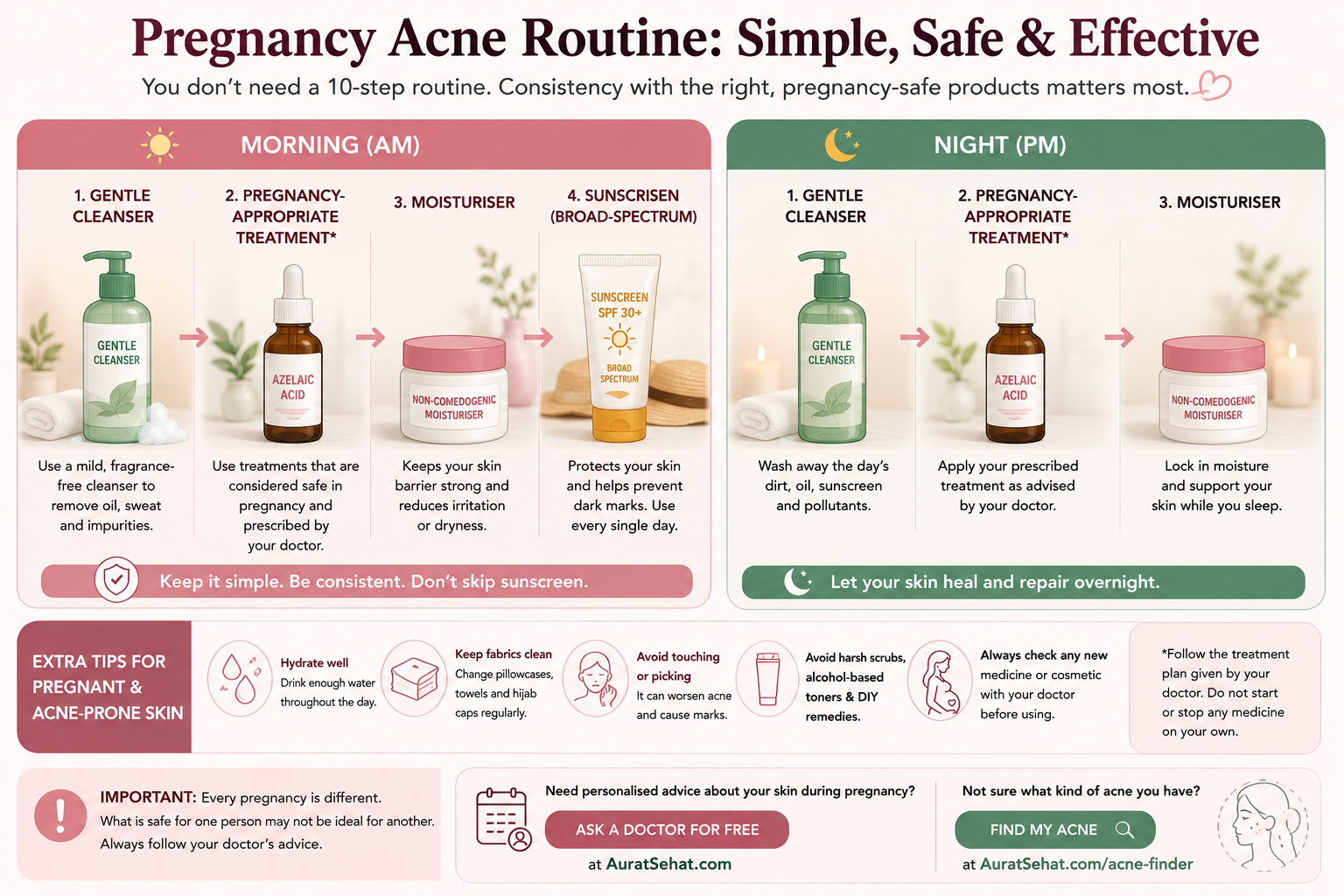
Pregnancy is not the time to build an aggressive ten-product acne routine. A simple routine is easier to tolerate and makes it easier to know which product is helping or causing irritation.
- Gentle cleanser
- Pregnancy-appropriate acne treatment if needed
- Non-comedogenic moisturiser
- Broad-spectrum sunscreen
- Gentle cleanser
- Pregnancy-appropriate treatment
- Moisturiser
Keep cleansing gentle
Acne is not caused by being dirty. Scrubbing harder does not clean acne out of the pores and can leave already sensitive pregnancy skin irritated.
For most women, cleansing morning and evening with a gentle product is enough. You may also want to cleanse after significant sweating.
Do I need moisturiser if pregnancy makes my skin oily?
Yes. Oily skin can still become irritated or dehydrated.
Choose a texture that suits your skin. A lightweight gel or lotion may feel better during hot Pakistani summers, while a richer moisturiser may be more comfortable if your skin becomes dry or sensitive.
Don’t forget sunscreen
Pregnancy can also be associated with increased facial pigmentation, and acne itself can leave brown or grey post-inflammatory marks.
Using a broad-spectrum sunscreen every morning can help protect the skin and should form part of a pregnancy acne routine.
Pregnancy acne in Pakistan: heat, sweat and skin products
Hot weather and sweating can make acne-prone skin feel much oilier. Avoid responding by washing repeatedly with harsh soaps or scrubs.
Lightweight moisturisers and sunscreens may feel more comfortable during humid weather. Keep pillowcases, towels, scarves, hijabs and other frequently used fabrics clean, especially when they repeatedly touch acne-prone areas.
Heat, friction and occlusion can aggravate acne in some women, but this does not mean wearing a hijab or dupatta itself is the cause of acne.
Be especially careful with whitening and “medicated” creams
During pregnancy, avoid experimenting with creams when you do not know exactly what ingredients they contain.
Some unlabelled fairness, whitening or mixed “medicated” creams may contain prescription-strength ingredients or substances that are not appropriate for unsupervised facial use.
Pregnancy rule: know what you are putting on your skin
A cream being sold by a pharmacy, salon, social-media seller or beauty shop does not automatically mean every ingredient is appropriate during pregnancy.
What about home remedies?
Pregnancy is not a reason to replace evidence-based skincare with harsh DIY treatments.
Lemon juice
Can irritate the skin and may worsen post-inflammatory pigmentation.
Toothpaste
Designed for teeth, not acne-prone facial skin, and can cause irritation.
Baking soda
Can disrupt the skin barrier and is not an established acne treatment.
Harsh scrubs
Scrubbing inflamed pimples can worsen irritation rather than clearing acne.
Try not to pick or squeeze pimples
Picking increases trauma and inflammation and can increase the chance of persistent post-acne marks or scars.
This is particularly important for Pakistani and other South Asian skin tones, where post-inflammatory pigmentation may remain visible long after the pimple itself has settled.
What if the acne is severe?
Pregnancy does not mean that severe acne should be ignored.
Deep painful nodules, widespread inflammatory acne or acne that is beginning to scar should be assessed medically. A dermatologist can build a pregnancy-appropriate treatment plan rather than leaving the acne untreated or relying on unsafe medicines.
Will pregnancy acne disappear after delivery?
It may improve as hormone levels change after pregnancy, but there is no guarantee that acne will disappear immediately after delivery.
If acne continues postpartum, treatment can be reassessed.
When should you see a doctor?
Arrange medical assessment if acne is deep or painful, is beginning to scar, becomes widespread, is not improving with pregnancy-appropriate treatment, or you are unsure whether a medicine or skincare ingredient is safe during pregnancy.
You should also seek medicine-specific advice if you discover that you were using a potentially unsuitable acne medicine before realizing you were pregnant.
Not sure what kind of acne you have?
Pregnancy does not tell you whether your acne is mainly comedonal, inflammatory or deep. Use the AuratSehat Acne Finder to explore your pattern.
Find My Acne →Pregnant and unsure what you can safely use?
If you are confused about an acne medicine, skincare ingredient or product you used before realizing you were pregnant, ask AuratSehat for guidance.
You can also ask about painful acne, worsening breakouts, dark marks, scarring or a routine that is not working.
Ask a Doctor for Free →Continue through the Acne Hub
Acne Skincare Routine
Build a practical morning and evening routine using cleanser, moisturiser, sunscreen and appropriate acne treatment.
Read the skincare routine →Acne Treatment Guide
Understand how acne treatment changes according to acne type and severity.
Read the treatment guide →Acne Marks & Dark Spots
Learn why brown or grey marks remain after pimples and how post-acne pigmentation differs from a true scar.
Read about acne marks →Nodular & Cystic Acne
Deep painful lumps have a greater risk of scarring and deserve appropriate medical assessment.
Read about deep acne →The AuratSehat takeaway
Pregnancy can change your acne, but you do not have to choose between treating your skin and protecting your pregnancy.
Keep your routine simple, use pregnancy-appropriate treatments, avoid retinoids and oral isotretinoin, and ask for medical advice when you are uncertain about a medicine.
The right treatment during pregnancy is the safest effective treatment — not necessarily no treatment at all.
Guidance reviewed against information from the American College of Obstetricians and Gynecologists (ACOG), NHS guidance on acne medicines and isotretinoin, and current medicine-safety information.