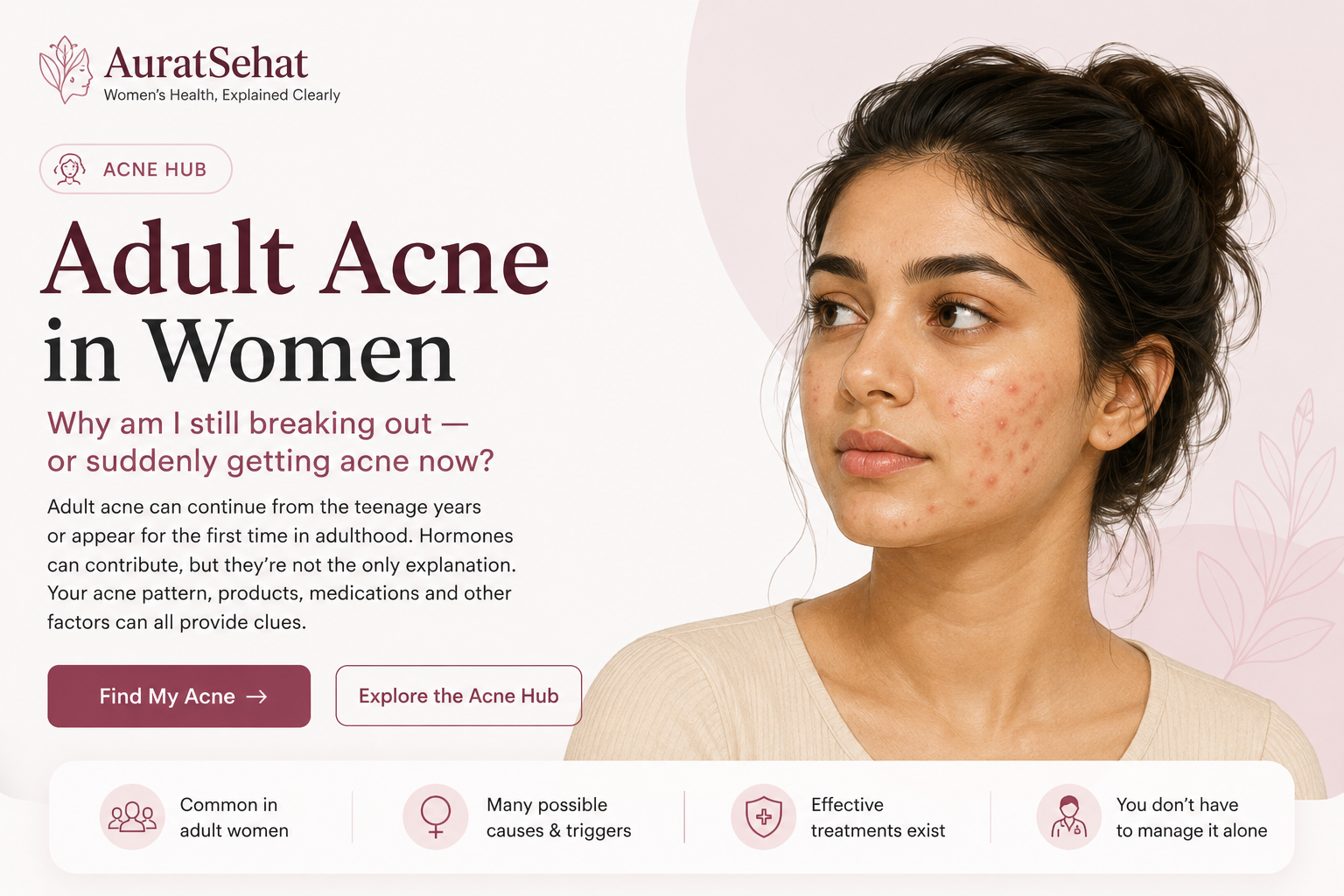
Adult Acne in Women
Why am I still breaking out — or suddenly getting acne now?
Acne can continue long after the teenage years or appear for the first time during adulthood. Hormones may contribute, but they are only one part of the story. Your acne pattern, skincare products, medicines and other factors can all provide useful clues.
Adult acne isn’t simply “teenage acne that stayed”
Adult acne can follow different timelines. Some women have dealt with breakouts since adolescence, while others develop acne after years of relatively clear skin.
Persistent acne
Acne begins during adolescence and continues, sometimes with periods of improvement and recurrence, into adulthood.
Late-onset acne
Acne appears for the first time during adulthood, even if the skin was relatively clear during the teenage years.
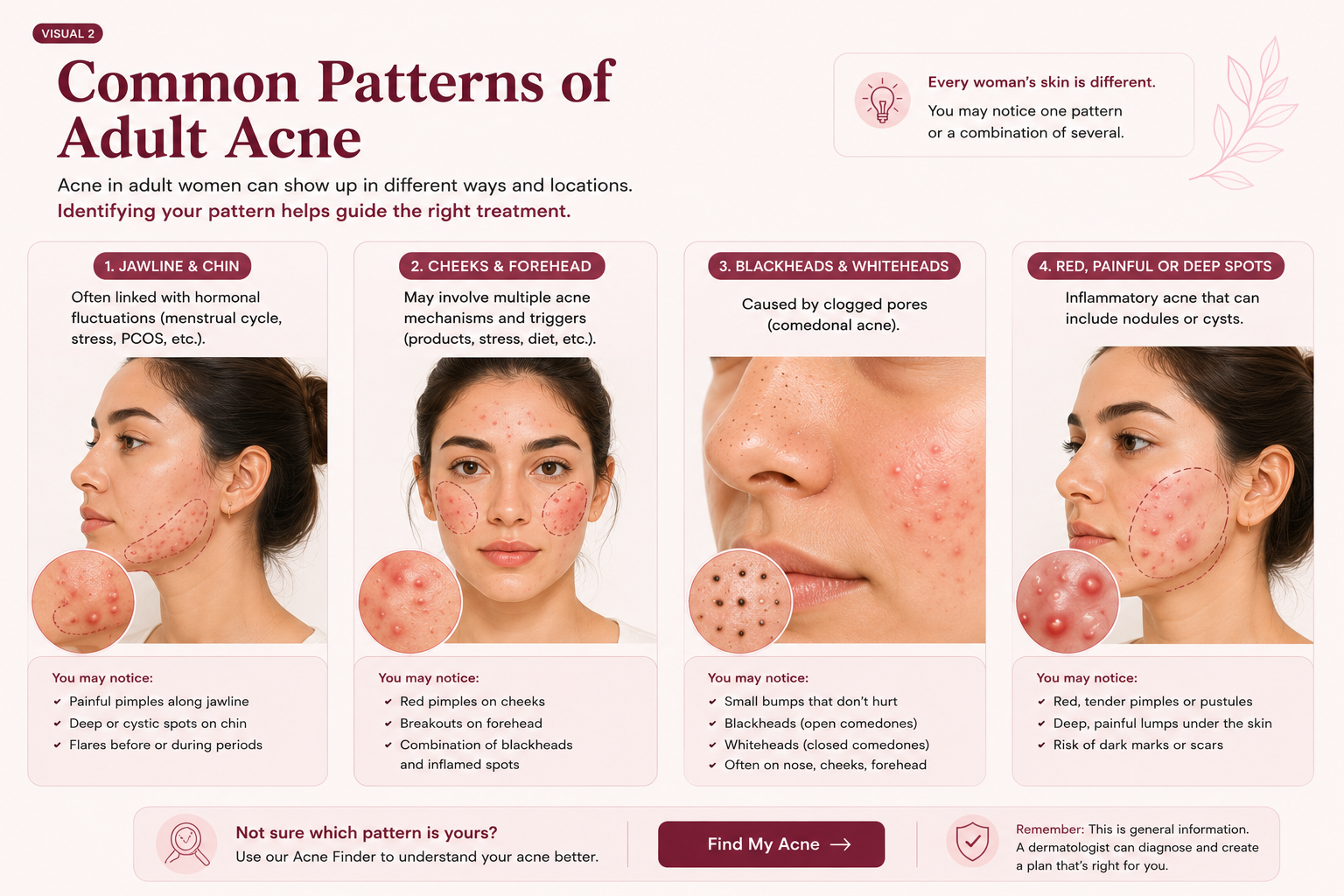
What can adult acne look like?
There is no single “adult acne face.” Different women can have very different lesion types and distributions.
Jawline & chin
Lower-face breakouts can occur in hormonally influenced acne, but location alone does not prove that hormones are the cause.
Cheeks & forehead
Acne here may involve clogged pores, inflammation, products, friction and the same biological mechanisms involved elsewhere.
Blackheads & whiteheads
These are comedones — pores that become blocked without necessarily becoming intensely inflamed.
Red, painful or deep spots
Papules, pustules, nodules and cyst-like lesions indicate increasing inflammation and may require stronger treatment.
Why am I getting acne as an adult?
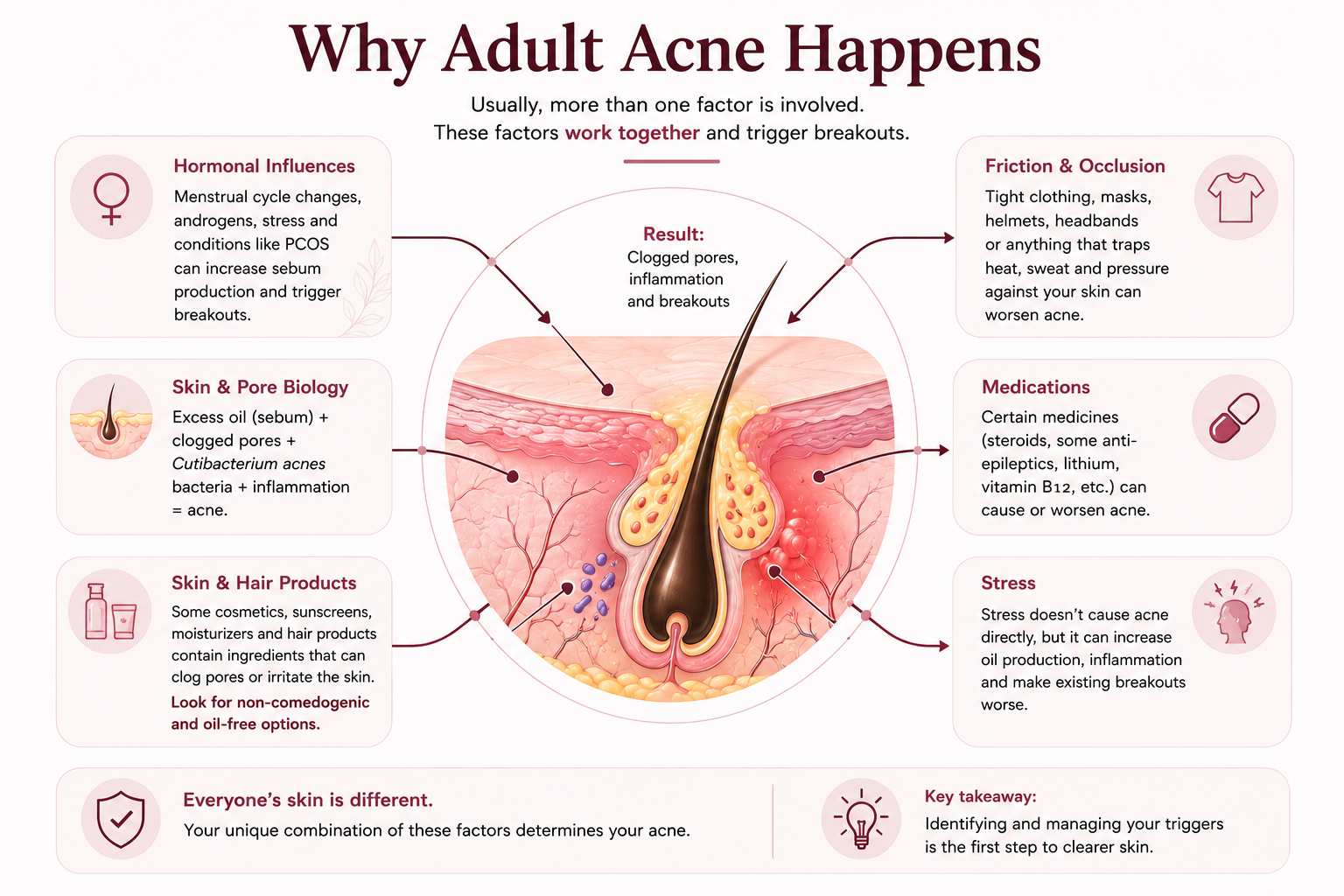
Adult acne usually does not have one single cause. Acne develops when several biological processes interact inside the hair follicle, while hormones, products, medicines and environmental factors can influence the tendency to break out.
Hormonal influences
Menstrual-cycle changes, androgen activity and conditions such as PCOS can influence acne in some women.
Skin & pore biology
Sebum, follicular plugging, Cutibacterium acnes and inflammation all contribute to acne formation.
Skin & hair products
Some cosmetics, moisturisers, sunscreens and hair products can contribute to clogged pores in acne-prone skin.
Friction & occlusion
Repeated pressure, rubbing, sweat and occlusion can aggravate acne in susceptible areas.
Medicines
Some medications can trigger acne or acne-like eruptions. A sudden change after starting a medicine is worth discussing with a doctor.
Stress
Stress is not a simple single cause of acne, but it can worsen existing breakouts in some people.
Could hormones be involved?
Hormones can influence adult acne, but having acne does not automatically mean that you have a hormonal disorder.
It is more useful to look for acne occurring alongside other clues, especially:
- breakouts that repeatedly worsen around your periods
- irregular, infrequent or absent periods
- increased facial or body hair
- scalp hair thinning
- difficulty with ovulation or fertility
- other features suggesting increased androgen activity or PCOS
Think your acne may be hormonally influenced?
We have separate guides so this page does not turn every case of adult acne into “hormonal acne.”
Do I need hormone tests?
Acne by itself usually does not mean that a large hormone panel is necessary. Testing is more likely to be considered when acne occurs with other features suggesting androgen excess or an underlying endocrine condition.
For example, a clinician may look more closely at hormones when acne occurs alongside irregular periods, increased facial/body hair, scalp hair thinning or other features of PCOS.
Which tests are appropriate — if any — depends on your symptoms, menstrual history, medicines and clinical assessment rather than acne location alone.
What should I actually do about adult acne?
The most useful treatment depends less on your age and more on what type of acne you have, how severe it is, whether it is scarring and whether pregnancy is possible.
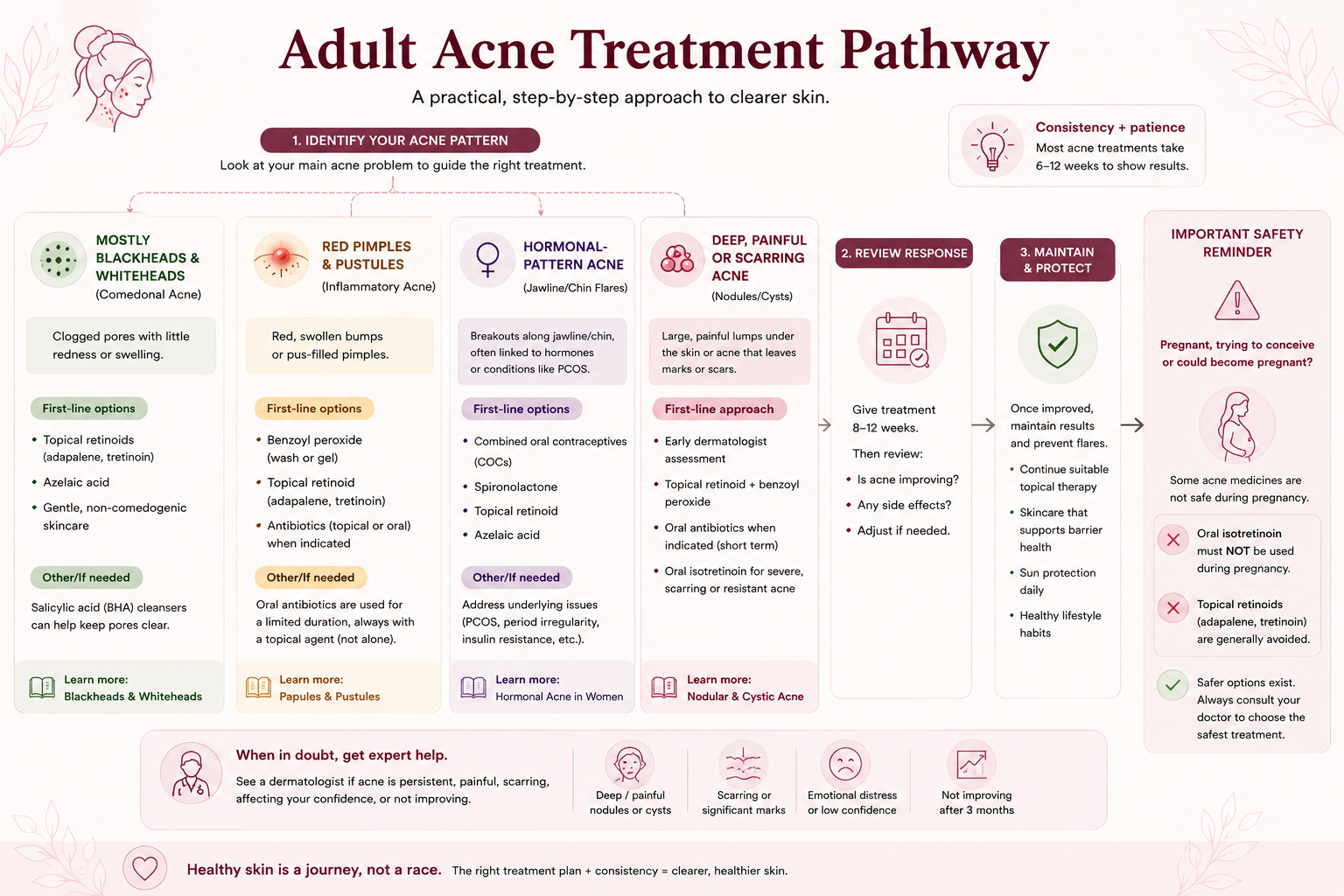
① Mostly blackheads & whiteheads
The main aim is to prevent follicles from becoming blocked and gradually clear existing comedones.
Common treatment options include:
- Topical retinoids such as adapalene or tretinoin
- Azelaic acid
- Benzoyl peroxide when inflammatory lesions are also present
- a gentle acne-friendly cleanser, moisturiser and sunscreen
Retinoids commonly cause irritation when first introduced, so treatment is often started gradually according to product instructions or a clinician’s advice.
② Red pimples & pustules
When acne is more inflammatory, treatment usually needs to address both blocked follicles and inflammation.
Depending on severity, a treatment plan may include combinations of:
- benzoyl peroxide
- adapalene or tretinoin
- azelaic acid
- selected topical antibiotics such as clindamycin when clinically appropriate
- oral antibiotics such as doxycycline for selected moderate-to-severe inflammatory acne
③ Deep, painful nodules or cyst-like acne
Deep acne deserves earlier medical assessment because it carries a greater risk of permanent scarring.
Depending on the pattern and severity, treatment may involve:
- topical combination therapy
- an appropriate oral antibiotic when indicated
- hormonal therapy in selected women
- isotretinoin for appropriate severe, resistant or scarring acne under medical supervision
④ When hormonal treatment may help
Some women with persistent adult acne may benefit from hormonal treatment, particularly when acne follows a hormonally influenced pattern.
Prescription options can include:
- certain combined oral contraceptive pills
- spironolactone in appropriately selected women
These treatments are not suitable for everyone. A clinician needs to consider pregnancy plans, medical history, other medicines and individual contraindications before prescribing them.
Want the complete medicine-by-medicine approach?
Our dedicated treatment guide covers how acne therapies fit together rather than simply listing products.
Acne Treatment Guide →What if I am pregnant or trying for pregnancy?
Do not assume that a topical or oral acne medicine is automatically safe simply because it is commonly used.
Topical retinoids such as adapalene and tretinoin are generally avoided during pregnancy, and oral isotretinoin must not be used during pregnancy because of its major risk of severe birth defects.
Azelaic acid is commonly considered an option during pregnancy, while other treatments should be discussed with your obstetrician, dermatologist or treating doctor. [American Academy of Dermatology](https://www.aad.org/public/diseases/acne/derm-treat/pregnancy
Your skincare routine still matters
Medicines work better when the rest of your routine is not constantly irritating or clogging acne-prone skin.
Keep cleansing gentle
Harsh scrubbing does not clean acne out of the pores and can worsen irritation.
Use moisturiser
Acne treatment can dry the skin. A suitable non-comedogenic moisturiser can improve treatment tolerance.
Protect from the sun
Sunscreen is particularly useful when acne leaves persistent dark marks and when irritating treatments are being used.
Do not keep changing everything
Adding multiple active ingredients at once often produces irritation without giving any one treatment enough time to work.
What about the marks acne leaves behind?
Adult acne commonly leaves brown, grey or red discoloration after an inflamed spot settles. These flat marks are different from true acne scars, which involve a change in skin texture.
Flat dark or red marks
These are usually post-inflammatory colour changes rather than scars.
Acne Marks & Dark Spots →Indented or raised texture
A permanent change in skin texture is more consistent with true acne scarring.
Acne Scars →When should I see a doctor?
Consider medical assessment when:
- your acne is deep, painful or frequently forms nodules
- you are developing scars
- acne is leaving substantial persistent pigmentation
- appropriate over-the-counter treatment is not helping
- acne begins suddenly or becomes unusually severe
- you also have irregular periods, increased facial/body hair, scalp hair thinning or other possible hormonal symptoms
- acne is significantly affecting your confidence, mood or quality of life
Deep inflammatory acne is particularly worth treating early because preventing new lesions can also reduce the chance of permanent scarring.
Find your acne pattern first
Answer a few simple questions about what your breakouts look like and where they occur, then explore the most relevant AuratSehat acne guide.
Medical note: This article provides general health education and is not a substitute for diagnosis or individual treatment from a qualified healthcare professional.