
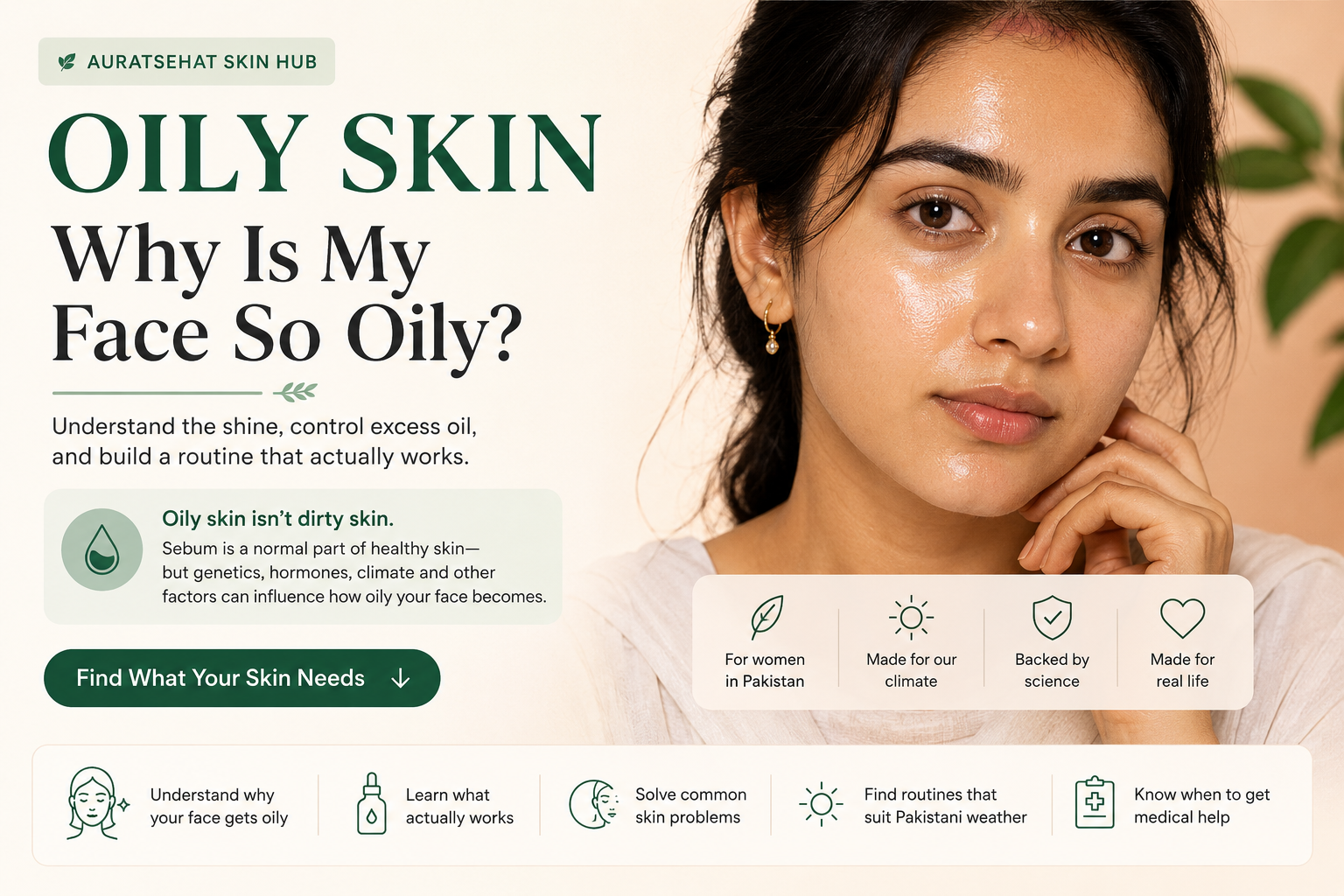
Oily skin isn’t dirty skin.
Your skin naturally makes an oily substance called sebum. It helps support the skin surface. Some people simply produce more of it than others, and hormones, genetics, age, climate and the products you use can all influence how oily your face looks and feels.
Is your skin actually oily?
“Oily skin” can describe several different situations. Identifying yours can help you avoid treating your entire face as if every area needs the same thing.
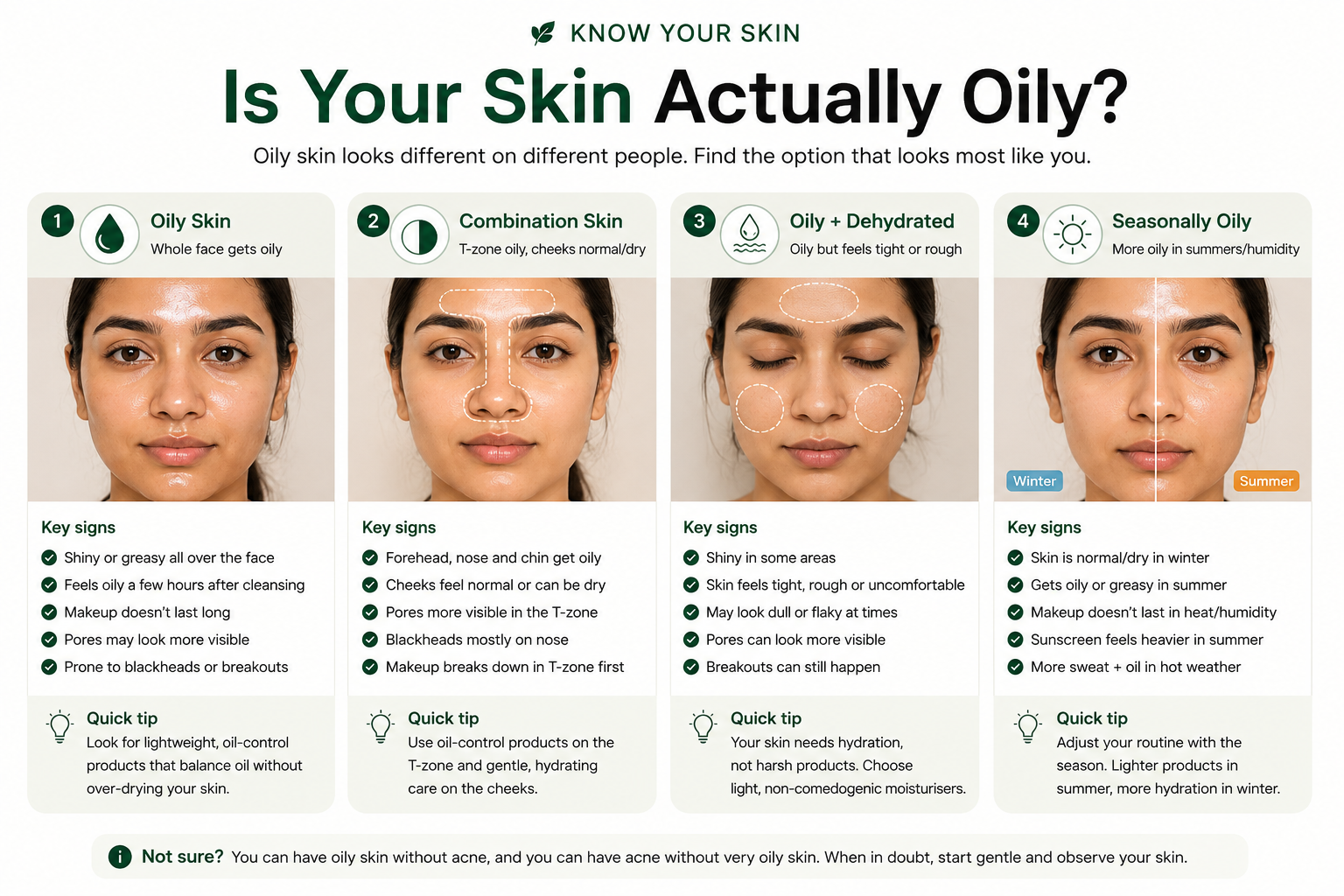
Oily Skin
Most of your face develops noticeable shine or oil during the day.
Combination Skin
Your forehead, nose and chin may be oily while your cheeks remain normal or dry.
Oily + Dehydrated
Your face can look shiny while still feeling tight, rough or uncomfortable.
Seasonally Oily
You may become much oilier in hot or humid weather than you are during winter.
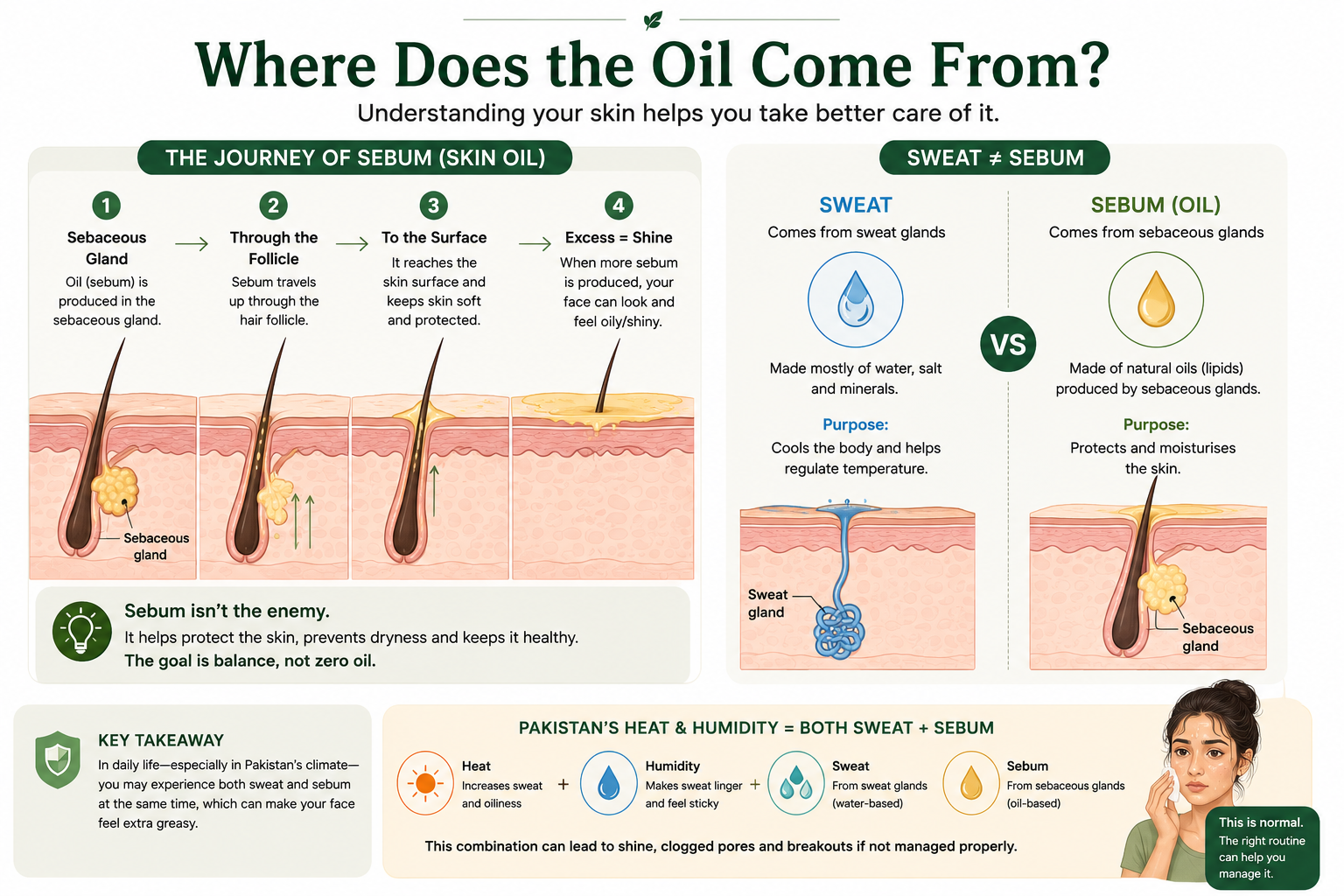
Where does facial oil come from?
Sebaceous glands are associated with hair follicles and release sebum onto the skin surface. When sebaceous activity is high, that oil becomes much more noticeable as facial shine or greasiness.
Why is my face so oily?
There usually isn’t one single cause. Your natural skin biology interacts with hormones, environment and the products you put on your face.
Genetics
Some people naturally have more active sebaceous glands and oilier skin.
Hormones
Androgens can stimulate sebaceous activity, which is one reason oiliness and acne sometimes appear together.
Age
Sebum production changes across life and is often particularly noticeable from adolescence into early adulthood.
Climate
Heat, humidity and sweating can make oiliness feel much more noticeable and change how products behave on your face.
Skincare & Makeup
Heavy layers may make skin feel greasier, while overly harsh routines can leave it irritated and uncomfortable.
Your Individual Skin
Two women using exactly the same products can still have completely different levels of facial oiliness.
What is actually bothering you?
Start with the concern that sounds most like your skin.
Understand sebaceous activity, triggers and why some skin naturally produces more oil.
T-Zone 👃 “My nose and forehead are much oilier than my cheeks.”You may have combination or T-zone-dominant skin rather than uniformly oily skin.
Pores & Black Dots ⚫ “My nose has little black dots and my pores look huge.”Those dots aren’t always blackheads. Learn about pores, comedones and sebaceous filaments.
Oily + Dry 💧 “My skin is oily but somehow still feels dry.”Oil production and skin hydration are different things. Your routine may need balancing.
Sunscreen 🧴 “Sunscreen makes my face greasy.”The sunscreen texture and the number of morning layers can make a big difference.
Makeup 💄 “My makeup looks good in the morning and breaks by afternoon.”Oil, sweat, humidity and multiple layers can affect how your makeup wears.
Breakouts 🔴 “My biggest problem is pimples.”Your main problem may be acne rather than oiliness itself. Go directly to the Acne Hub.
Persistent Oiliness ⚕️ “I’ve tried everything and I’m STILL extremely oily.”Learn when medical treatment may be considered and why stronger isn’t always better.
Your skin at 8 AM may not be your skin at 2 PM.
A routine that feels perfect when you leave home can feel completely different after hours of heat, sweating, humidity, sunscreen and makeup.
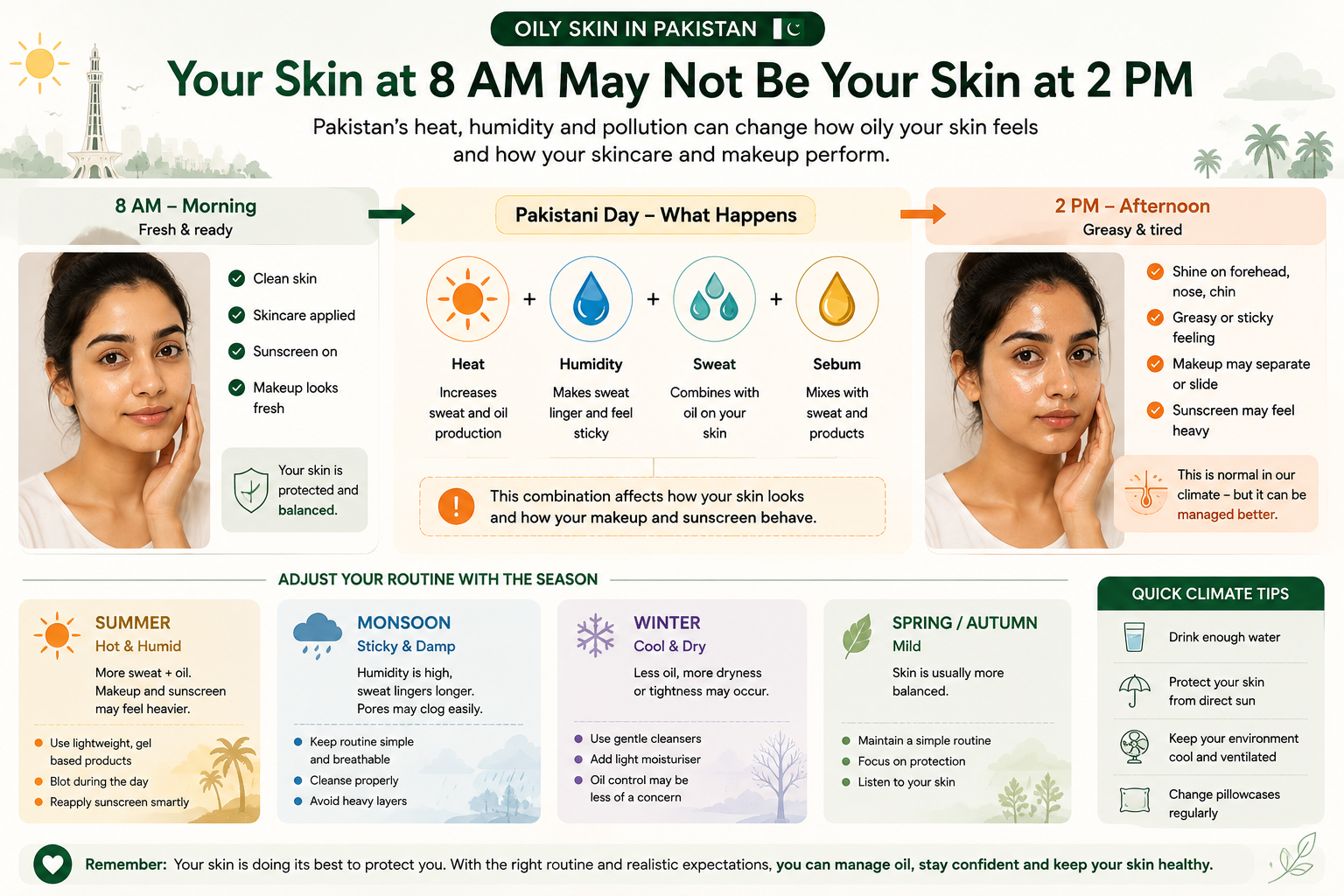
Summer
Sweat and facial oil may become much more noticeable. Heavy layers can also feel uncomfortable.
Humid / Monsoon Weather
Persistent humidity and sweating can make sunscreen and makeup feel heavier or less comfortable.
Winter
The same woman may experience less surface oil or more tightness and need a slightly different routine.
Does everything start breaking down after a few hours?
Don’t solve this by skipping sunscreen. For oily skin, the easier solution is often to simplify your morning layers and choose textures that sit comfortably together.
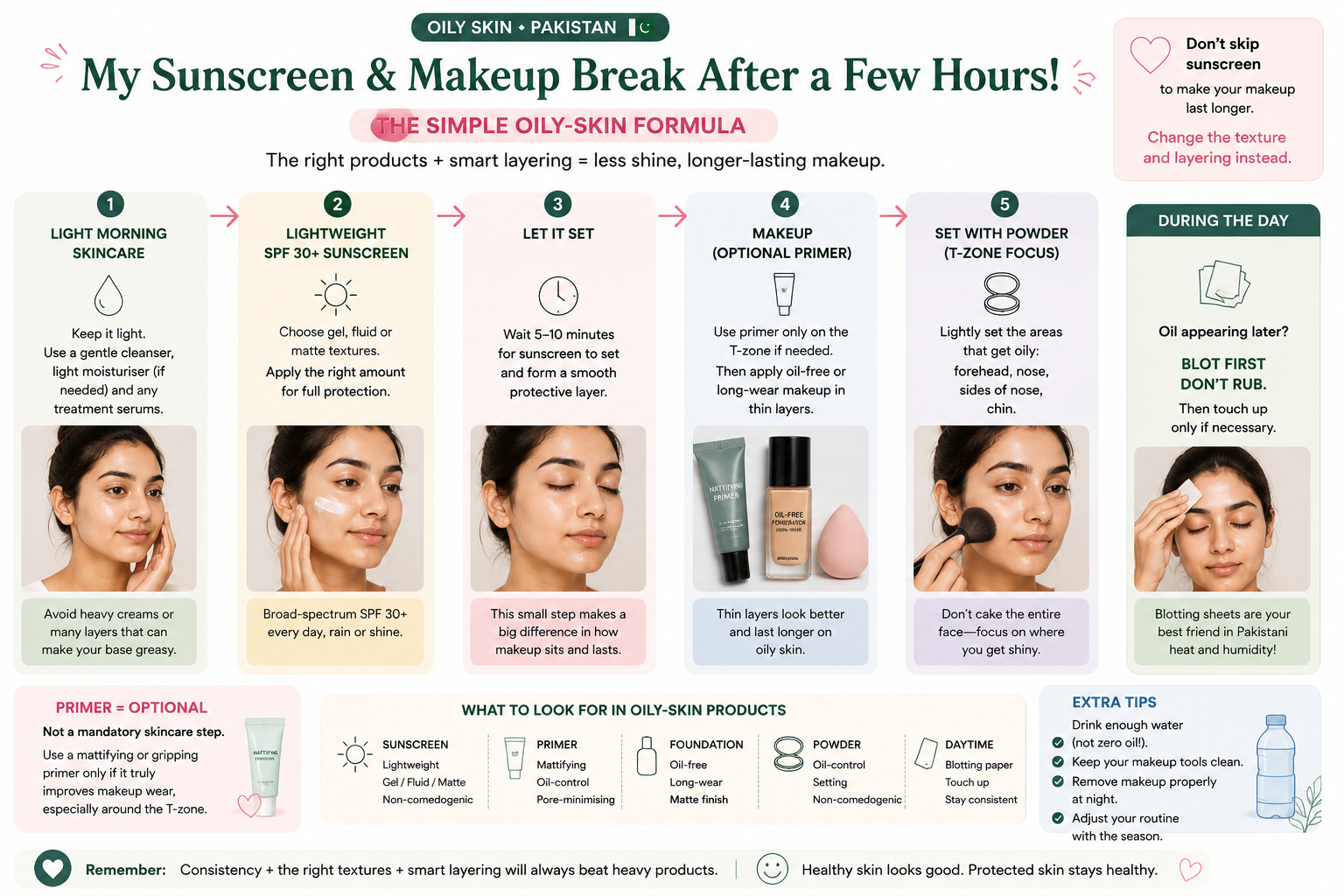
Light skincare → lightweight broad-spectrum sunscreen → let it settle → thin makeup layers → powder mainly where needed → blot oil during the day before repeatedly adding more powder.
What should you look for?
Sunscreen
Lightweight gel, fluid or matte-feeling formulations may be more comfortable for oily skin.
Primer
Optional. If it helps, use a small amount mainly where makeup tends to break down.
Foundation
Thin layers of a suitable oil-free or longer-wear base often perform better than a heavy layer.
During the Day
Blot excess oil rather than rubbing the skin or continually adding thick powder.
Not every dot on your nose is a blackhead.
Oily skin, visible pores, sebaceous filaments and comedones often appear in the same areas—but they are not the same thing.
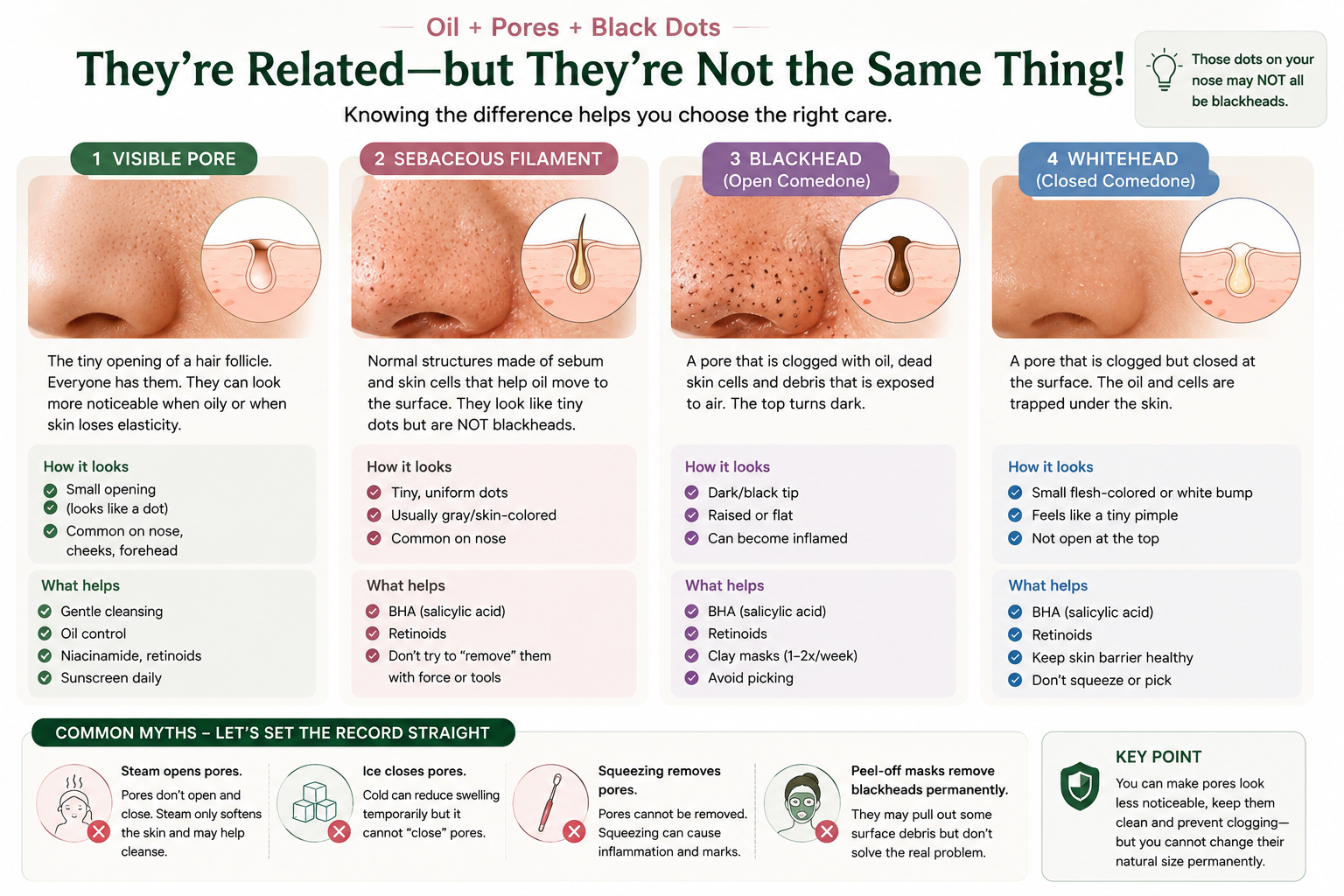
Sebaceous filaments
These are normal structures within oil-producing follicles. They can look like tiny grey, beige or dark dots—especially around the nose. The goal is usually to make them less noticeable, not to permanently “remove” them.
Blackheads
Blackheads are open comedones. Material inside the follicle is exposed to air, giving the surface its darker appearance. The colour is not simply dirt.
What does oily skin actually need?
You don’t need a complicated ten-step routine. Start with the basics and add treatment only when it solves a specific problem.
Multani mitti, rose water, ice, lemon & phitkari?
Some traditional remedies can temporarily change how oily your skin feels. That doesn’t necessarily mean they treat the biological cause of excess sebum.
Multani Mitti
Clay can absorb surface oil temporarily. Using it too aggressively or too often may leave some skin feeling dry or irritated.
Rose Water
It may feel refreshing, but it should not be presented as a proven treatment for excessive sebaceous activity.
Ice
Cooling may temporarily change how skin looks or feels, but ice does not permanently “close” pores or switch off oil glands.
Lemon
Lemon juice can irritate facial skin and isn’t an appropriate treatment for oily skin.
Phitkari / Alum Toner
Homemade concentrated alum mixtures are not something we recommend as routine treatment for facial oiliness.
Eating Oily Food
Facial sebum is not simply cooking oil from your diet travelling to your face. Diet and acne are more complicated than that.
Could your oily skin be hormonal?
Oily skin by itself does not mean you have PCOS. But androgen activity can affect sebaceous glands, so the bigger picture matters.
Consider the hormonal picture if oiliness occurs together with:
PCOS is only one possible context, and symptoms need to be considered together rather than diagnosing yourself from oily skin alone.
Understand PCOS & Hormones →Is acne actually your main problem?
Oily skin and acne often overlap, but they’re not identical. If your main concern is pimples, cysts, jawline acne, back acne or recurring breakouts, use our dedicated Acne section instead.
Go to Acne Hub →Dark marks left after pimples?
Once the breakout settles, post-acne pigmentation can remain for weeks or months—especially in brown skin. That is a pigmentation problem rather than active acne.
Explore Skin Care →“I’m doing everything right and I’m still extremely oily.”
For some people, ordinary skincare improves comfort and appearance but does not substantially change naturally high sebaceous activity.
A dermatologist can help distinguish ordinary oily skin from acne, medication-related changes, irritation or significant hyperseborrhea, and discuss whether any medical treatment is justified.
Explore Medical Treatment →Go deeper into the problem that matters to you.
Start with the foundation, build your routine, understand pores and blackheads, or explore what happens when normal skincare isn’t enough.
Oily Skin Explained
Understand sebaceous glands, hormones, genetics, climate, skin types and why some faces become much oilier than others.
Read the Guide →Best Skincare Routine for Oily Skin in Pakistan
Build a practical morning and night routine using cleanser, moisturiser, sunscreen and targeted ingredients without unnecessary layers.
Build Your Routine →Open Pores, Blackheads & Sebaceous Filaments
Understand those dots on your nose, why sebaceous filaments come back, what “open pores” really means and which treatments actually help.
Understand the Difference →Medical Treatment for Excessively Oily Skin
Learn what dermatology can actually do when oiliness is severe, what reduces sebaceous activity and why stronger treatment requires caution.
Explore Treatment →Your skin concerns don’t always fit into one box.
Acne & Breakouts
Find your acne pattern and explore treatment, hormonal acne, acne marks and scars.
Explore Acne →PCOS & Hormones
If oiliness appears alongside irregular periods, acne or increased facial hair, understand the broader hormonal picture.
Explore PCOS →Skin Care
Explore AuratSehat’s wider guides to acne, pigmentation and everyday skin care.
Explore Skin Care →Still not sure what your skin needs?
If you’re confused about severe oiliness, pores, breakouts, skincare products or whether your symptoms could have a hormonal component, you can ask AuratSehat.
Ask a Doctor for Free →Medical Content & Editorial Team, AuratSehat
Dermatology Reviewer, AuratSehat
This page is intended for general health education and does not replace individual medical assessment, diagnosis or treatment.