
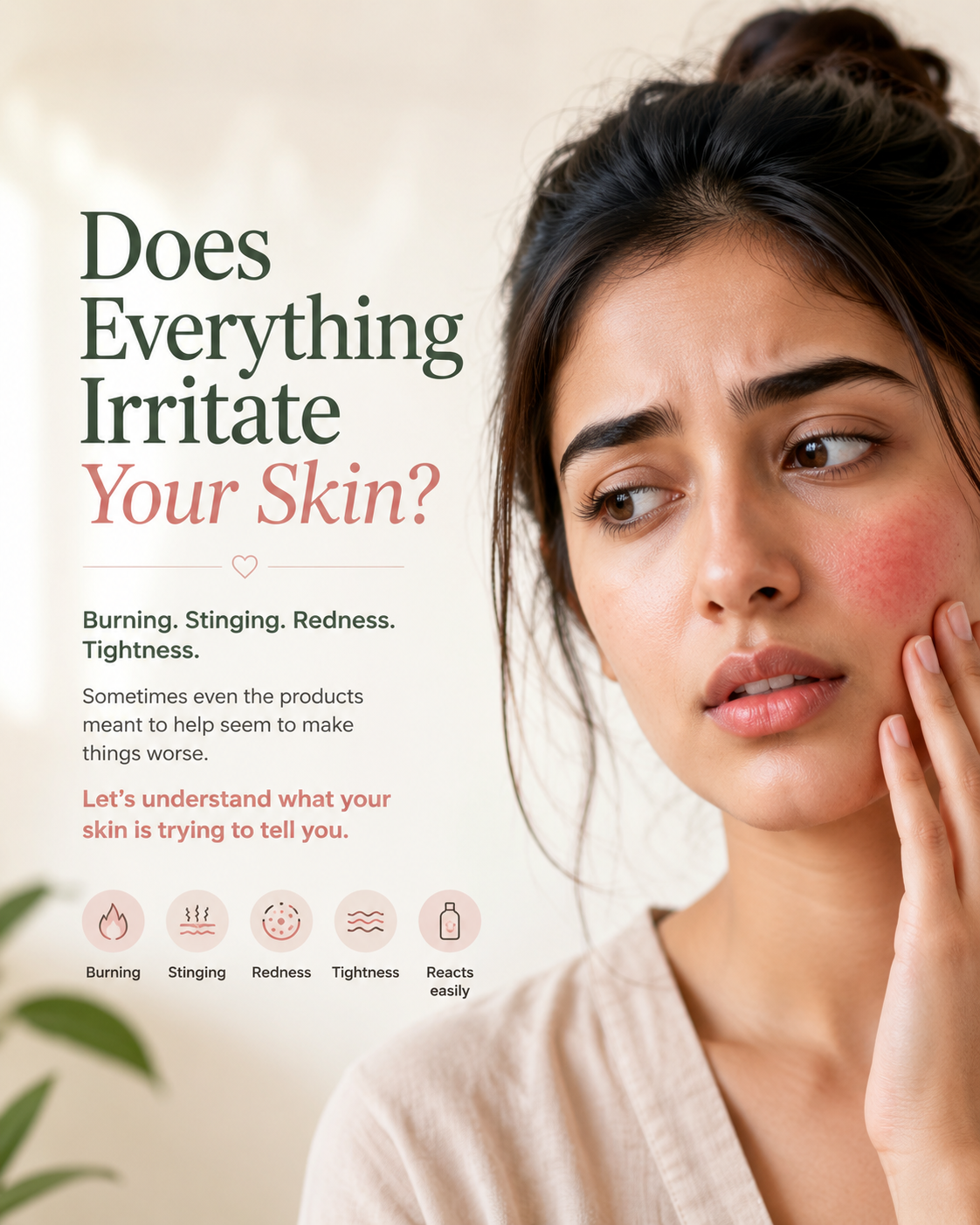
Does Everything Irritate Your Skin?
Burning. Stinging. Redness. Tightness. Sometimes even the products meant to help seem to make things worse. Let’s understand what your skin is trying to tell you.
Sensitive Skin Is Not One Single Problem
Some people naturally have skin that reacts easily. In others, irritation begins after overusing acids, retinoids, scrubs or new skincare products. Sometimes eczema, rosacea, allergy or another skin condition may be responsible.
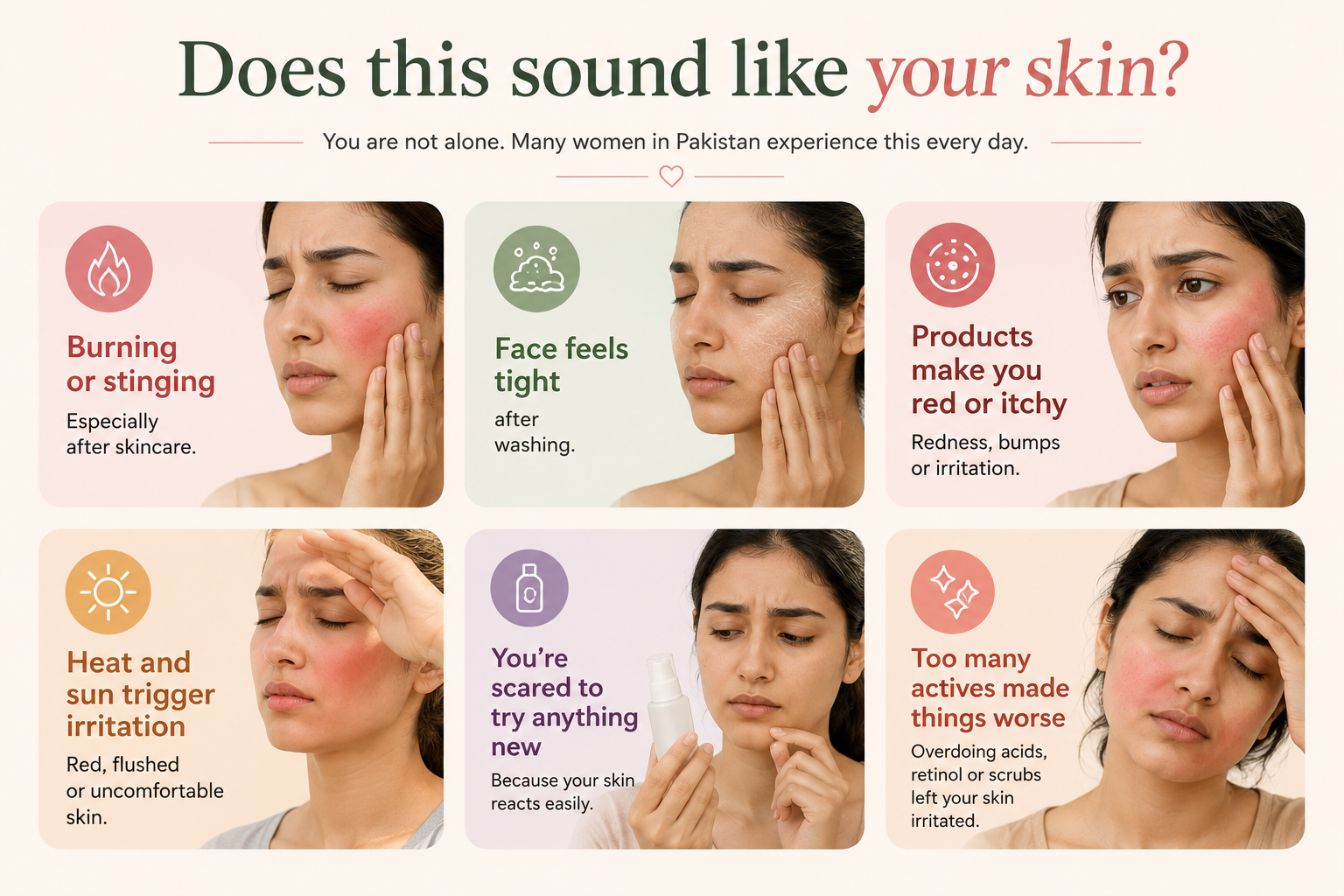
Does This Sound Like Your Skin?
You do not need every symptom. Even one or two recurring problems can be a sign that your skin needs a gentler approach.
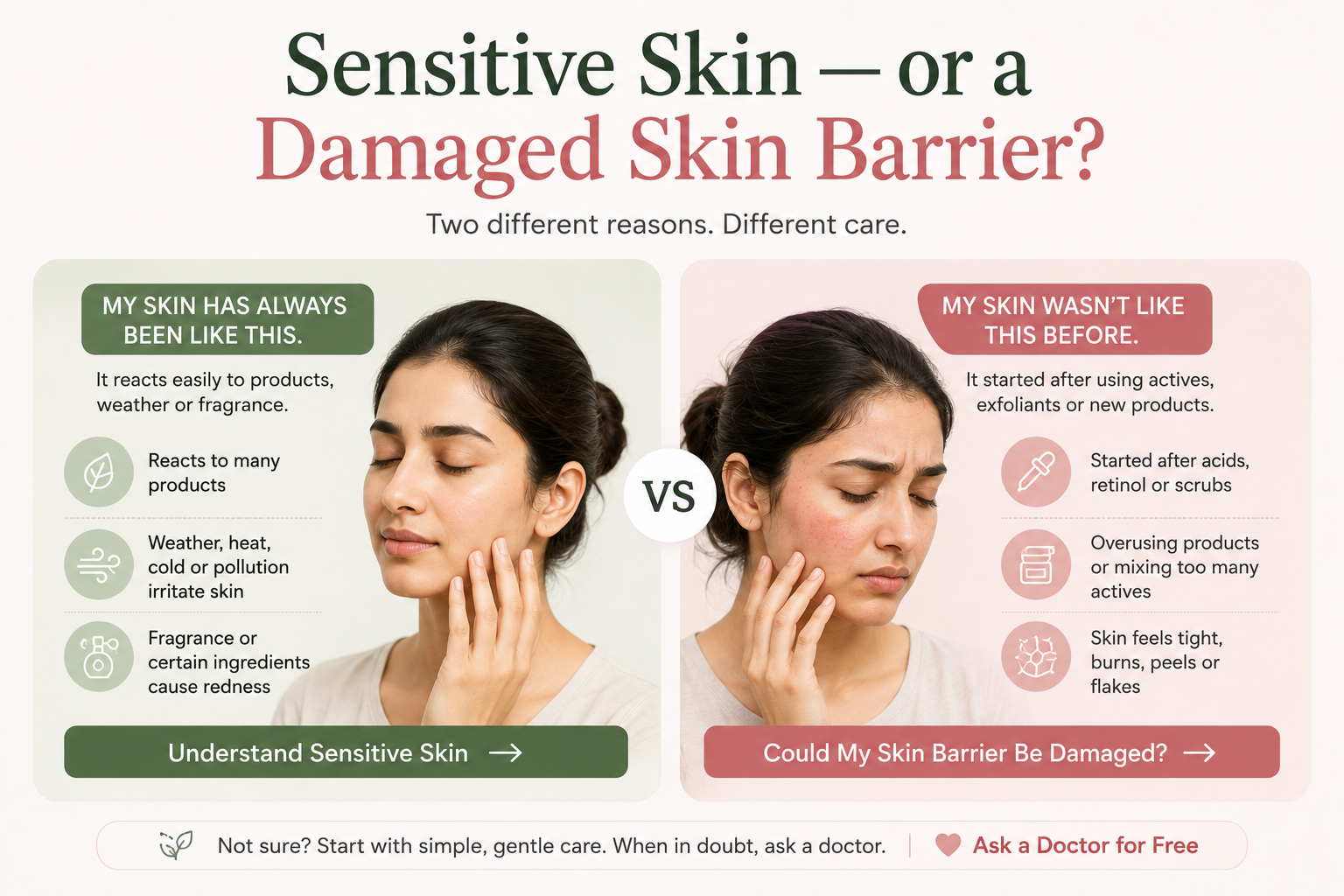
Sensitive Skin — or a Damaged Skin Barrier?
They can feel very similar, but how the problem started can give you an important clue.
Choose What Sounds Most Like Your Skin
Sensitive Skin V1 is built around three simple paths: understand your skin, build a gentle routine, or repair an overwhelmed skin barrier.
Sensitive Skin Explained
Why does your face burn, sting, flush or react so easily? Learn what sensitive skin actually means, common triggers and when another skin condition may be involved.
Understand Sensitive Skin →Best Skincare Routine for Sensitive Skin
Build a simple routine around gentle cleansing, moisturising and sun protection — without turning your bathroom shelf into a chemistry experiment.
Build a Gentle Routine →Damaged Skin Barrier
Did your skin suddenly become tight, flaky, irritated or painful after acids, retinol, scrubs or too many products? Your skin barrier may need time to recover.
Check Your Skin Barrier →Your Skin Doesn’t Need 10 More Products.
Sometimes it needs fewer.
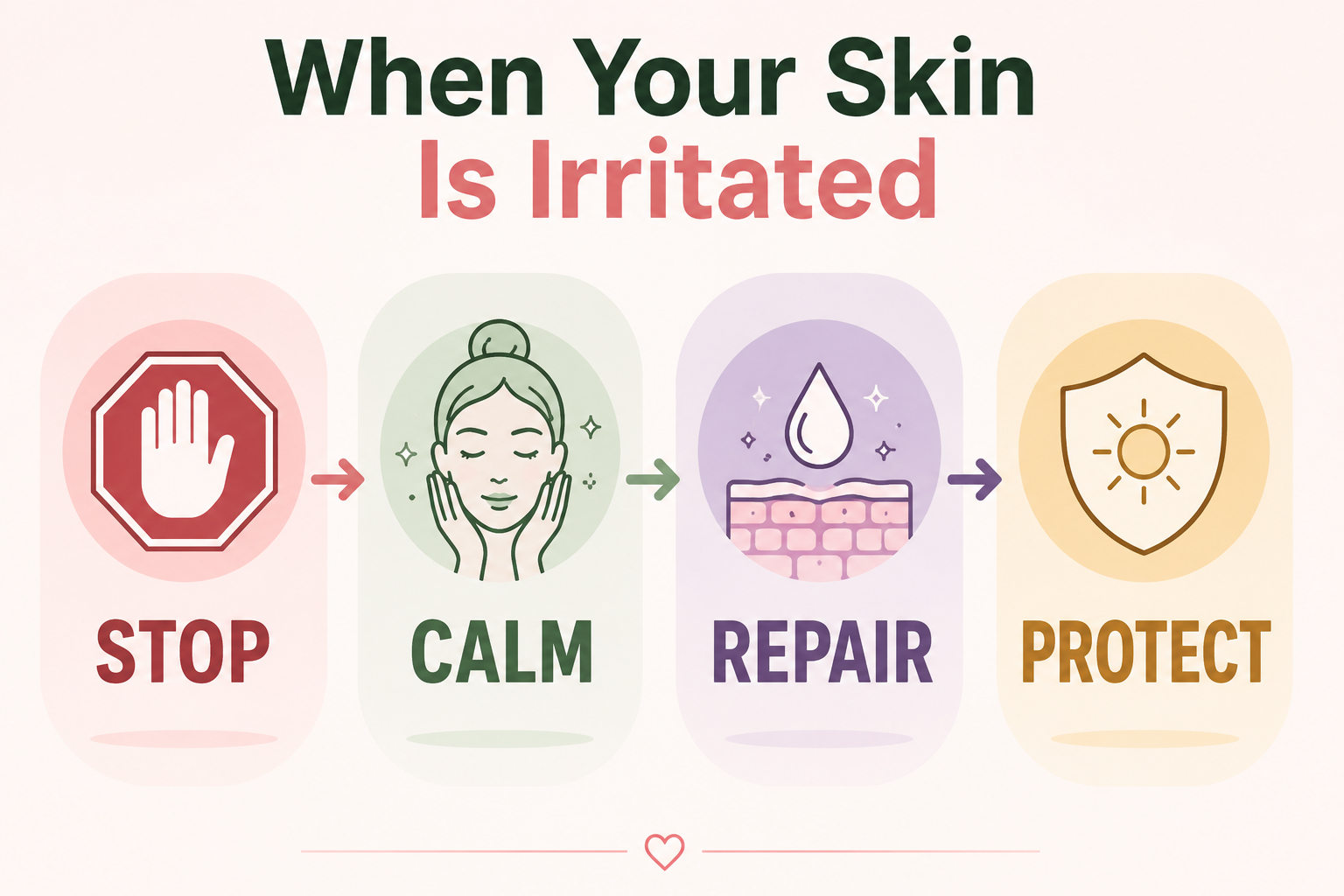
Stop → Calm → Repair → Protect
When your skin is irritated, adding more treatments is not always the answer. Simplifying your routine may be the first step.
A Few Things Sensitive Skin Needs You to Know
Not Every Skin Problem Is Simply “Sensitive Skin”
Sometimes your main concern belongs in another AuratSehat skin pathway.
Visit the Acne Hub.
Explore Oily Skin.
Explore Pigmentation.
A dermatologist may need to assess for eczema or another condition.
Consider medical assessment for rosacea or another inflammatory skin condition.
Seek medical care rather than continuing to experiment with skincare.
Still Not Sure What Your Skin Is Reacting To?
Tell us what you are experiencing and what products you are using. AuratSehat can help you decide what may need a simpler routine and what should be assessed by a doctor.
Ask a Doctor for Free