
Why Does My Skin React to Everything?
Does your face burn after applying skincare? Does a new product leave your skin itchy, tight or red — while other people seem to use the same thing without a problem? You may describe your skin as “sensitive”, but sensitive skin can mean more than one thing.
What Does “Sensitive Skin” Actually Mean?
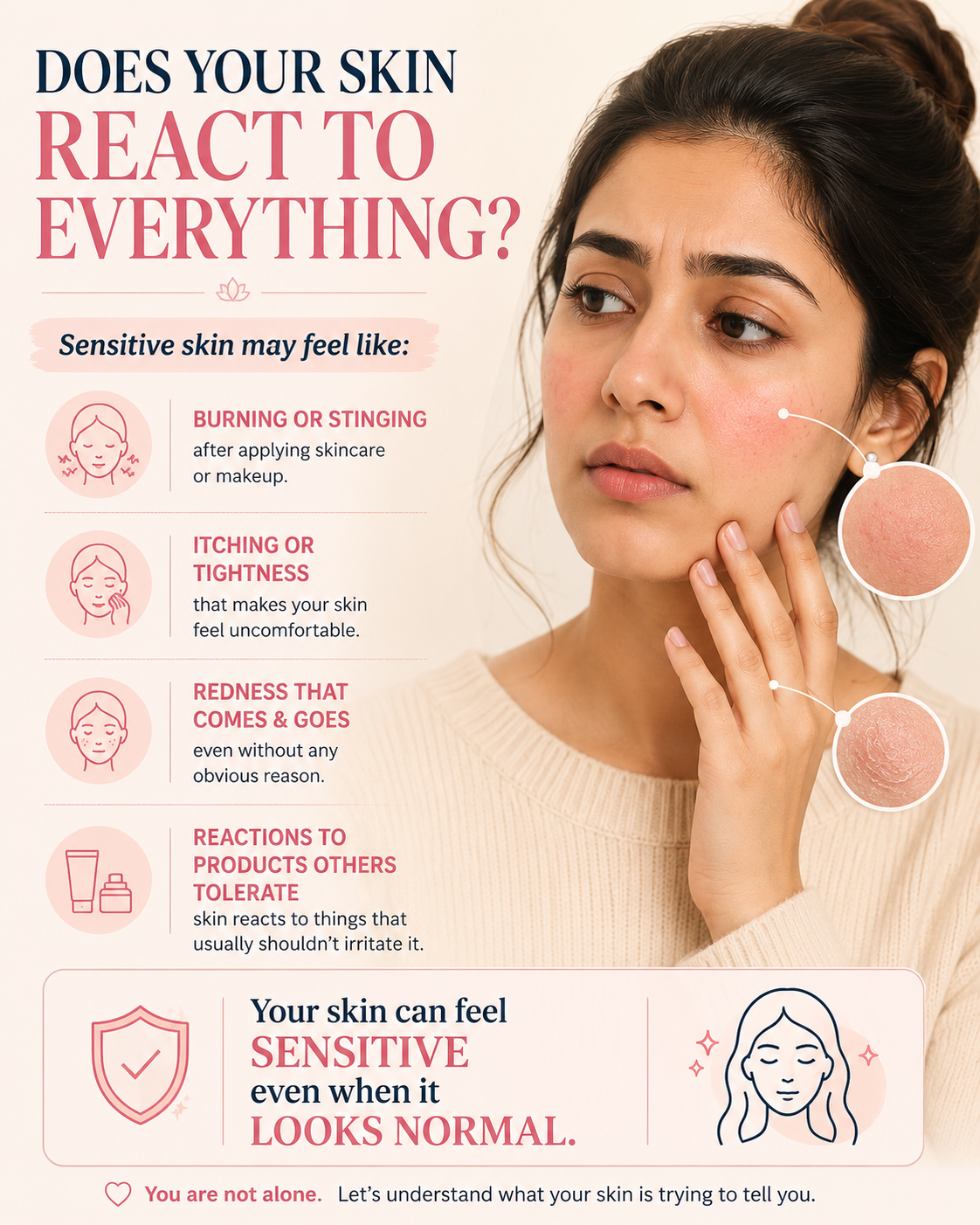
Sensitive skin is best understood as a tendency for the skin to react more strongly than expected to things that would normally be well tolerated. These reactions may happen after skincare products, environmental changes, heat, cold, rubbing or other everyday triggers.
The most typical sensations include:
- Burning after applying a product
- Stinging or prickling sensations
- Itching or uncomfortable tightness
- Tingling or unusual skin discomfort
- Redness that may come and go
Visible redness is not required. Some people experience significant burning or stinging despite having very little to see on the surface.
Why Can Apparently Normal Skin Burn or Sting?
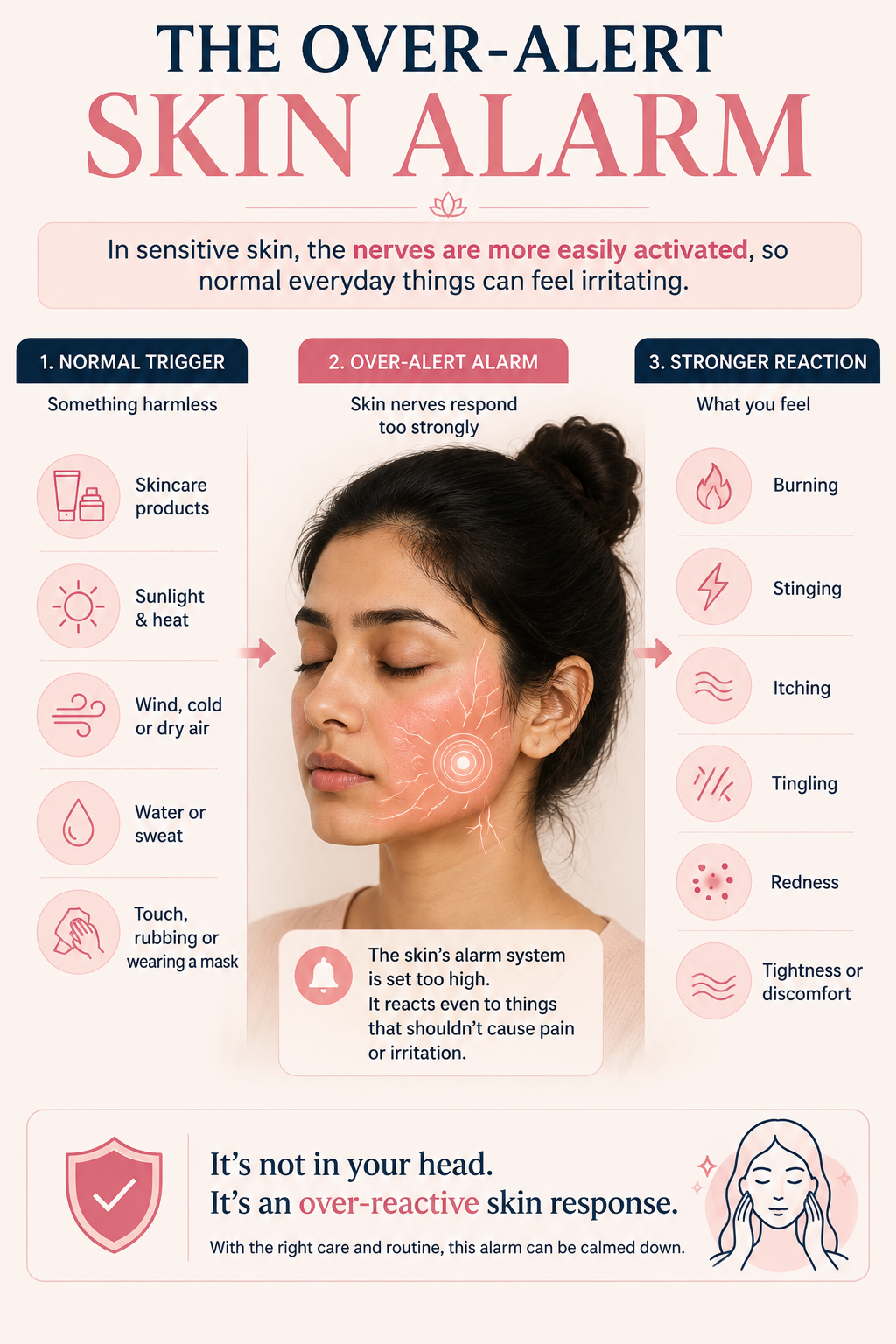
Sensitive skin appears to involve, at least partly, an over-responsive sensory system within the skin. The tiny nerves that help detect heat, chemicals, irritation and discomfort may become activated more easily in some people.
An easy way to imagine this is to think of your skin as having an alarm system.
Everyday trigger
A skincare product, warm weather, wind, water or rubbing touches the skin.
The alarm reacts quickly
Sensitive skin may perceive that stimulus more strongly than expected.
You feel discomfort
Burning, stinging, itching, tingling or tightness can follow.
Researchers are still studying exactly why this happens. Altered nerve signalling, skin-barrier differences and individual susceptibility may all contribute, and there is not one single explanation that applies to everyone.
Does Sensitive Skin Always Mean Dry Skin?
No. Sensitive skin and dry skin are not the same thing.
A person may have:
Dry + Sensitive
Skin may feel tight, uncomfortable and easily irritated.
Oily + Sensitive
The face may become greasy while still burning or reacting to products.
Acne-Prone + Sensitive
Acne treatments may be useful but can also cause irritation if introduced too aggressively.
This matters because automatically treating every sensitive face as extremely dry can lead to routines that feel too heavy, greasy or unsuitable for acne-prone skin.
Is Sensitive Skin the Same as a Damaged Skin Barrier?
No — but they can overlap.
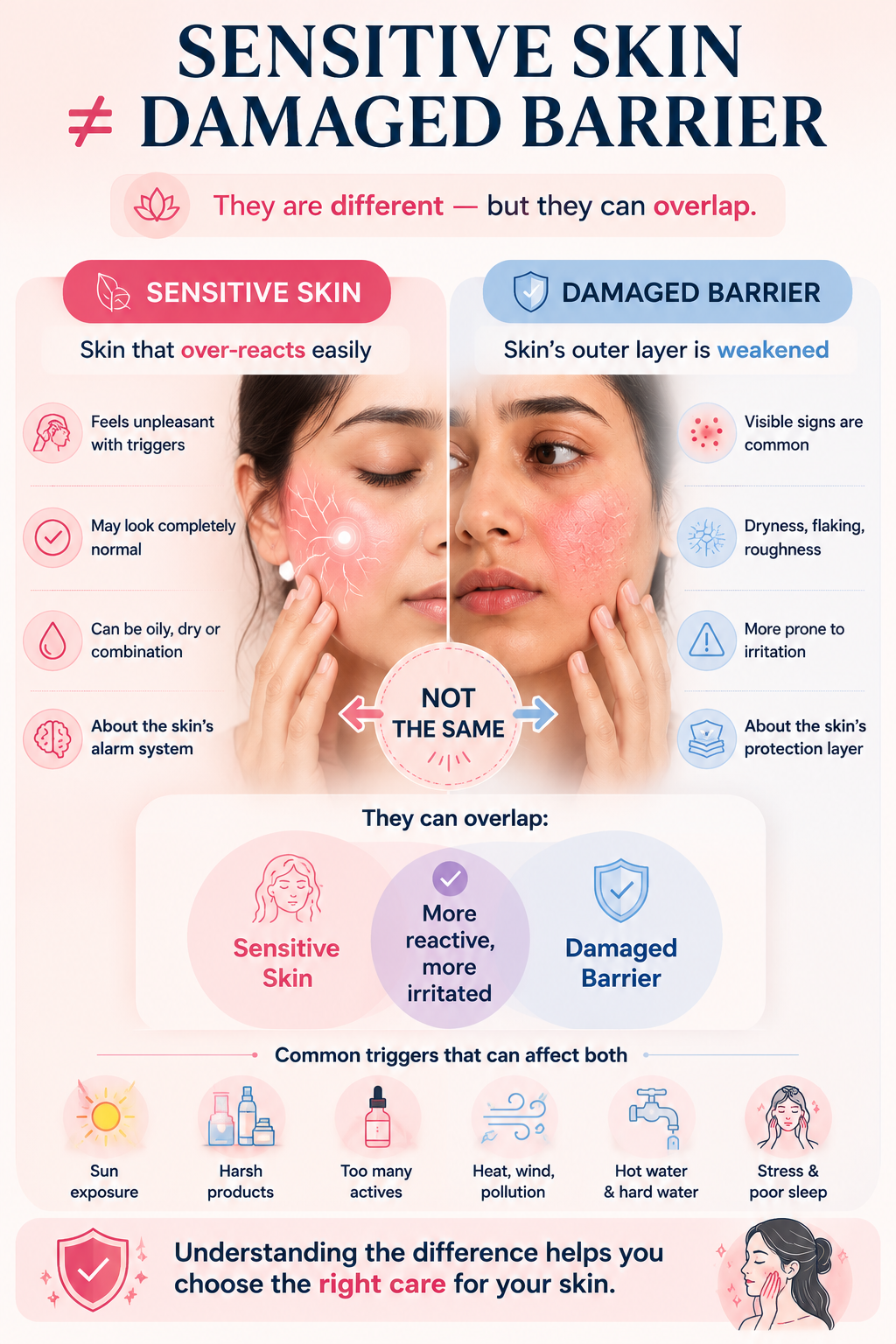
Sensitive skin describes a tendency to react excessively. A damaged skin barrier means the skin’s outer protective layer is not functioning as well as it should.
Sensitive Skin
The skin may burn, sting, itch or feel uncomfortable in response to triggers that would normally be tolerated.
The skin can sometimes look completely normal.
Damaged Skin Barrier
The outer protective layer becomes disrupted, which can increase water loss and make the skin more vulnerable to irritation.
Dryness, roughness, flaking or increased product sensitivity may appear.
A weakened barrier can make sensitive-skin symptoms worse, but “sensitive skin” should not simply be translated as “damaged barrier.”
Why Has My Skin Suddenly Become Sensitive?
This is an important question.
Some people have had reactive skin for years. Others previously tolerated almost everything and then suddenly find that moisturisers, sunscreen, makeup or even water begin to sting.
If your skin has suddenly changed, do not automatically assume that you have developed a lifelong “sensitive skin type.”
Sudden sensitivity can occur after:
- Using too many exfoliating acids at the same time
- Starting retinoids too quickly
- Frequent scrubbing or physical exfoliation
- Repeated harsh cleansing
- Using irritating or fragranced products
- Developing irritant or allergic contact dermatitis
- A flare of an underlying skin condition
“Has my skin always behaved this way, or did something recently change?”
That answer can help distinguish long-standing sensitivity from a new episode of irritation or barrier disruption.
Common Sensitive-Skin Triggers
Triggers vary from person to person. Something that causes intense stinging in one person may cause no problem at all in another.
Skincare & Cosmetics
Fragrances, strong cleansers, repeated exfoliation, acids, retinoids and certain cosmetic ingredients can provoke symptoms in susceptible skin.
Heat & Sweating
Hot weather and sweating can worsen burning, flushing or discomfort in some people.
Cold, Wind & Dry Conditions
Environmental dryness can increase tightness and irritation, particularly when the skin barrier is already compromised.
Washing & Friction
Hot water, frequent cleansing, rubbing and other physical irritation may aggravate reactive skin.
Sun exposure may also worsen redness and discomfort in certain people and can aggravate conditions such as rosacea.
Sensitive Skin, Irritated Skin or Allergy?
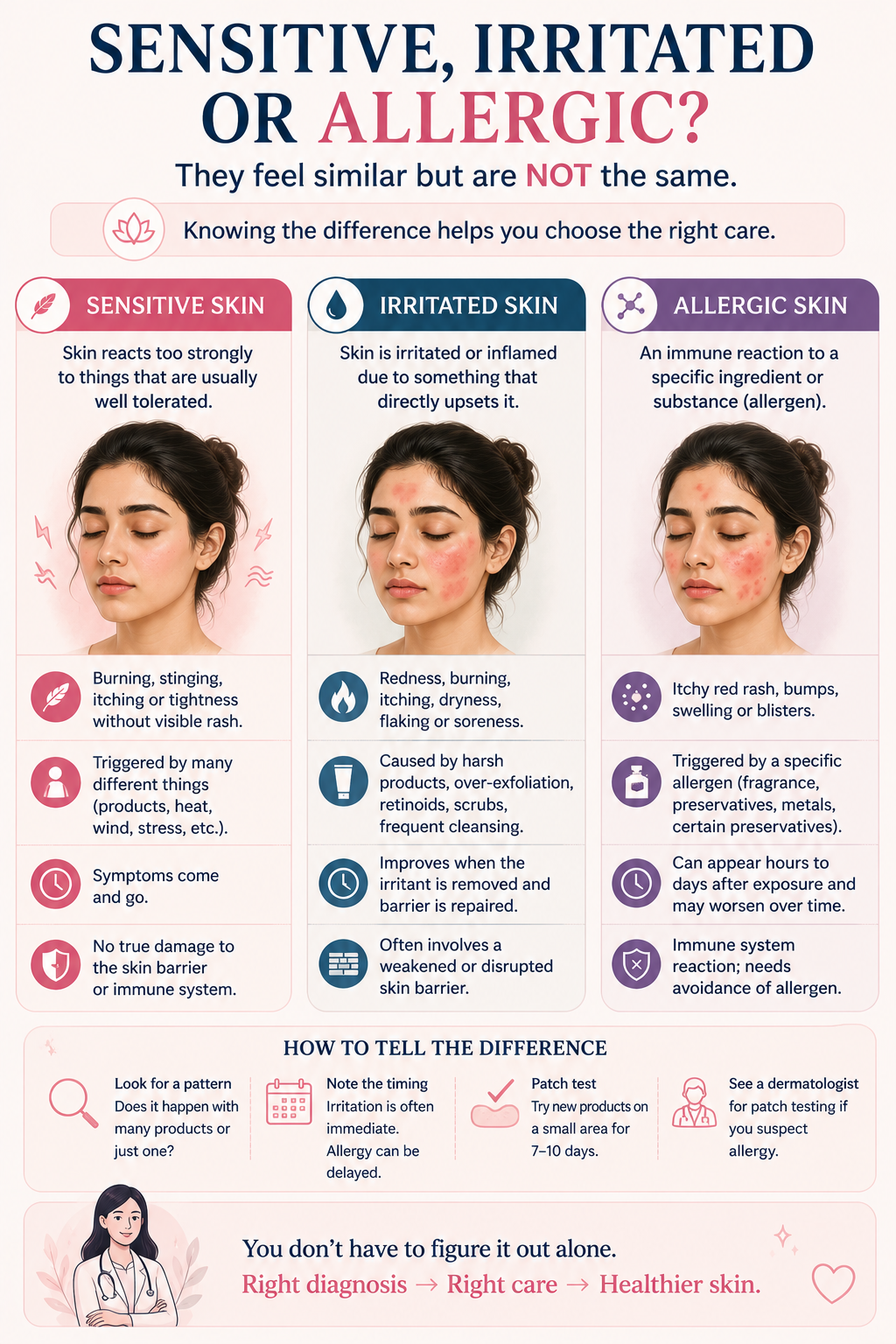
These terms are often used as if they mean the same thing, but medically they describe different problems.
Irritation is much more common than many people realise. True allergic contact dermatitis may require assessment by a dermatologist and, in some cases, formal patch testing.
How Should I Test a New Skincare Product?
If your skin reacts easily, introducing one new product at a time makes it much easier to identify what your skin does and does not tolerate.
The American Academy of Dermatology suggests applying a new product to a small test area twice daily for about 7–10 days, using it in a similar way to how you plan to use it normally.
Watch for:
- Redness
- Itching
- Swelling
- Burning or significant discomfort
- New rash or bumps
Dermatologists use formal patch testing when investigating allergic contact dermatitis. It is designed to identify specific delayed skin allergies.
Sometimes It Is More Than “Sensitive Skin”
Sensitive skin should not become a label that prevents you from recognising an actual skin condition.
Repeated facial burning, redness or irritation can sometimes be associated with conditions such as:
Rosacea
Persistent facial redness, flushing, burning, visible small blood vessels or acne-like bumps may occur.
Eczema
Dry, itchy, inflamed or repeatedly irritated patches may suggest atopic dermatitis or another form of eczema.
Irritant Contact Dermatitis
Often follows exposure to products or habits that repeatedly irritate the skin.
Allergic Contact Dermatitis
Can develop after exposure to an allergen such as certain fragrances, preservatives or other ingredients.
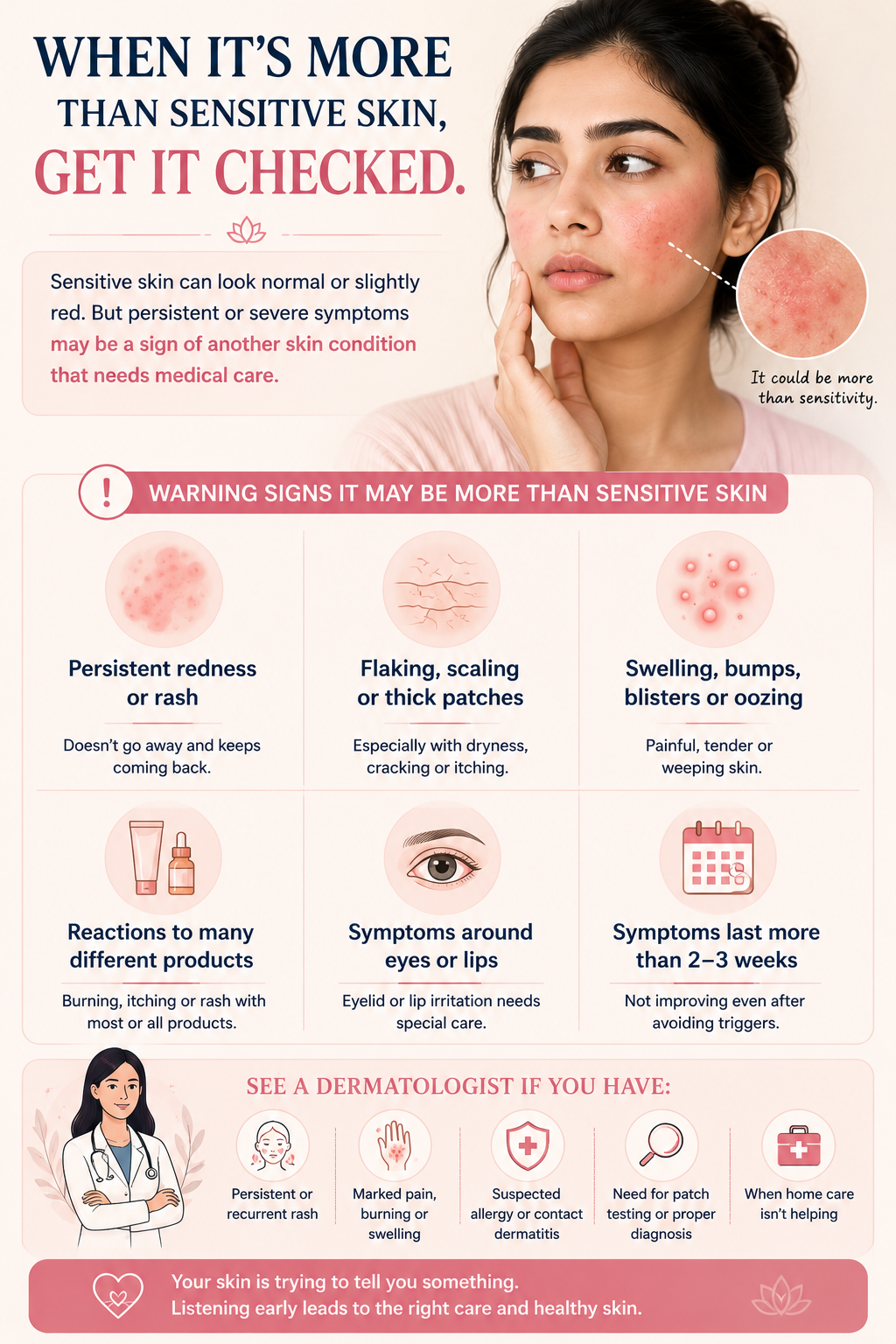
When Should You See a Dermatologist?
Occasional mild stinging does not always require medical treatment. But persistent, worsening or unusual symptoms deserve proper evaluation.
Consider seeing a dermatologist if you develop:
- A rash that repeatedly returns or does not settle
- Persistent redness or significant facial flushing
- Marked pain, burning or tenderness
- Swelling of the skin, lips or eyelids
- Blistering, oozing or crusting
- Significant scaling, cracking or thickened patches
- Reactions to many different skincare products
- Possible allergy or contact dermatitis
- Symptoms that continue despite removing likely irritants
A dermatologist may be able to identify whether you truly have sensitive skin or whether rosacea, eczema, contact dermatitis or another condition is responsible.
So What Should You Do If Your Skin Is Sensitive?
The goal is not to build a ten-step routine or search for a magical “sensitive skin” ingredient. Start by reducing unnecessary irritation and understanding what your skin actually needs.
- Keep your skincare routine simple
- Introduce new products gradually
- Avoid repeatedly changing several products at once
- Do not over-scrub or over-exfoliate your skin
- Choose products based on your actual skin type as well as sensitivity
- Pay attention to patterns — what triggers your symptoms and what does not
If your skin has suddenly become reactive after excessive exfoliation, retinoids or other irritating products, your next step may be to focus specifically on restoring the skin barrier.
What Should You Read Next?
Still Not Sure Why Your Skin Is Reacting?
If your symptoms are persistent, unusual or difficult to understand, a healthcare professional can help you decide what to do next.
Ask a Doctor for Free