
Sun Tan & Sun-Damaged Skin — How to Get Your Natural Skin Tone Back Safely
Has your face, hands or arms become darker after repeated sun exposure? Learn how to tell whether it is really a tan, how long it may take to fade, and what actually helps without damaging your skin.
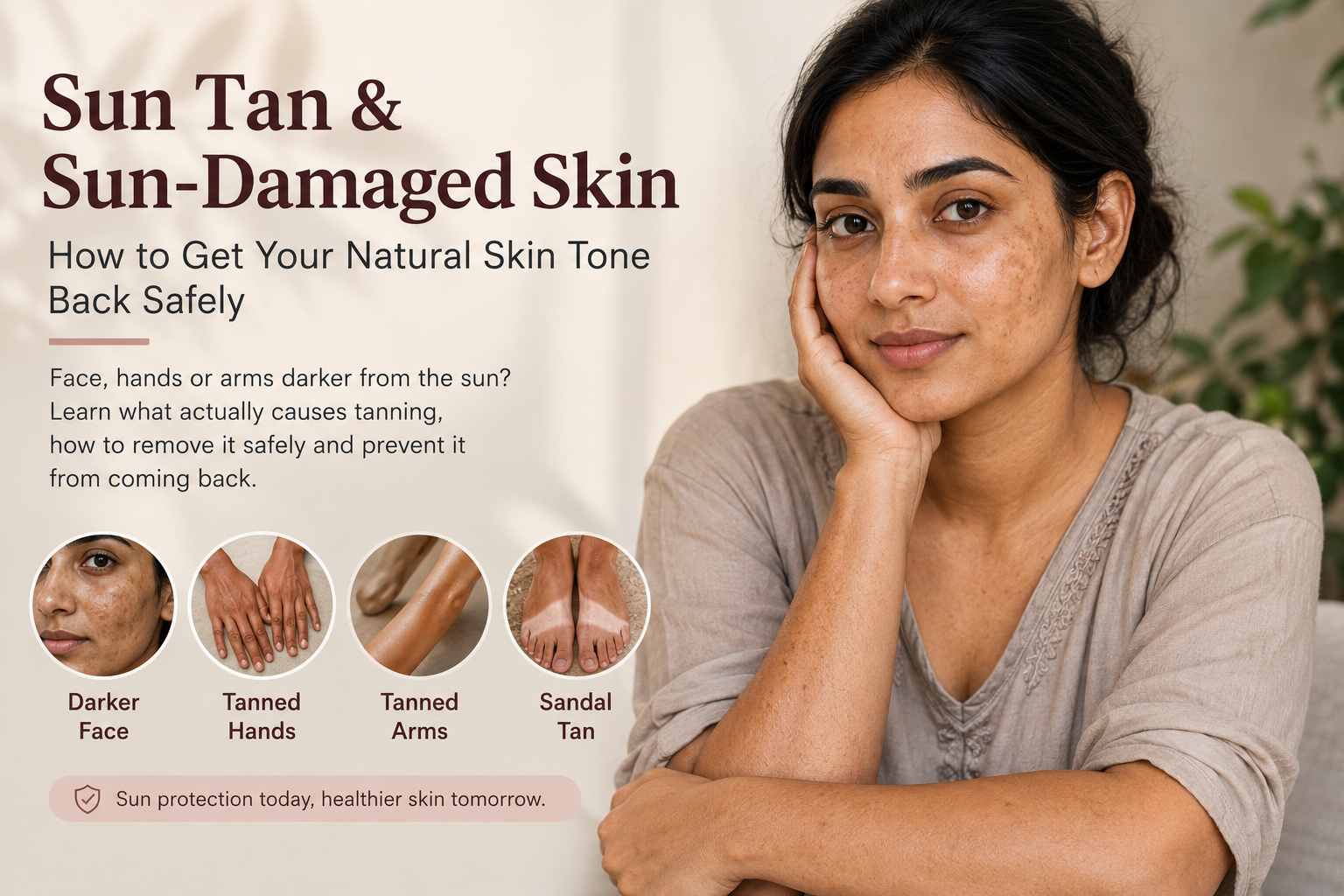
Can I Get My Natural Skin Tone Back After Tanning?
Often, yes. If the darkening is mainly a recent sun tan, your skin can gradually move back toward its usual colour once repeated sun exposure is controlled.
But pigmentation that has stayed for months, occurs in patches, follows acne or irritation, or feels thick and velvety may not be a simple tan. Treating every form of pigmentation as “sun tan” is one reason de-tanning routines often fail.
What Actually Happens When Your Skin Tans?
Your skin contains a pigment called melanin. When skin is exposed to ultraviolet radiation from sunlight, pigment-producing cells increase their activity. The exposed skin can then become darker.
This darker colour is commonly called a tan. It may look harmless, especially on brown skin, but tanning is part of the skin’s response to ultraviolet injury. Repeated UV exposure also contributes to premature skin ageing and increases the long-term risk of skin cancer.
In Pakistani and other brown skin tones, sun exposure may be noticed more as darkening, uneven colour or worsening pigmentation than as an obvious bright-red burn.
You do not have to burn for the sun to affect your skin. Tanning itself reflects UV-related skin injury.
Is It Really a Sun Tan?
Before buying a scrub, acid or “de-tan” cream, look at the pattern. Different causes of pigmentation can look surprisingly similar. Our Hyperpigmentation & Uneven Skin Tone guide explains the broader causes of skin darkening in more detail.
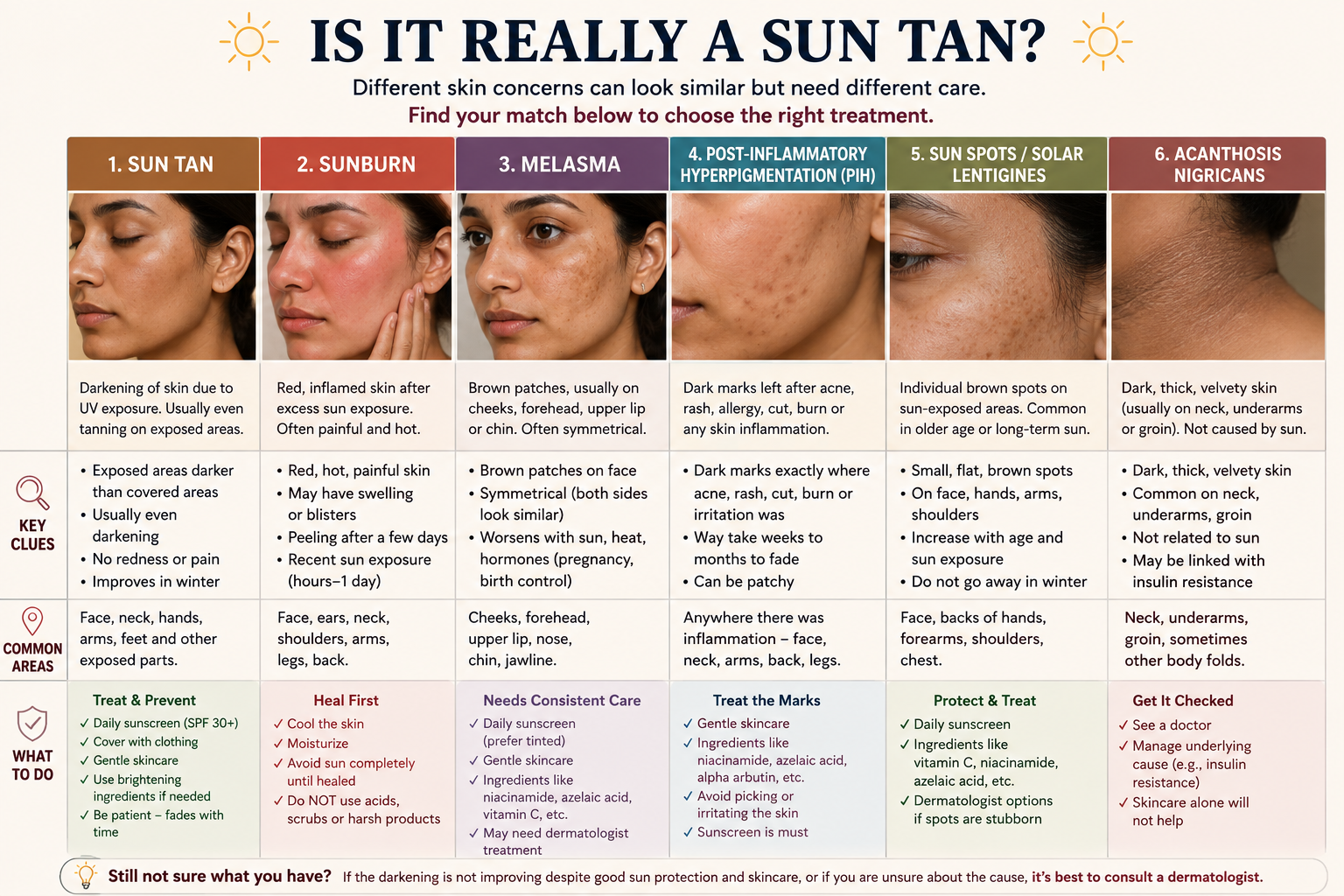
| What you notice | More likely explanation |
|---|---|
| Face, arms, hands or feet are darker mainly where they are exposed | Sun tan |
| Skin is hot, painful, tender, red or later peels | Sunburn |
| Brown or grey-brown patches on both cheeks, forehead or upper lip | Melasma |
| Dark marks where acne, rash, waxing, threading, burns or irritation occurred | Post-inflammatory hyperpigmentation (PIH) |
| Separate persistent brown spots, especially after years of sun exposure | Dark spots / sun spots |
| Neck or folds look darker and also feel thicker or velvety | Acanthosis nigricans |
A useful clue for a simple tan: there is often a visible difference between covered and uncovered skin — for example, your forearm may be darker than the skin beneath your sleeve, or your feet may show sandal lines.
Why Am I Still Getting Darker Even Though I Use Sunscreen?
Saying “I use sunscreen” does not always mean the skin is receiving enough protection. Small problems in how sunscreen is used can make a large difference.
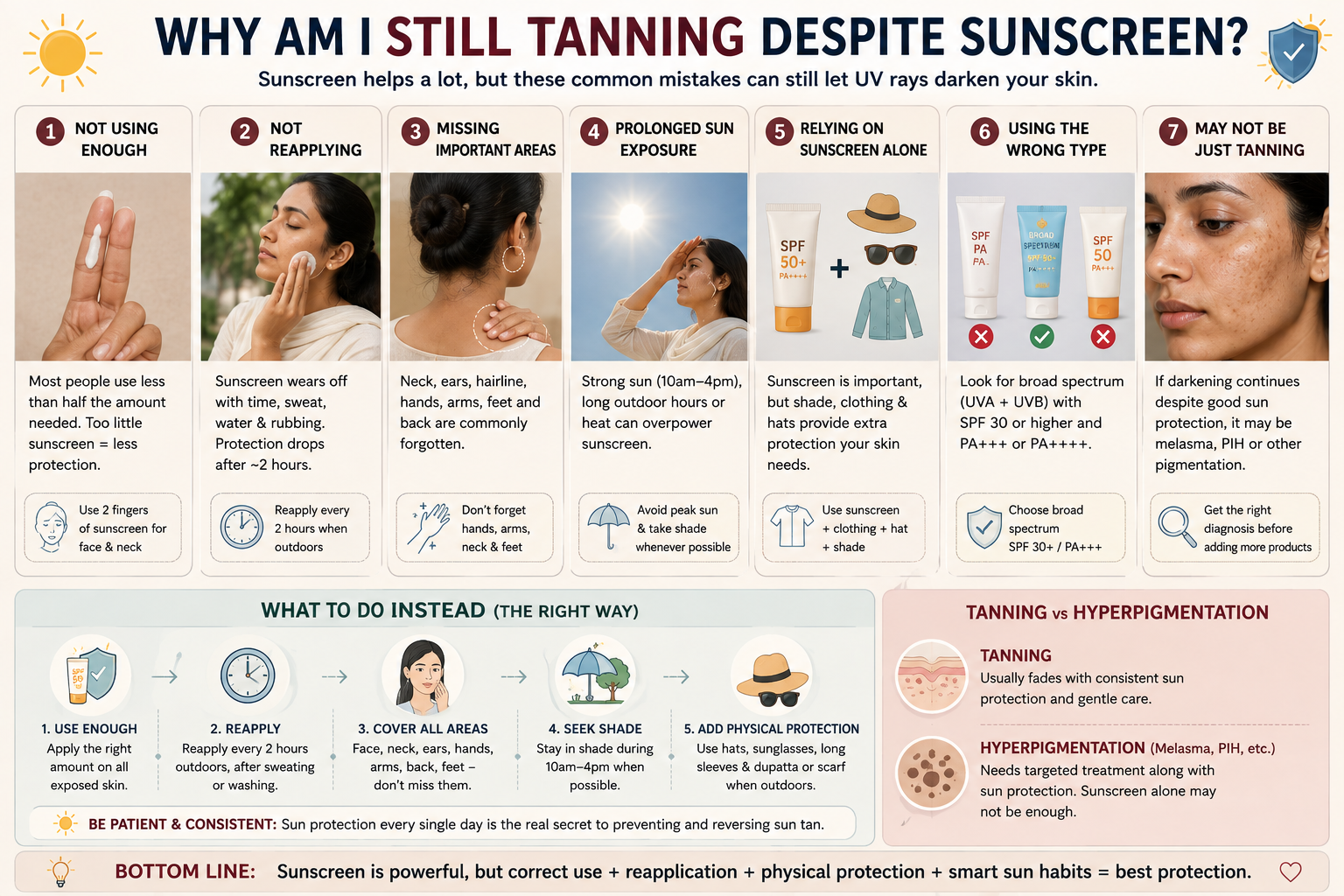
A very thin layer may not provide the protection shown on the label.
Ears, neck, hands, hairline, arms and feet are easily forgotten.
Sunscreen needs reapplication during prolonged outdoor exposure and after swimming or heavy sweating.
Shade, clothing and reducing unnecessary intense exposure still matter.
Melasma or PIH can remain dark even after you start protecting your skin.
Visible light can contribute to hyperpigmentation, particularly in darker skin tones.
If pigmentation is your main concern: choose a broad-spectrum SPF 30 or higher. A tinted sunscreen containing iron oxides can provide additional visible-light protection, which may be particularly useful when you have melasma or pigmentation-prone brown skin.
Sun Tan or Sunburn?
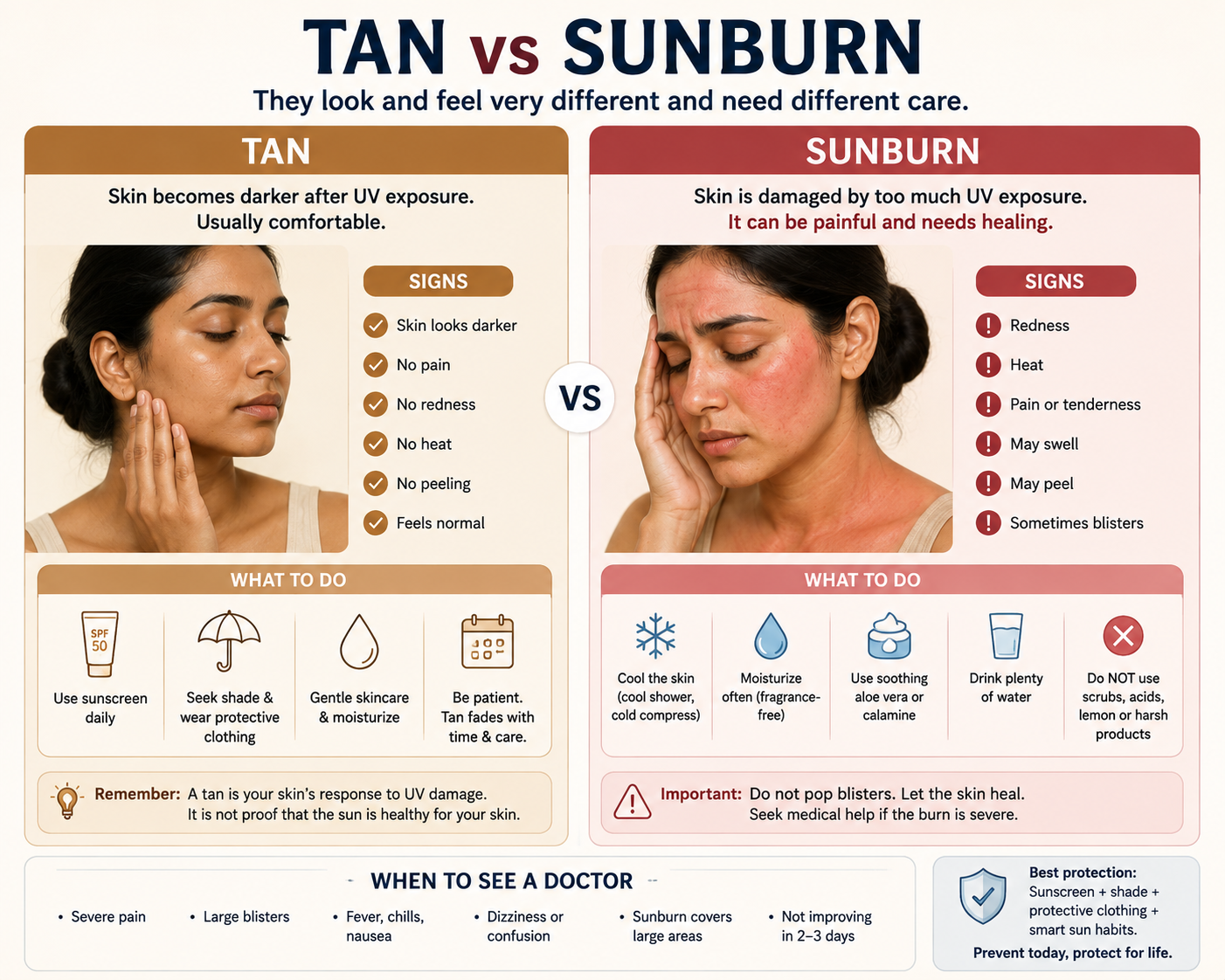
A tan usually means the skin has become darker without major pain. A sunburn is an acute injury and may cause heat, tenderness, redness, swelling, discomfort and later peeling.
If your skin is freshly sunburned, do not try to “remove the tan” with scrubs, glycolic acid, peels, lemon or other harsh products. Let the skin recover first. Irritating injured skin can make inflammation and pigmentation worse.
Seek medical care for a severe burn, especially if there is extensive blistering, marked swelling, fever, vomiting, dizziness, dehydration or significant illness.
How Long Does a Sun Tan Take to Fade?
There is no fixed number of days. Your skin gradually renews itself, but the speed at which visible darkening improves depends on the pigment and whether you continue receiving new sun exposure.
A mild, recent tan may become noticeably lighter over several weeks. More persistent pigmentation can take months.
If you are still tanning every day while commuting, walking outdoors or repeatedly missing sunscreen on exposed areas, the skin is continually receiving new exposure.
Do not judge a pigmentation treatment after three or four days. Trying stronger and stronger products because you want rapid results can cause irritation — and irritation itself can leave darker marks on brown skin.
Stop Adding New Sun Damage
No brightening serum can reliably outrun repeated sun exposure. If you want an acquired tan or pigmentation to fade, protection comes first.
- Use a broad-spectrum sunscreen with SPF 30 or higher on exposed skin.
- Apply it generously and evenly rather than using a tiny amount.
- During prolonged outdoor exposure, reapply approximately every two hours and after swimming or heavy sweating.
- Do not forget the ears, neck, hands, arms and feet.
- Use shade, clothing, sunglasses and a hat or umbrella when practical.
If melasma is your main concern, read our dedicated Melasma guide. Melasma behaves differently from a simple tan and usually needs a more targeted strategy.
What Can You Use to Help the Tan Fade?
You do not need a ten-product routine. For many people, consistent sun protection plus one well-tolerated pigmentation ingredient is more useful than repeatedly changing products.
Niacinamide
A relatively gentle option that can support the skin barrier while helping with uneven-looking pigmentation. It is often a reasonable starting ingredient for sensitive or beginner routines.
Vitamin C
An antioxidant commonly used in morning routines to help with uneven skin tone and signs of sun-related skin damage. It complements sunscreen but does not replace it.
Azelaic Acid
Useful for several types of pigmentation, particularly when dark marks coexist with acne or previous inflammation.
Retinoids
Retinoids can help uneven pigmentation and other signs of photodamage over time, but they can irritate the skin if introduced too aggressively. Topical retinoids are generally avoided during pregnancy.
Glycolic Acid
Glycolic acid can help improve superficial uneven tone, but stronger is not always better. Overuse can cause burning, irritation and post-inflammatory pigmentation.
If your skin burns, stings, becomes red or starts peeling from your routine, stop trying to “push through it.” A damaged skin barrier can make pigmentation harder rather than easier to treat.
A Simple Routine for Sun-Tanned or Uneven Skin
- Gentle cleanser
- Optional: niacinamide or vitamin C
- Moisturizer if needed
- Broad-spectrum SPF 30+
- Gentle cleanser
- One suitable pigmentation treatment
- Moisturizer
Start simple. Once your skin tolerates a routine, you can decide whether anything else is actually necessary.
What About Tan on the Hands, Arms and Feet?
Many women protect their face carefully but forget the rest of the body. This is why the face may improve while the hands and forearms remain noticeably darker.
Apply sunscreen to exposed hands, forearms, feet and neck as well. Long sleeves, covered shoes and shade can sometimes be more practical than repeatedly trying to correct pigmentation after exposure.
If you use an exfoliating body lotion or glycolic-acid product, introduce it gradually. Do not apply acids immediately after waxing, shaving, threading or onto irritated skin.
Do Pakistani Home Remedies Remove a Tan?
Besan, yoghurt, turmeric, potato, tomato, lemon and homemade “de-tan packs” are commonly recommended. The important question is not whether something is natural — it is whether it is effective and safe for your skin.
Lemon Juice
Lemon is acidic and can irritate skin. Irritation followed by sun exposure may leave the skin even darker. It is not a treatment we recommend for pigmentation.
Baking Soda
Baking soda can disturb the skin barrier and cause dryness and irritation. Scrubbing harder does not remove pigment being produced inside the skin.
Besan, Yoghurt or Turmeric
A gentle homemade mask may temporarily make skin feel smoother, but it should not be expected to erase established pigmentation. Stop if it causes burning, itching or rash.
A tan cannot be scrubbed off like dirt. Vigorous scrubbing can create inflammation, and inflammation itself can produce more pigmentation.
Should I Use a Fairness or Whitening Cream?
Be cautious with products promising dramatic whitening or very rapid “de-tanning.” Some unregulated fairness creams may contain potent ingredients that are inappropriate for unsupervised long-term use.
The goal should be to treat the cause of acquired pigmentation, not continuously suppress or bleach your normal skin colour.
Avoid using an unknown cream simply because somebody says it will make you “fair in seven days.” If a cream works extremely quickly, especially while causing redness, visible veins, acne or skin thinning, get professional advice rather than continuing it indefinitely.
Why Isn’t My Tan Going Away?
If months are passing without improvement, reconsider the diagnosis before buying another product.
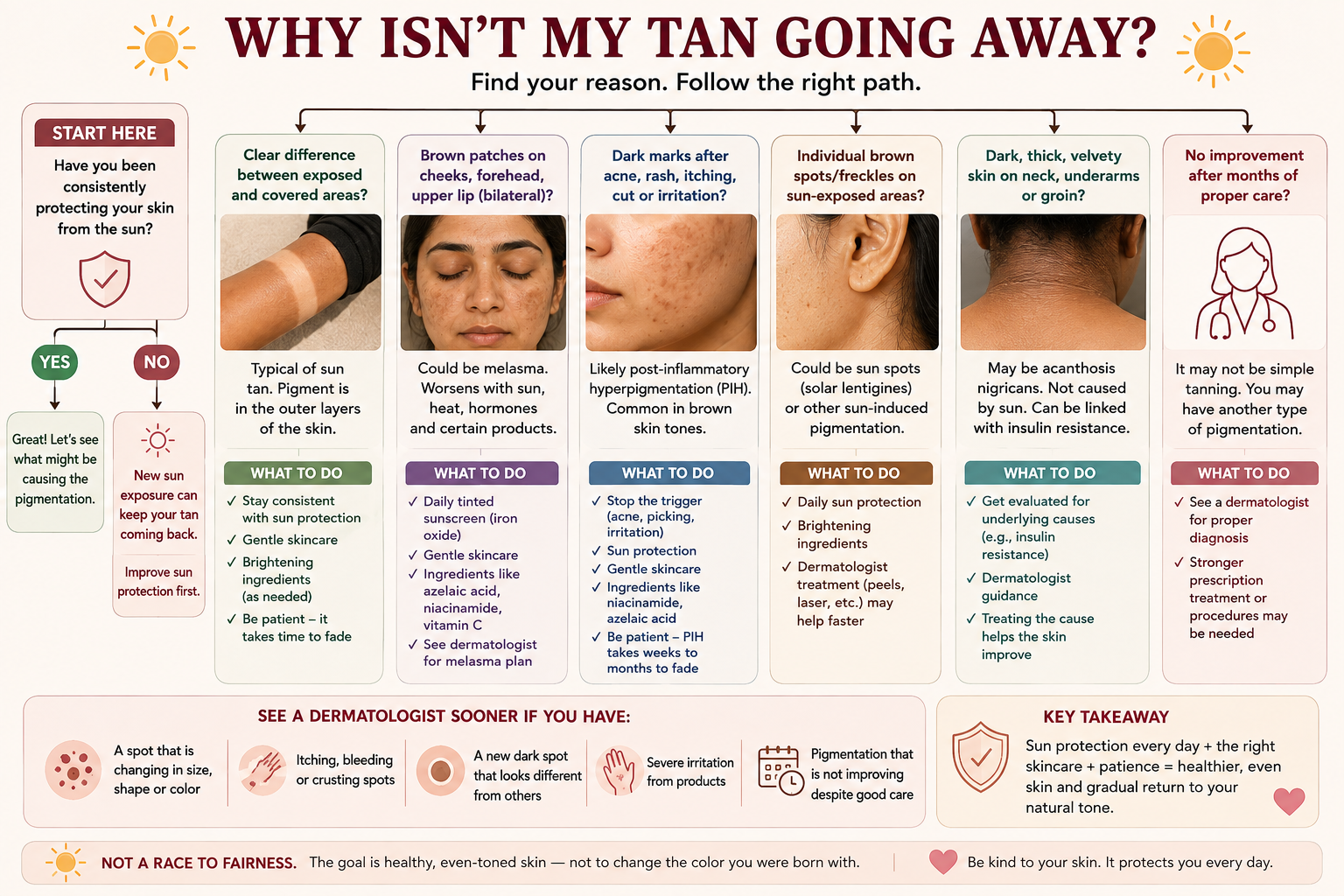
When Should You See a Dermatologist?
- pigmentation has persisted for months despite sensible sun protection;
- you cannot tell whether you have tanning, melasma, PIH or another condition;
- the skin is becoming darker despite treatment;
- products repeatedly cause burning, redness or peeling;
- you want stronger prescription treatments or procedures;
- a new pigmented spot is changing in size, shape or colour, looks very different from your other spots, bleeds, itches or does not heal.
A dermatologist can first identify what the pigmentation actually is and then decide whether prescription creams, chemical peels, lasers or other procedures are appropriate.
Frequently Asked Questions
Can a sun tan become permanent?
A straightforward tan usually fades gradually once repeated exposure stops, but persistent pigmentation can remain for months. If the colour does not improve, it may represent melasma, PIH, sun spots or another condition rather than a simple tan.
Can sunscreen remove an existing tan?
Sunscreen does not bleach away existing pigment. Its main role is to reduce new ultraviolet exposure so that your skin has a chance to recover without continually becoming darker again.
Is SPF 50 better than SPF 30 for pigmentation?
Both can provide strong protection when used correctly. How generously and consistently you apply sunscreen — and whether you reapply during prolonged outdoor exposure — matters greatly. Choose at least SPF 30 with broad-spectrum protection.
Why are my hands darker than my face?
Hands often receive substantial daily sun exposure but much less sunscreen than the face. Frequent washing also removes sunscreen, so hands may require more frequent reapplication while you are outdoors.
Can glycolic acid remove a tan?
Glycolic acid may gradually improve superficial uneven pigmentation, but it does not replace sun protection and should not be overused. Excessive exfoliation can cause irritation and make brown skin more pigmented.
Why is my face getting darker even with sunscreen?
Possible reasons include insufficient sunscreen, missed areas, lack of reapplication, significant ongoing exposure, visible-light-related pigmentation, or a condition such as melasma being mistaken for tanning.
Can I use lemon to remove my tan?
It is better not to. Lemon can irritate the skin and irritation can worsen pigmentation, especially when the area is subsequently exposed to sunlight.
Will my original skin colour come back?
If the darker colour is acquired from recent sun exposure, it can often gradually move back toward your usual skin tone with consistent protection and time. Treatment should aim to reverse acquired pigmentation, not lighten your genetically natural skin colour.
References
Key sun-protection recommendations in this article were checked against guidance from the American Academy of Dermatology (AAD).