
Prescription Treatments for Pigmentation — When Skincare Isn’t Enough
Sunscreen and good skincare can improve many pigmentation problems. But persistent melasma, post-acne dark marks and stubborn hyperpigmentation sometimes need stronger, targeted treatment.
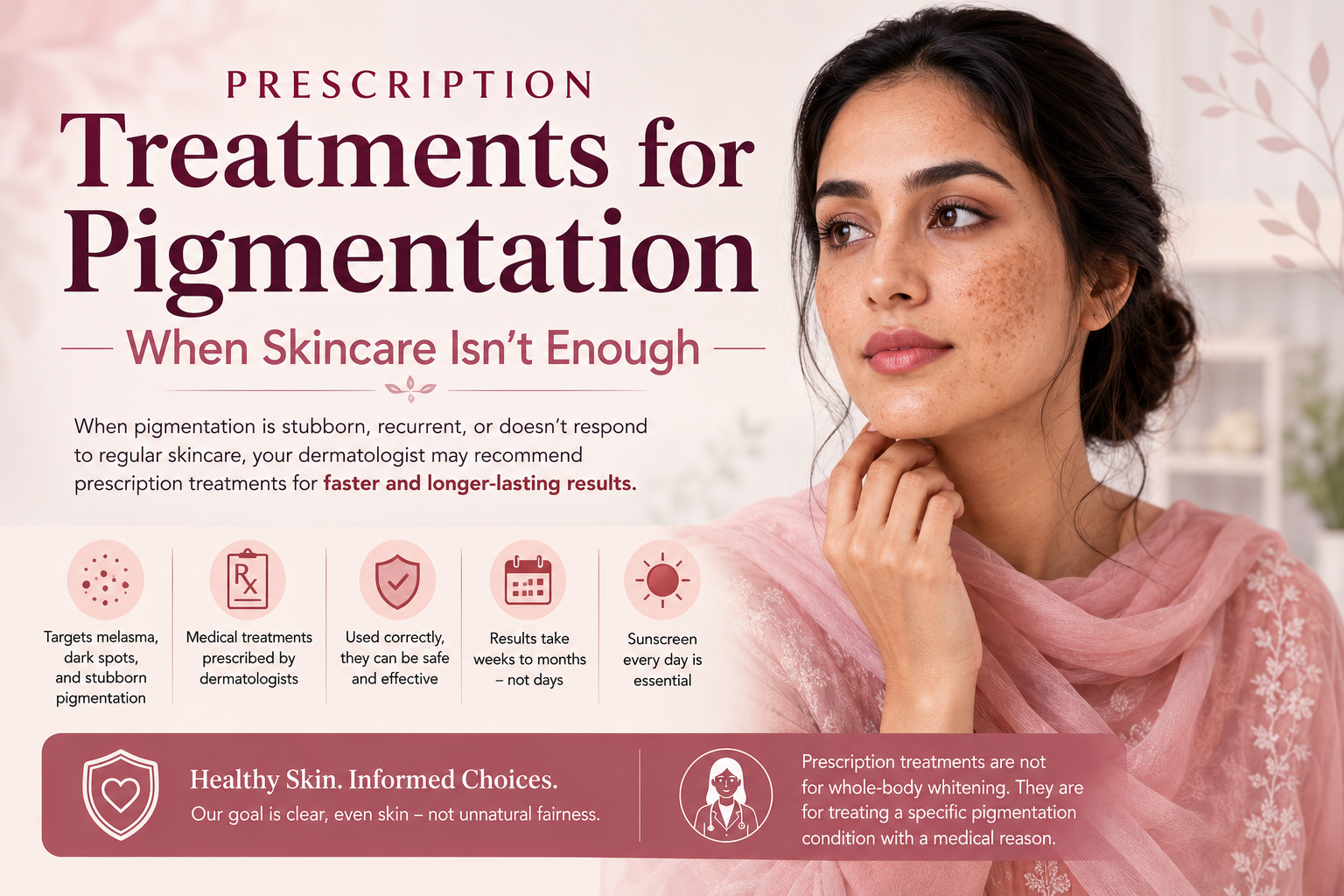
When might you need prescription treatment?
Consider seeing a dermatologist when pigmentation is persistent, keeps returning, or has not improved despite sensible skincare and regular sun protection.
Diagnosis matters. A woman with ordinary uneven pigmentation may need a completely different approach from someone with melasma or a dark, velvety neck caused by acanthosis nigricans.
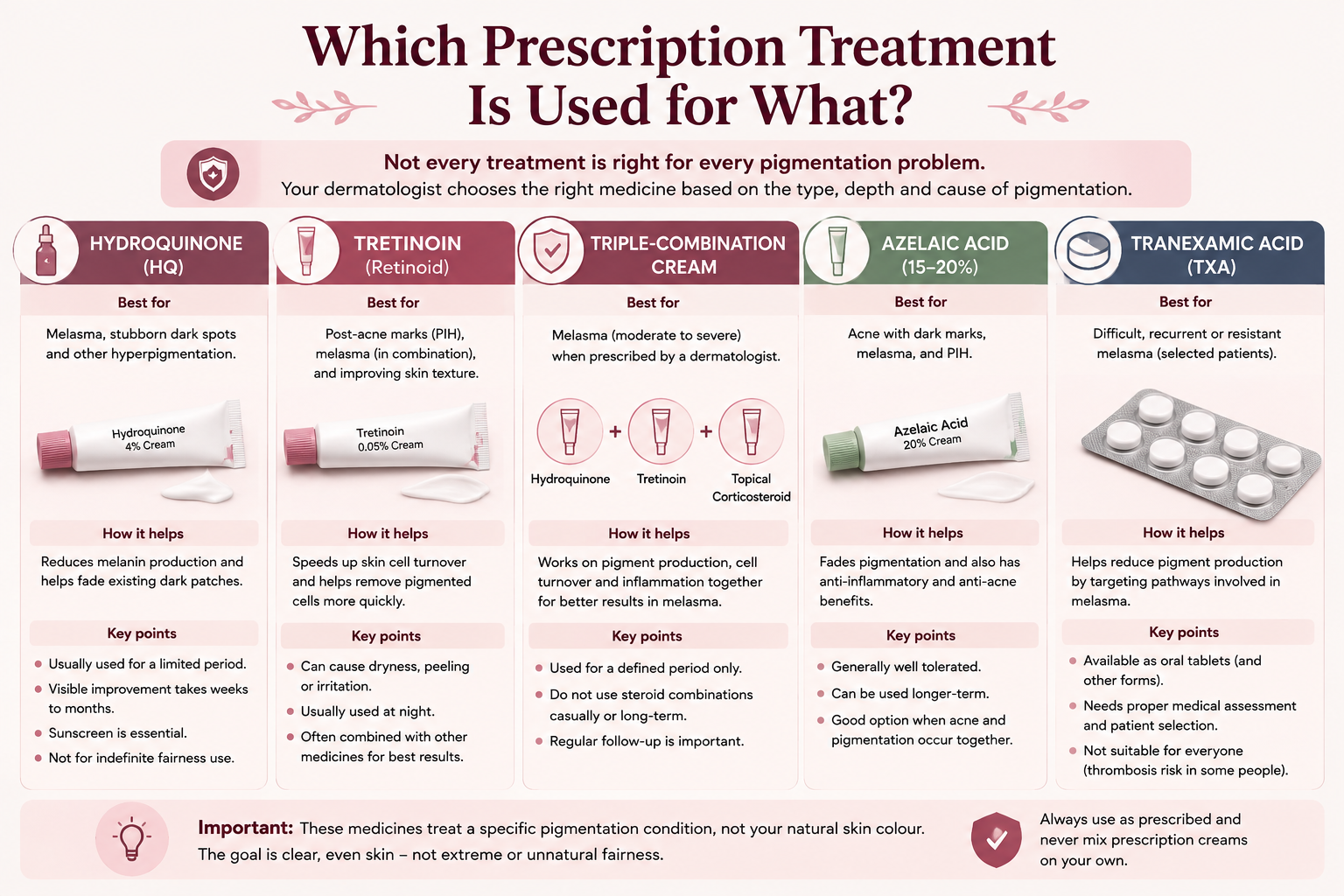
Which medicines are used for pigmentation?
Melasma & stubborn pigmentation
One of the established medical treatments for excess pigmentation. It is generally used as a controlled treatment rather than an indefinite fairness cream.
PIH & combination treatment
A prescription retinoid that can help pigmentation and is also commonly used as part of combination treatment.
Melasma
Combines hydroquinone, tretinoin and a corticosteroid. It is an established treatment for melasma when used appropriately.
Acne + pigmentation
Particularly useful when acne and the dark marks left behind by breakouts need to be addressed together.
Difficult or recurrent melasma
A specialist option for selected patients with melasma. Oral treatment requires appropriate medical assessment and is not a DIY whitening tablet.
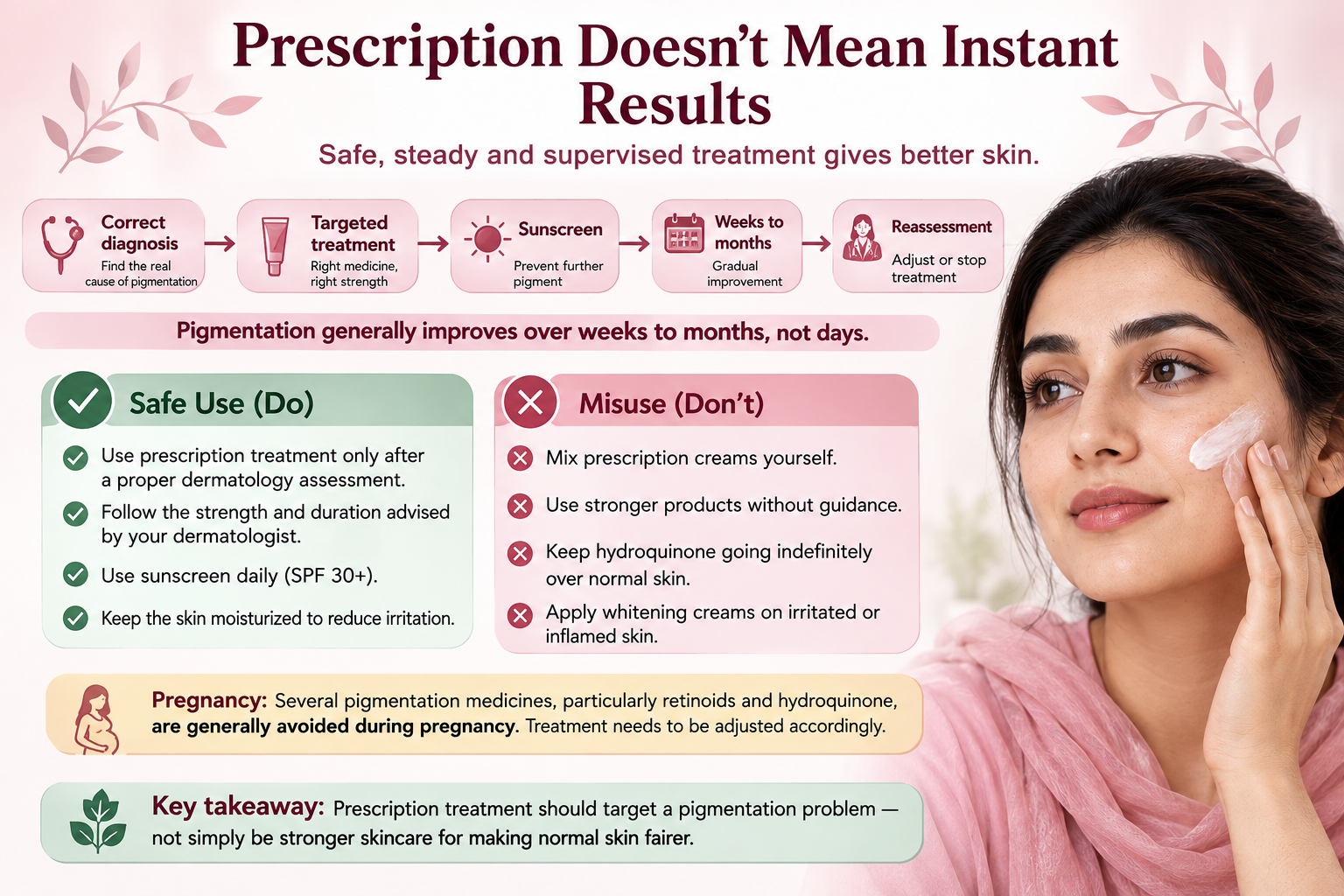
Prescription doesn’t mean instant
Pigmentation treatment takes time. Depending on the condition and treatment, meaningful improvement generally develops over weeks to months, not after a few applications.
Sunscreen remains essential. Treating pigment while allowing repeated sun exposure can slow improvement and contribute to recurrence — particularly with melasma and sun-related pigmentation .
More irritation ≠ faster fading
Stronger creams, excessive application or mixing multiple treatments can irritate the skin. In medium-to-darker skin tones, inflammation itself can leave additional pigmentation.
What about pregnancy?
Pigmentation is common during pregnancy, but the treatment plan changes. Topical retinoids such as tretinoin are avoided during pregnancy, and hydroquinone is generally avoided because pregnancy safety data are limited and appreciable skin absorption can occur.
Which treatment makes sense for you?
And if you are currently using a strong whitening mixture without knowing what is inside it, read our guide to safe skin brightening and pigmentation treatment before adding another active ingredient.