
Excessive Facial & Body Hair in Women
Facial or body hair can be completely normal. But when hair becomes coarse, darker, more widespread or starts increasing, many women want to know why — and whether PCOS, hormones or another condition could be involved.
Having facial hair does not automatically mean you have PCOS.
Hair patterns vary between women, families and populations. What matters is the type of hair, where it is growing, how quickly it is changing and whether you have other symptoms.
This guide explains the difference between normal hair and hirsutism, when hormone testing may be useful, how PCOS can affect hair growth, and the practical treatment choices available in Pakistan.
We will also go much deeper into one of the biggest questions: laser hair reduction — including IPL vs laser, how many sessions you may need, why hair sometimes comes back, possible maintenance, Pakistani skin tones and realistic expectations.
Is My Hair Growth Actually Abnormal?
Every woman has facial and body hair.
The first question is not simply: “Do I have hair?”
The better questions are:
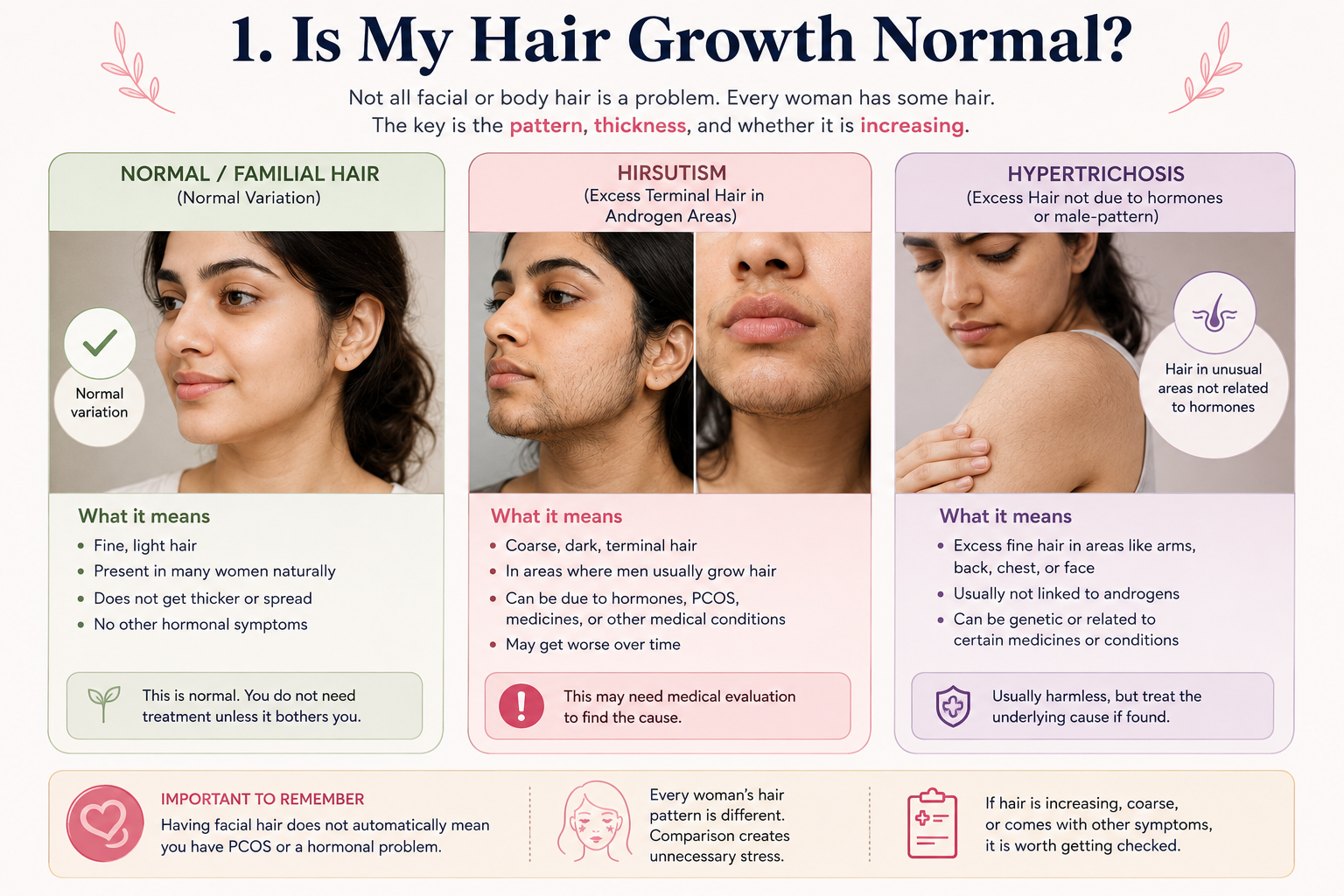
Normal / familial hair
Fine or visible hair may simply be normal for you, particularly if the pattern has been stable for years and other women in your family have similar hair.
Hirsutism
Hirsutism means coarse terminal hair in androgen-sensitive areas in women — areas where male-pattern hair commonly grows.
Hypertrichosis
Hypertrichosis means excessive hair growth that does not necessarily follow a typical androgen-dependent pattern.
What matters most?
A sudden change, increasing thickness, wider spread or accompanying hormonal symptoms is more important than one isolated hair.
Where Does Hormonal Hair Usually Grow?
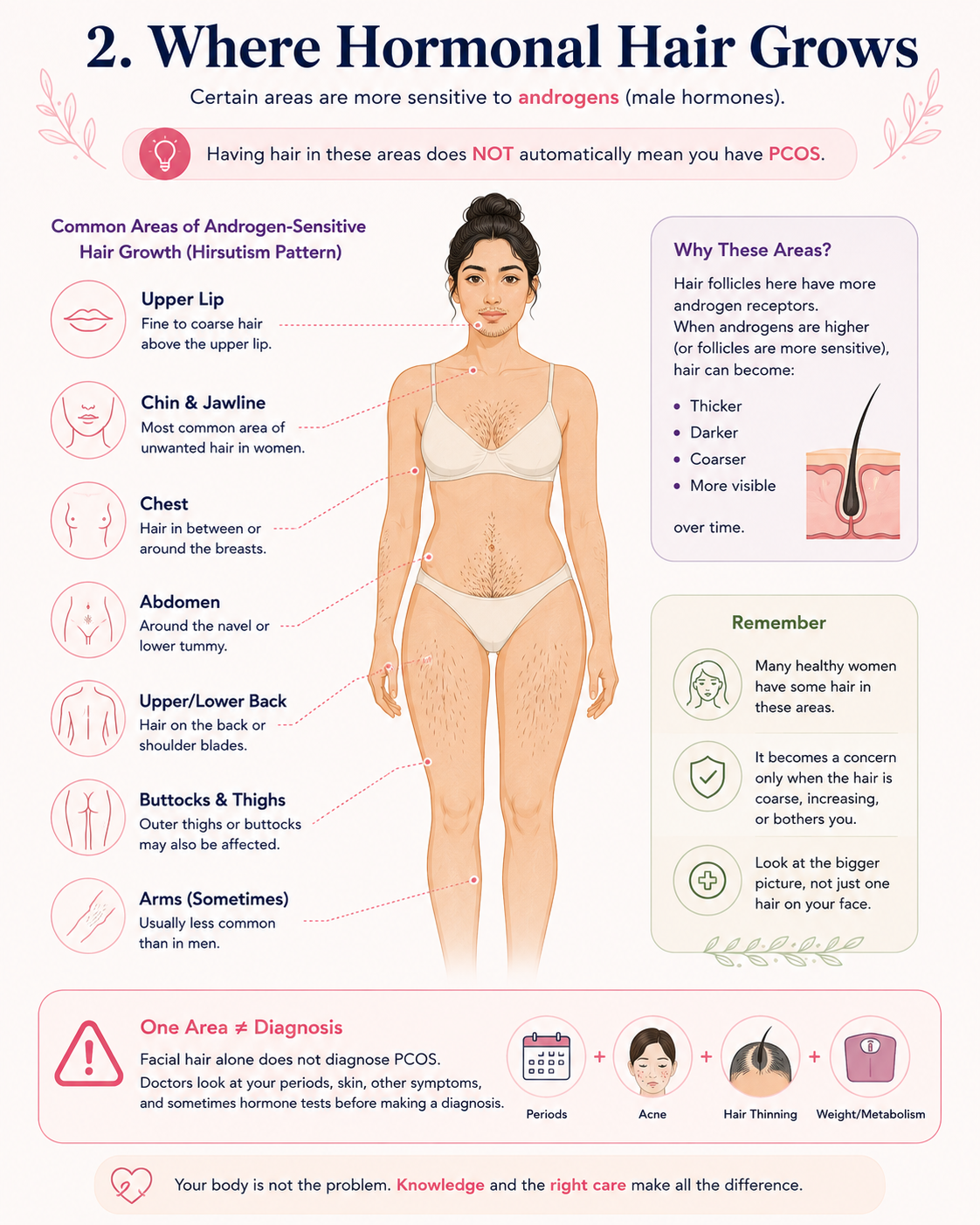
Some hair follicles are more sensitive to androgens — hormones such as testosterone.
These areas commonly include:
- upper lip
- chin and jawline
- chest and around the nipples
- lower abdomen
- upper or lower back
- buttocks and thighs
Hair in one of these areas still does not automatically mean there is disease. The pattern becomes more important when it is coarse, dark, increasing or associated with other symptoms.
Does Facial Hair Mean I Have PCOS?
No.
PCOS is an important cause of hirsutism, but facial hair alone is not enough to diagnose PCOS.
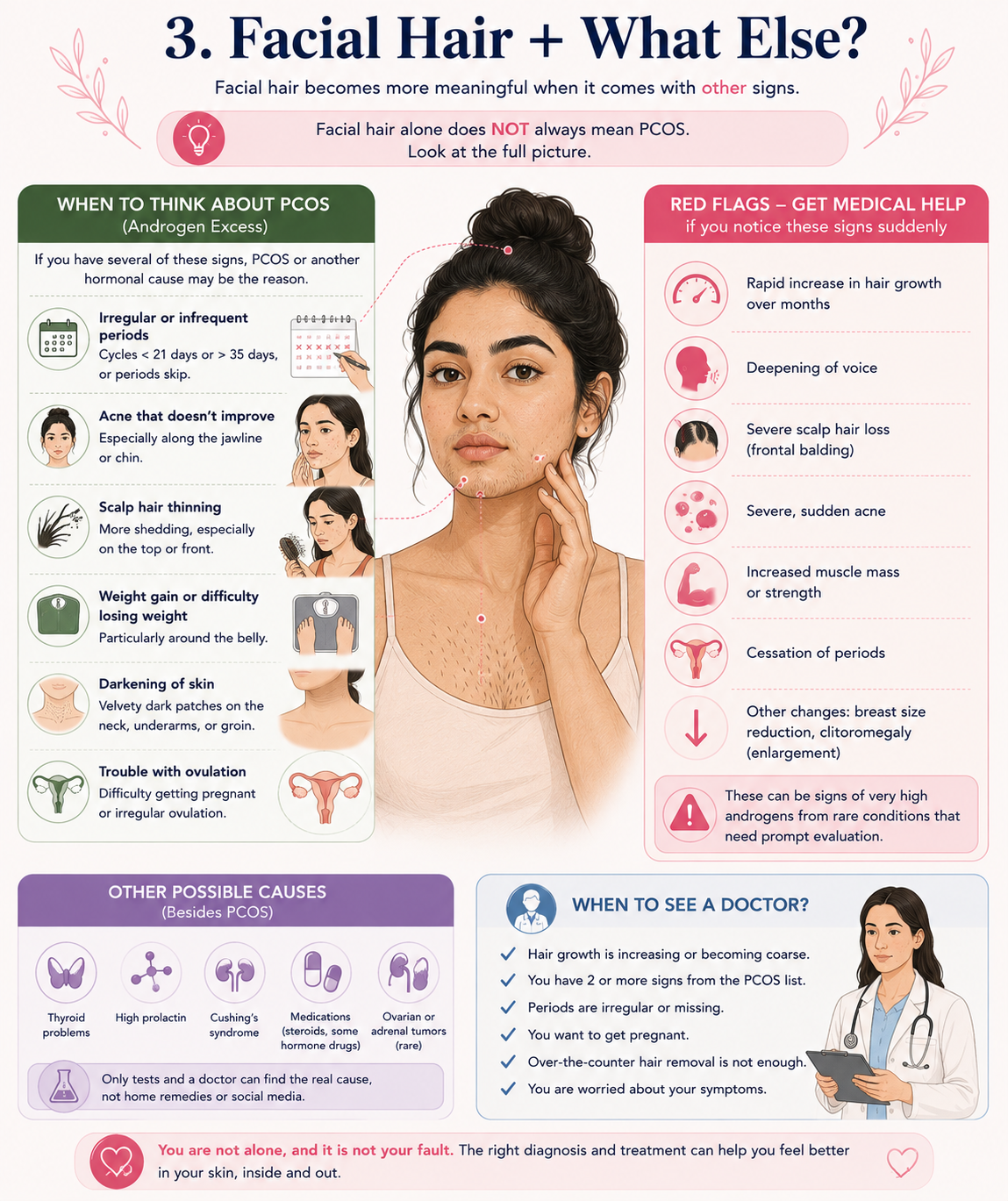
PCOS becomes more likely when excessive hair growth appears together with other signs of androgen excess or ovulatory problems.
Irregular periods
Cycles may be widely spaced, unpredictable or occasionally absent.
Persistent acne
Especially if acne is difficult to control or follows a hormonal pattern.
Scalp hair thinning
Some women develop androgen-related thinning over the top or front of the scalp.
Metabolic clues
Weight gain, insulin resistance or acanthosis nigricans may occur in some women.
If you already have or suspect PCOS, see our full PCOS Hub and PCOS Skin & Hair guide .
What Causes Excessive Hair Growth?
There are several possible causes.
PCOS
PCOS is one of the most common causes of androgen-related hair growth in women.
Familial or idiopathic hirsutism
Some women have coarse androgen-pattern hair despite normal menstrual cycles and without a clear hormonal disorder.
Medicines
Certain medicines can increase hair growth. Your doctor will consider this if the timing fits with a new medication.
Less common endocrine causes
Thyroid problems, Cushing syndrome, adrenal disorders and other endocrine conditions may occasionally contribute.
Rare androgen-producing tumors
These are uncommon, but become more important when hair growth develops very quickly together with clear virilization.
When Excessive Hair Growth Needs Medical Evaluation
Arrange medical assessment if you notice:
- rapid increase in coarse hair over a few months
- deepening of the voice
- marked or rapidly worsening scalp hair loss
- sudden severe acne
- increased muscularity with other androgenic changes
- periods stopping unexpectedly
- other signs of virilization
These findings do not automatically mean something dangerous is present, but they deserve proper evaluation rather than self-treatment from social media.
Do I Need Hormone Tests?
Not every woman with a few facial hairs needs a large hormonal panel.
Testing is more useful when there is:
- clear hirsutism
- rapid progression
- irregular or absent periods
- infertility concerns
- significant acne or scalp hair thinning
- signs of virilization
A long list of blood tests ordered without understanding your symptoms is not automatically better medicine.
A doctor should first decide what diagnosis is actually being considered, then choose appropriate tests.
How Can Facial Hair Be Removed?
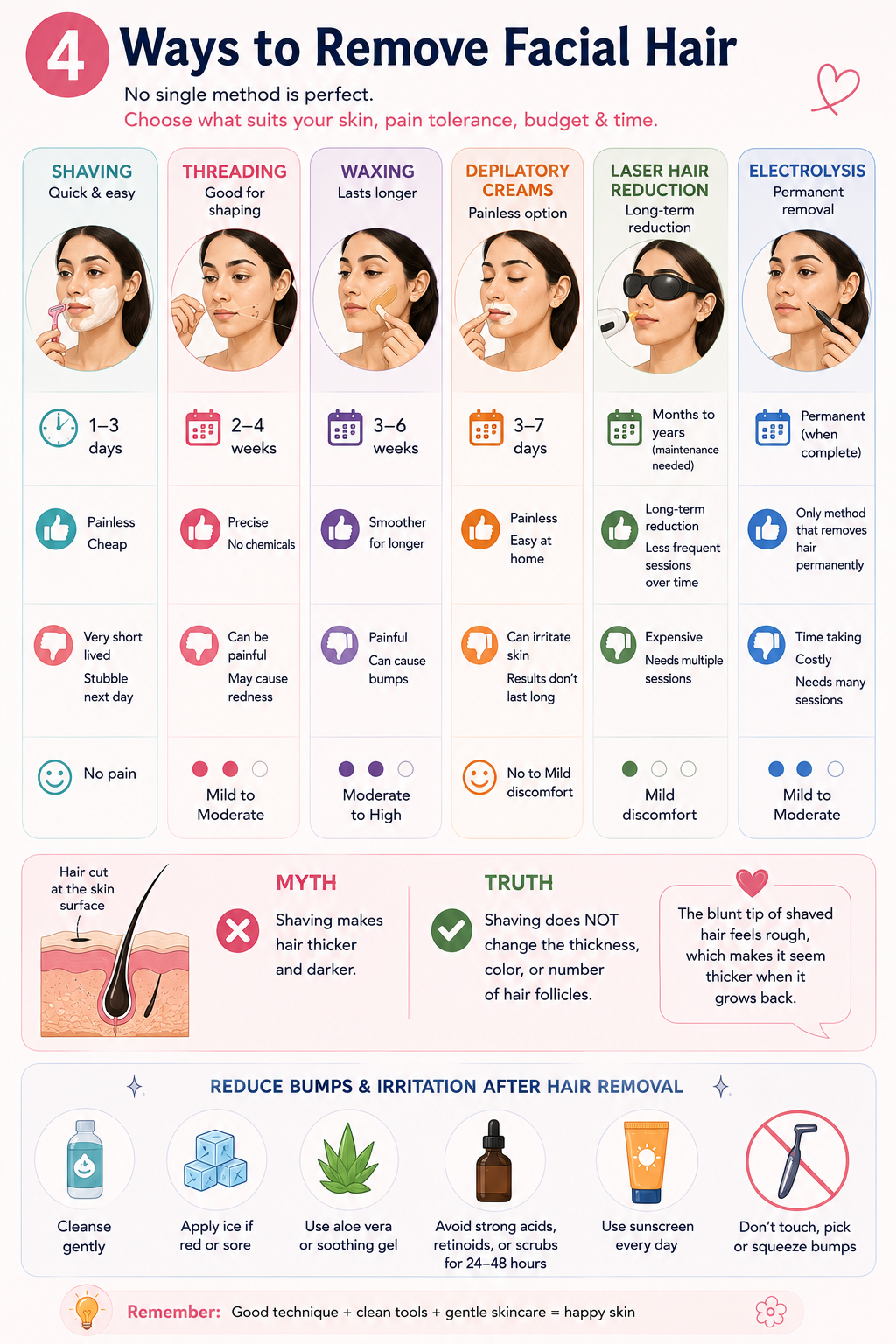
There is no single best method for every woman.
The right choice depends on: skin sensitivity, hair thickness, pain tolerance, cost, convenience and how long you want the result to last.
Does Shaving Make Hair Grow Back Thicker?
No.
Shaving cuts the hair at the skin surface. It does not change the number of follicles underneath the skin.
Freshly shaved hair has a blunt end, so when it grows back it can feel rougher or look slightly more obvious.
If shaving made every hair permanently thicker, men who shaved daily would have progressively expanding beards forever.
What About “Permanent Hair Removal Oils” and TikTok Products?
This is where marketing becomes particularly creative.
You may see oils, herbal serums, powders or creams claiming to:
- permanently stop facial hair
- “kill the root” at home
- balance hormones through the skin
- remove PCOS hair permanently in days
Be particularly cautious when a product does not clearly state its active ingredients, mechanism, evidence, safety information or regulatory status.
Some cosmetic products may make hair feel softer or easier to remove, but that is very different from permanently disabling the follicle.
Laser Hair Reduction — What Does It Actually Do?
Laser treatment sends light energy toward pigment in the hair. That energy is converted into heat and damages the follicle enough to reduce future hair growth.
The important word is:
Laser usually provides long-term hair reduction. It does not promise that every follicle will disappear permanently.
Why are several sessions needed?
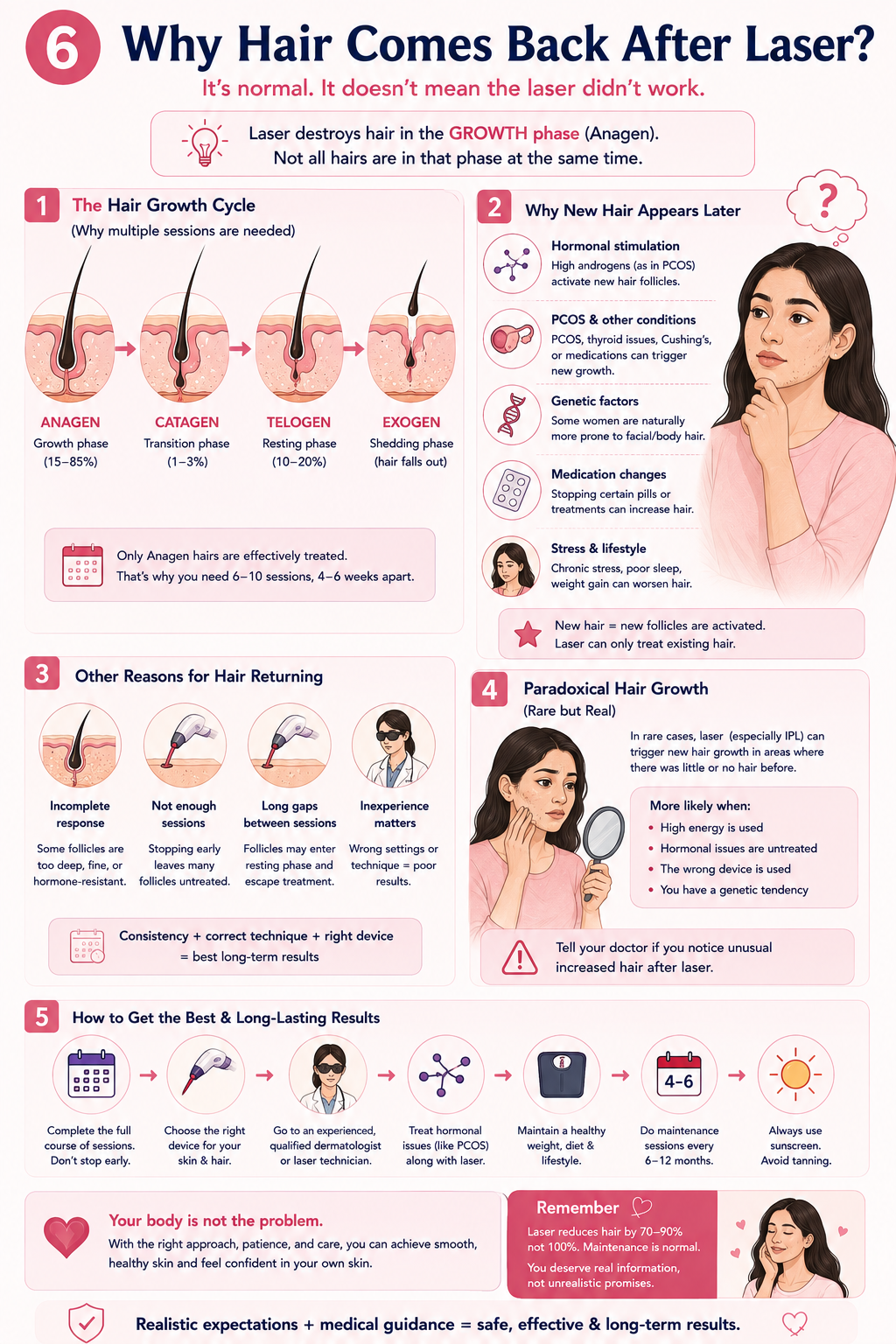
Hair follicles move through different growth phases.
Laser works best on hairs that are actively growing. Since all follicles are not in the same phase at the same time, treatment needs to be repeated.
IPL vs Diode vs Nd:YAG — What Is the Difference?
This is one of the most confusing parts of hair removal advertising.
First:
IPL means Intense Pulsed Light. It uses a broad range of wavelengths.
True lasers use more specific wavelengths.
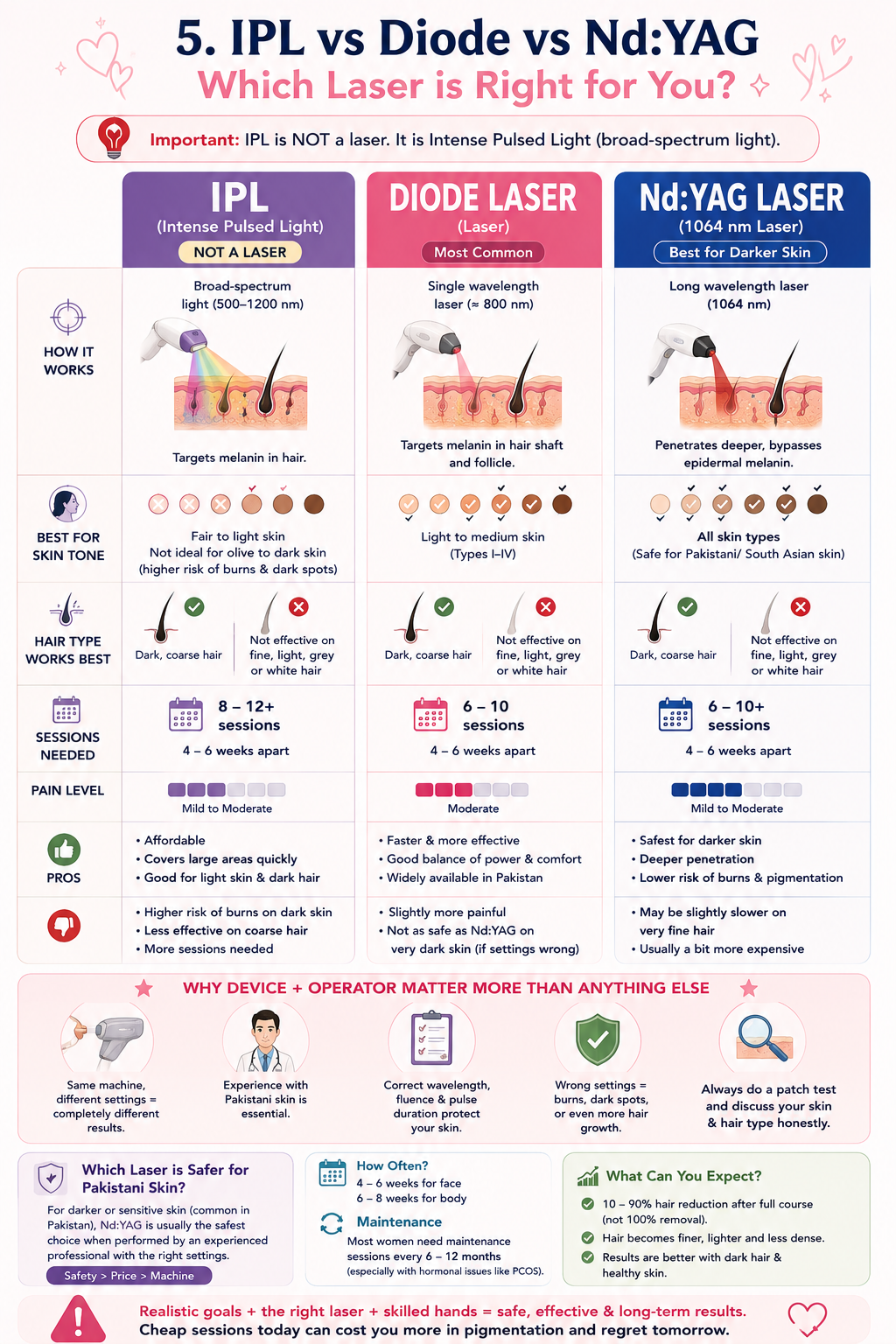
Diode laser
Diode systems are widely used for hair reduction and can work very well, particularly on dark coarse hair.
They can be used across a range of skin tones when the machine, cooling and treatment settings are appropriate.
Nd:YAG laser
Long-pulsed 1064-nm Nd:YAG is particularly important for darker skin because its wavelength interacts less strongly with pigment in the surface of the skin than shorter wavelengths.
That can provide a better safety margin for many South Asian skin tones when used correctly by an experienced professional.
Does this mean Nd:YAG is always better?
No.
The right choice depends on:
- your skin tone
- hair colour
- hair thickness
- body area
- the actual machine
- energy settings
- cooling
- operator experience
A good device in inexperienced hands can still produce poor results.
Which Laser Is Safer for Pakistani Skin?
Many Pakistani women have medium-to-deeper skin tones with more epidermal melanin.
That matters because the treatment has to heat the hair while avoiding excessive heating of the surrounding skin.
Incorrect settings can cause:
- burns
- blistering
- post-inflammatory hyperpigmentation
- hypopigmentation
- prolonged irritation
Ask which device is being used, whether the practitioner regularly treats your skin tone, and whether your skin and hair are actually suitable for treatment.
How Much Does Laser Hair Removal Cost in Pakistan?
Prices vary enormously by city, clinic, machine, body area and whether treatment is being performed by a dermatology clinic or a beauty/aesthetic centre.
As a practical guide, common advertised prices can fall roughly in ranges like these:
Approximate price per session
These are practical market ranges, not fixed national prices. Always confirm the current price, machine and area definition with the clinic.
What does the whole course cost?
If a full-face session costs Rs 6,000 and you need eight sessions, the initial course already costs around:
Rs 6,000 × 8 = Rs 48,000
Maintenance sessions later may add further cost.
This is why comparing only the price of one session can be misleading.
How Many Laser Sessions Do You Need?
Many women need around 6–10 sessions for a substantial initial reduction.
Some need more.
The number depends on:
- hair thickness and colour
- body area
- skin tone
- device and settings
- hormonal stimulation
- how consistently sessions are completed
How far apart should sessions be?
Facial sessions are often spaced roughly 4–6 weeks apart.
Body areas may require longer intervals because the hair cycles differ.
Does Laser Work If You Have PCOS?
Yes.
Women with PCOS can get meaningful hair reduction from laser.
But there is an important difference:
If androgen stimulation continues, new terminal hairs can appear later, even when previously treated follicles responded well.
That means some women with PCOS need maintenance sessions more often.
Managing the underlying PCOS can therefore be useful alongside cosmetic treatment. See our PCOS guide for a full explanation.
Why Does Hair Come Back After Laser?
Hair returning after treatment does not always mean the laser “failed.”
There are several reasons.
Hair growth cycles
Some follicles were not in the right growth phase during earlier sessions.
Hormonal stimulation
PCOS or other androgen-related conditions can stimulate new terminal hair.
Incomplete course
Stopping after only a few sessions can leave many follicles inadequately treated.
Device or technique
Inappropriate settings or poor technique can reduce effectiveness.
Will Hair Ever Come Back After a Successful Course?
It can.
Laser is best thought of as long-term hair reduction rather than a guarantee of permanent zero hair.
After a successful course, remaining hair often becomes:
- less dense
- finer
- slower growing
- easier to manage
Some women need maintenance every several months or once or twice a year. Others need very little maintenance.
Hormonal conditions make recurrence or new growth more likely.
Can Laser Make Facial Hair Worse?
Rarely, yes.
This is called paradoxical hypertrichosis.
Instead of decreasing hair, treatment can occasionally stimulate more visible hair in or around the treated area.
It is reported particularly around the face and neck.
Risk may be influenced by:
- skin tone
- fine facial hair
- hormonal factors
- device choice
- inappropriate treatment settings
Very fine hair can respond poorly, and patient selection matters. A proper assessment is better than buying a package simply because the clinic is running a sale.
Before You Pay for Laser, Ask These Questions
- What machine are you using?
- Is it IPL or a true laser?
- What wavelength does it use?
- Is this device suitable for my skin tone?
- Who will perform the treatment?
- How many sessions do you realistically expect?
- What maintenance might I need later?
- What happens if I develop burns or pigmentation?
A clinic should be able to explain these answers clearly.
“Our machine is imported and very advanced” is not a wavelength.
What About Electrolysis?
Electrolysis treats individual follicles using a tiny probe and electrical energy.
It is much slower than laser because follicles are treated one at a time, but it can be useful for:
- a small number of stubborn hairs
- white or grey hairs that laser cannot target effectively
- isolated remaining hairs after laser
It is generally considered a method of permanent hair removal when a follicle has been successfully treated, but completing a large area can require many sessions.
Can Medicines Reduce Excessive Hair Growth?
Yes, when the hair is related to androgen excess.
Depending on the diagnosis, doctors may use treatments such as:
- combined hormonal contraceptives in appropriate patients
- antiandrogen medicines such as spironolactone in selected women
- treatment of the underlying endocrine condition
Medicines usually do not make existing coarse hair suddenly disappear.
Instead, they can help reduce stimulation of new hair and make future growth slower or finer over time.
Pregnancy safety and contraception need to be considered carefully. Do not self-start hormone or antiandrogen medicines from social media recommendations.
Do Spearmint Tea, Supplements or Home Remedies Remove Facial Hair?
No home remedy reliably removes established coarse terminal hair permanently.
Some lifestyle measures may help the broader metabolic or hormonal picture in women with PCOS, but that is not the same as directly destroying a hair follicle.
A supplement should not be treated as a diagnosis, hormone test or guaranteed cure simply because the packaging includes the words “PCOS,” “detox” or “hormone balance.”
Frequently Asked Questions
Does chin hair always mean PCOS?
Does shaving make facial hair thicker?
Is laser hair removal permanent?
How many laser sessions are needed?
How often are facial laser sessions done?
Does laser work for PCOS facial hair?
Why did my facial hair return after laser?
Can laser make hair growth worse?
Is IPL the same as laser?
Which is better: diode or Nd:YAG?
Which laser is safer for Pakistani skin?
Does laser work on fine facial hair?
Does laser work on grey or white hair?
Can I shave between laser sessions?
Should I wax or thread between laser sessions?
Can laser cause dark spots?
Is laser safe during pregnancy?
Is electrolysis better than laser?
Can facial hair disappear if I treat PCOS?
When should facial hair be investigated?
The Bottom Line
Facial and body hair exists on a spectrum.
Some women naturally have more visible hair. Others have true androgen-related hirsutism.
PCOS is common, but it is not the explanation for every chin hair.
And treatment depends on your goal.
If the hair is increasing or accompanied by hormonal symptoms, treat the cause as well as the hair.
Written by Dr Melina
Reviewed by Dr Sadia — Dermatologist