Glutathione for Skin Whitening — Tablets, Injections & IV Drips
Glutathione can make the skin look lighter in some people. But a glutathione tablet, a liposomal supplement and an IV drip are not the same treatment. How glutathione is delivered can dramatically change how much reaches the bloodstream — while the amount of actual skin lightening remains much less predictable.
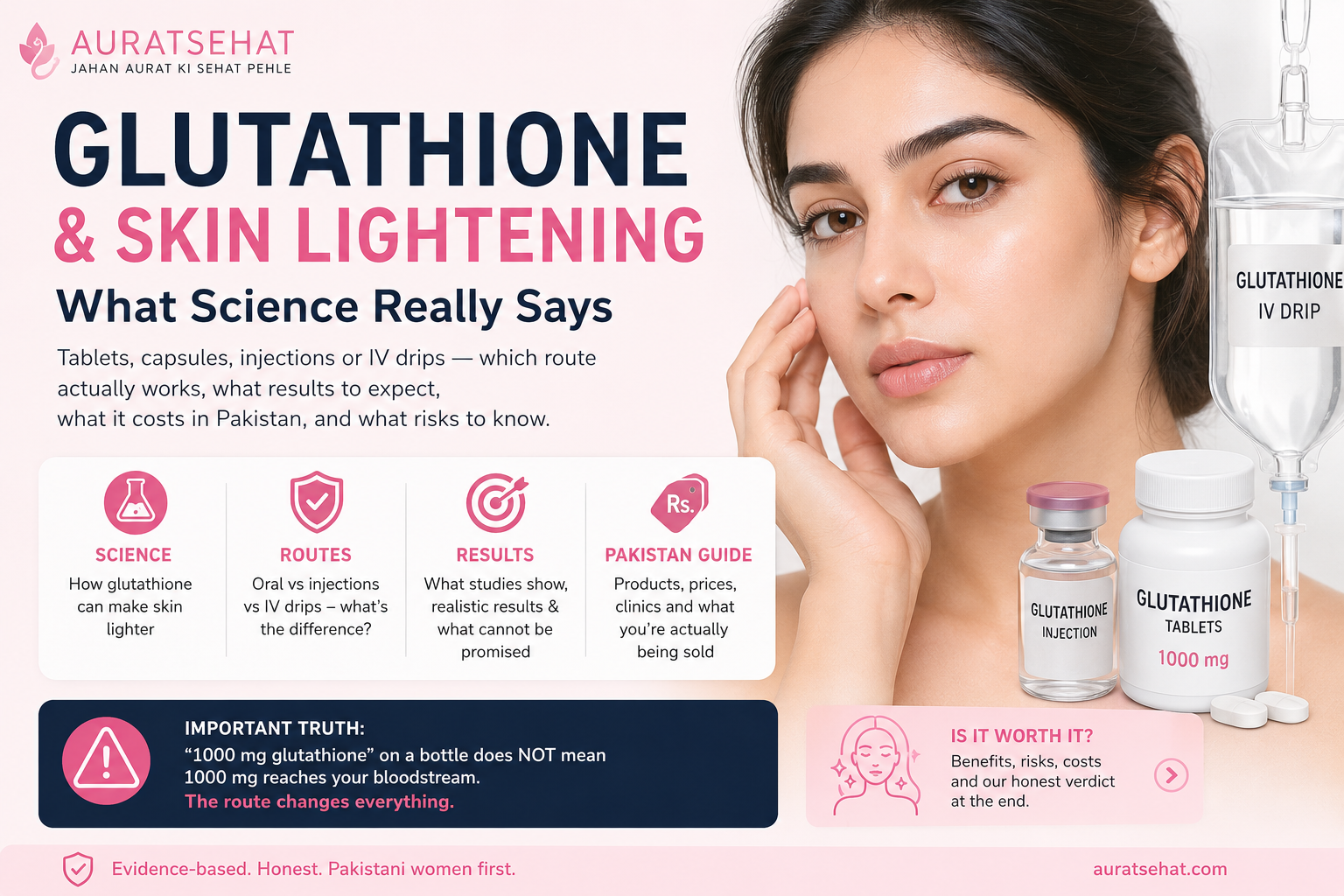
Does glutathione actually whiten skin?
It can lighten skin pigmentation to some degree in some people. Human studies of oral glutathione have reported reductions in melanin measurements, although the response varies considerably and the overall evidence is still limited.
That is different from saying glutathione will make everyone several shades fairer. The realistic result is usually much more subtle.
If your main concern is melasma, acne marks, tanning or uneven pigmentation, treating the actual cause is often more predictable than trying to lighten your entire natural skin tone. You can start with our Skin Care guide to understand which type of pigmentation you may be dealing with.
How can glutathione make skin lighter?
Your skin colour is largely influenced by melanin. Melanin is produced by specialised cells called melanocytes.
Glutathione is a naturally occurring antioxidant made inside the body. In laboratory and clinical research, it appears to influence melanogenesis — the process through which melanin is produced.
One proposed effect is a shift away from the production of darker eumelanin toward relatively lighter pheomelanin. Glutathione may also interfere with tyrosinase activity, an important enzyme involved in melanin formation.
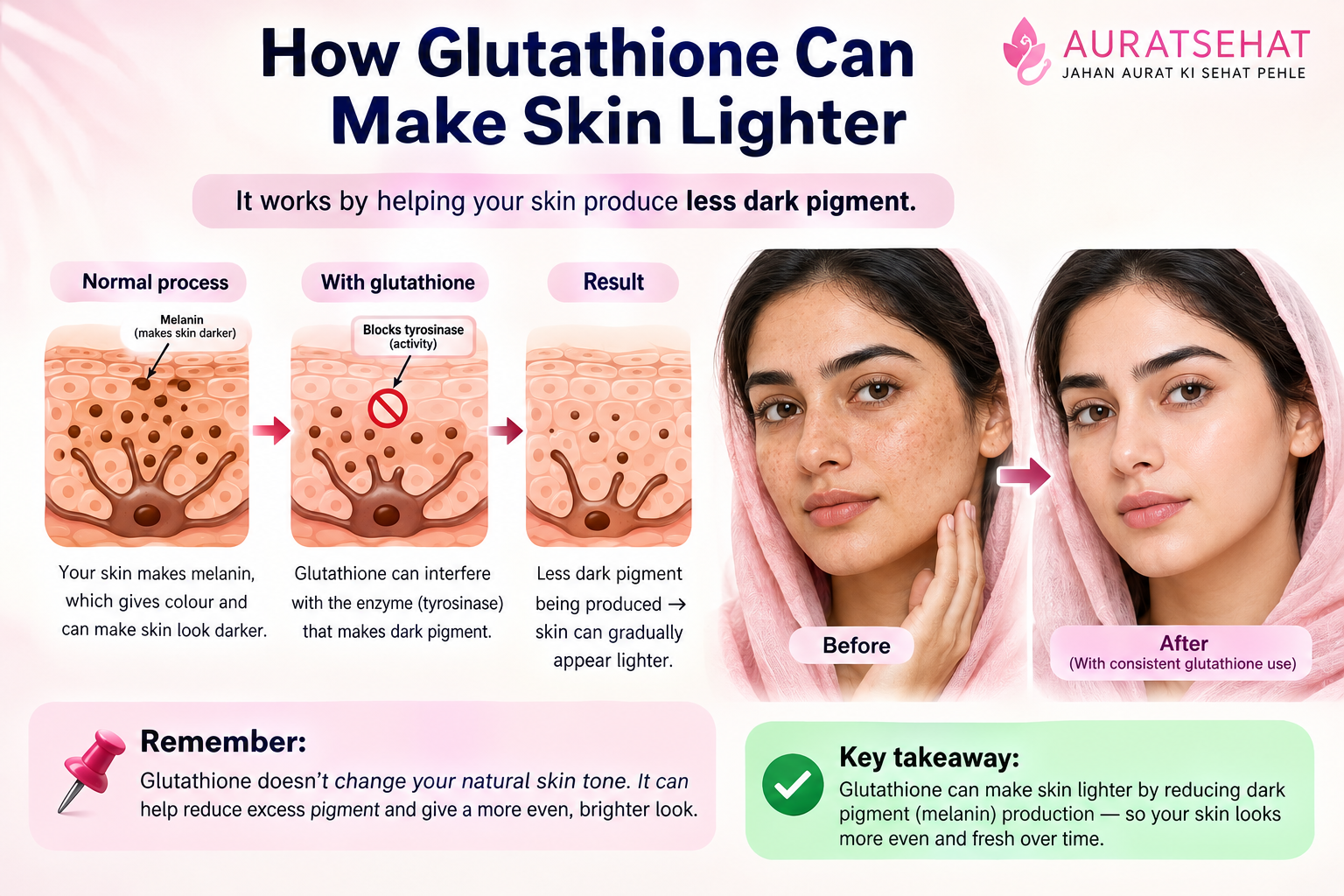
This mechanism helps explain why some studies find a measurable reduction in pigmentation. But biology is complex: the amount of lightening depends on genetics, sun exposure, baseline skin colour, formulation, treatment duration and other factors.
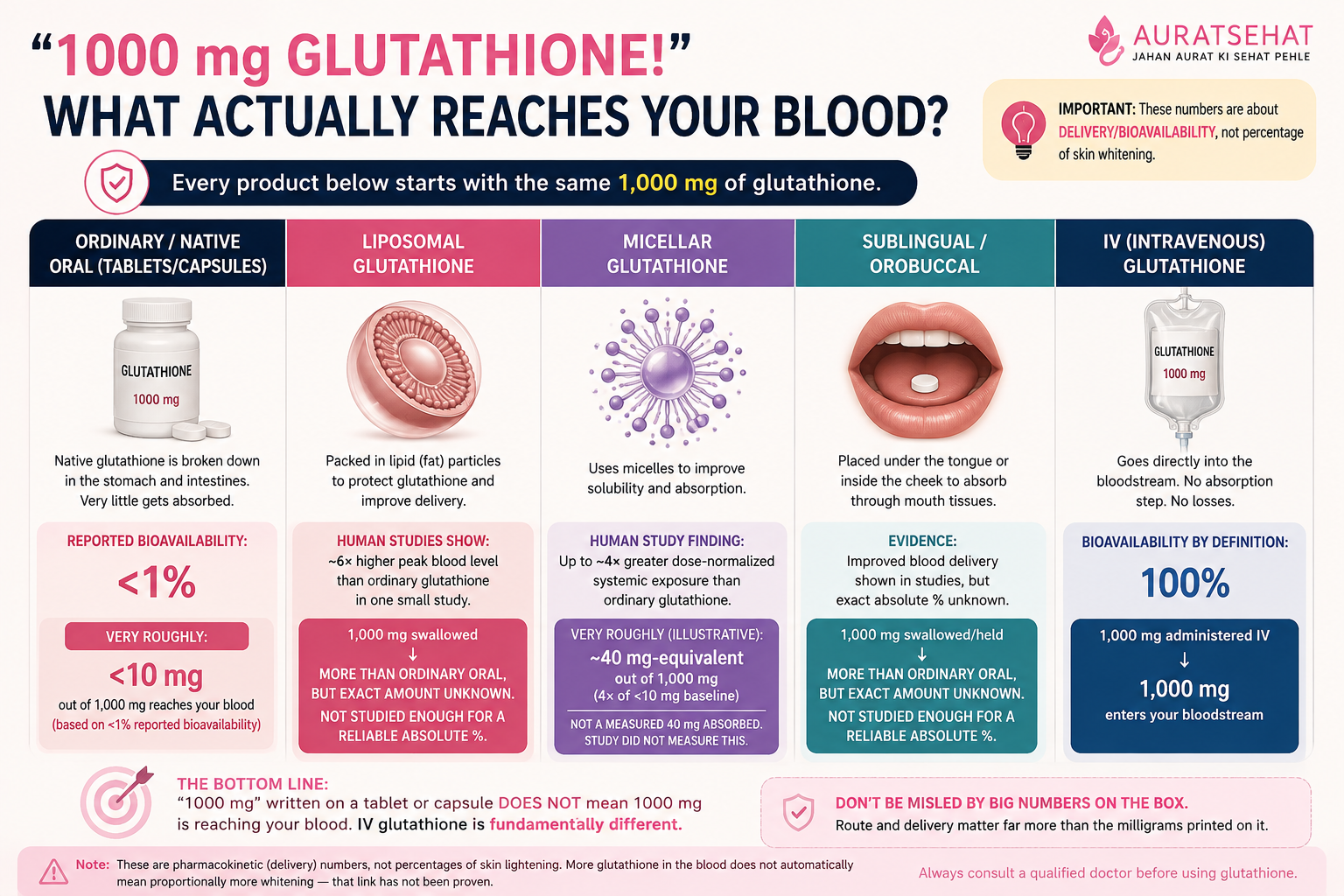
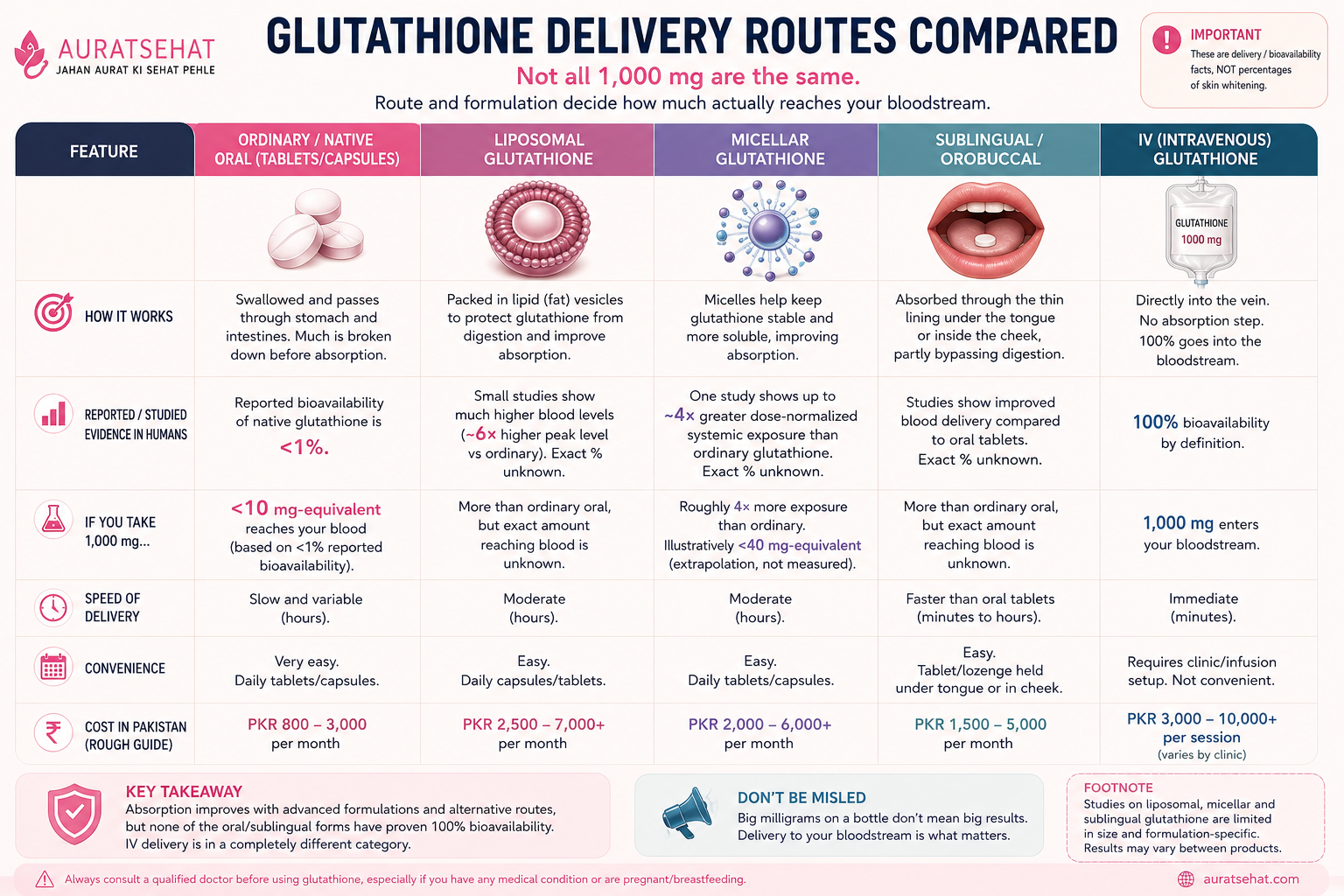
“1000 mg glutathione” sounds impressive. But how much actually reaches your blood?
This is where the difference between dose and bioavailability becomes important.
Bioavailability describes how much of a substance reaches the systemic circulation in a form available to the body.
A 2025 paper published in Pharmaceutics describes the reported oral bioavailability of native glutathione as below 1%, largely because glutathione can be broken down in the gastrointestinal tract and is poorly absorbed.
What would that mean for a 1000 mg tablet?
If we use the reported <1% benchmark purely as a simple illustration, less than 1% of 1000 mg corresponds to:
Important: this does NOT mean “less than 1% whitening.”
Bioavailability and whitening effectiveness are completely different measurements.
<1% versus 100% describes drug delivery into systemic circulation. It does not mean oral treatment gives <1% skin lightening while IV treatment gives 100% skin lightening.
If ordinary oral absorption is poor, why do some oral studies still show results?
Because the pharmacology of glutathione is more complicated than simply measuring intact glutathione crossing directly from the intestine into the blood.
Oral supplementation may influence glutathione status through absorbed components, precursor availability and changes in body glutathione stores. Human trials have also reported increased glutathione levels and measurable pigmentation changes despite the well-recognised absorption limitations of conventional glutathione.
So the appropriate conclusion is not:
The better conclusion is:
Conventional oral glutathione has an important delivery limitation.
That limitation makes formulation relevant and makes it misleading to compare products simply by looking at the number of milligrams written on the bottle.
What about liposomal, micellar and sublingual glutathione?
Manufacturers have developed alternative formulations specifically because ordinary oral glutathione has absorption problems.
Tablets & capsules
Convenient and widely available, but native glutathione is vulnerable to degradation in the digestive tract and has poor reported oral bioavailability.
Liposomal glutathione
Glutathione is enclosed within lipid structures designed to protect it and improve delivery. Small human studies suggest liposomal formulations can increase systemic glutathione exposure.
Micellar formulations
Micellar delivery is another strategy intended to improve gastrointestinal absorption. Emerging pharmacokinetic research suggests substantially greater exposure than standard glutathione in specific formulations.
Sublingual / orobuccal
These products attempt to deliver glutathione through the tissues of the mouth and partly bypass gastrointestinal degradation. Evidence is promising but still limited.
What we cannot reliably tell you
There is currently no scientifically defensible universal percentage such as “liposomal glutathione is 80% absorbed” that can be applied across all products. Formulations differ, and many commercial absorption claims are stronger than the human evidence.
Glutathione delivery routes compared
Conventional oral glutathione
Easiest to use and usually cheapest, but systemic delivery is limited by the gastrointestinal tract.
Enhanced oral formulations
Liposomal, micellar and similar systems may improve delivery, but the magnitude depends on the individual formulation and cannot be generalised to every product.
Sublingual / orobuccal glutathione
Designed to reduce dependence on gastrointestinal absorption. Human evidence exists, but remains much smaller than would be needed to establish a universal advantage.
Intravenous glutathione
The drug is placed directly into the bloodstream, so systemic bioavailability by definition is 100%. It completely bypasses intestinal absorption.
Is IV glutathione more powerful?
From a delivery perspective, yes: IV glutathione has an enormous advantage because it enters the circulation directly.
An IV dose has 100% systemic bioavailability, while oral glutathione must survive the digestive tract and cross the intestinal barrier.
But this leads to a very important distinction.
100% bioavailability does not mean 100% whitening.
We do not have high-quality head-to-head trials showing that the difference in delivery translates proportionally into greater skin lightening.
In fact, the evidence base for cosmetic IV glutathione is much weaker than the aggressive marketing around IV whitening drips might suggest.
A 2025 systematic review identified only one placebo-controlled IV study and concluded that IV glutathione should not be recommended for skin lightening because of the poor evidence and safety concerns.
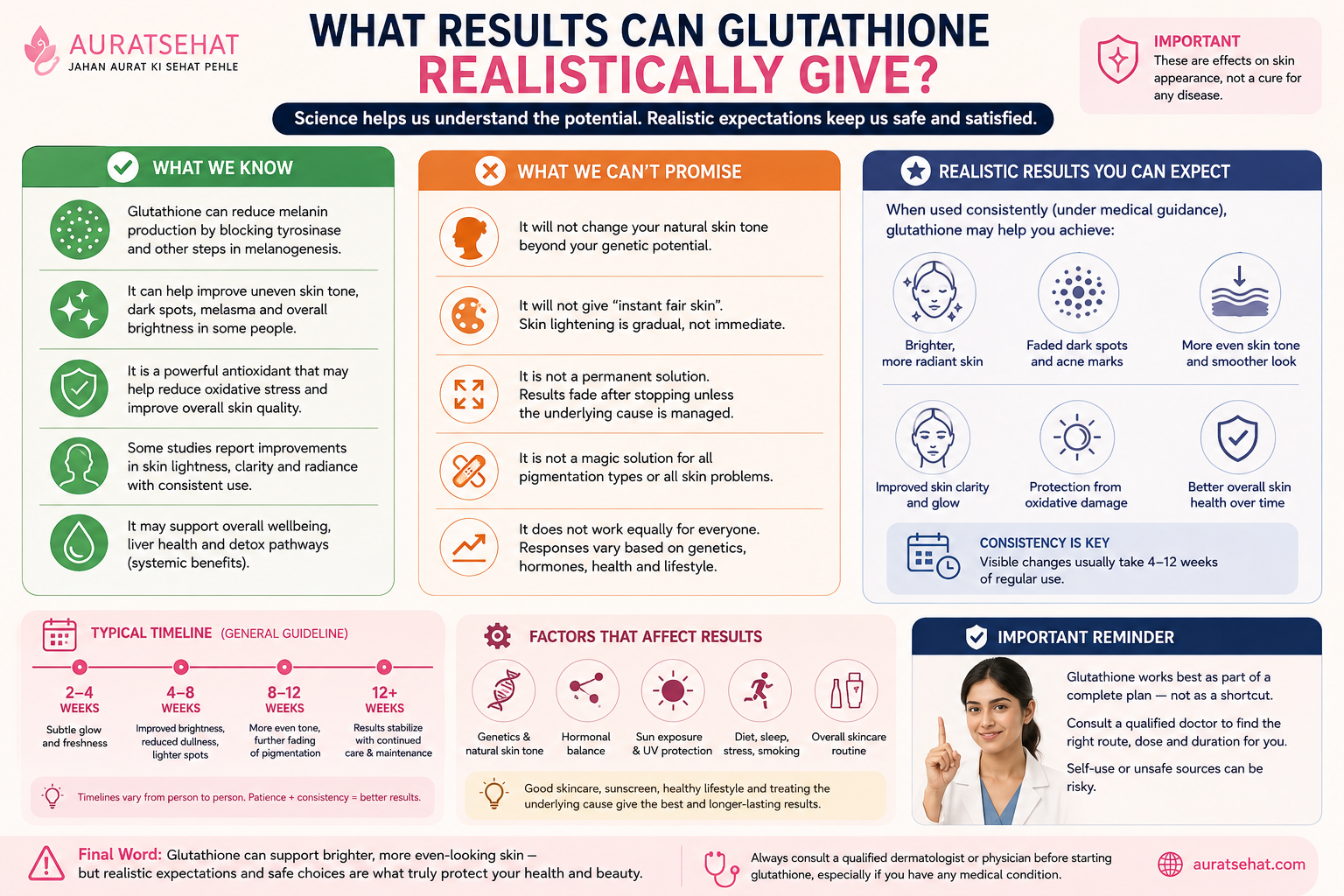
How much lighter can glutathione actually make you?
This is where advertisements often create unrealistic expectations.
Some people may notice a more even complexion or modest reduction in pigmentation. Others may notice very little.
There is no scientifically reliable rule such as: “glutathione will make you three shades fairer.”
More realistic
- Subtle overall brightening
- Reduced melanin measurements in some people
- More even-looking skin
- Gradual rather than dramatic change
Less realistic
- Guaranteed several-shade whitening
- Permanent colour change
- Identical results for everyone
- Expecting IV delivery to produce proportionally greater whitening
How long does glutathione take to lighten skin?
Studies that have reported skin-lightening effects generally evaluate participants over weeks to a few months, rather than days.
Your response may depend on:
- your natural skin colour and genetics;
- the type and dose of glutathione;
- the formulation and route of administration;
- how consistently it is used;
- sun exposure;
- your underlying pigmentation problem;
- and individual biological differences.
If a clinic promises dramatic whitening after one or two drips, that promise is much stronger than the available clinical evidence.
Does glutathione lighten the whole body?
Systemic glutathione is not applied only to the face, so any biological influence on melanogenesis may theoretically occur across multiple skin areas.
But different parts of the body do not necessarily respond equally.
Dark underarms, a dark neck, inner thighs or acne marks may have additional causes such as friction, post-inflammatory pigmentation, hair shadow, insulin resistance or repeated irritation. Simply taking a systemic lightening supplement may not correct the underlying problem.
For example, velvety darkening of the neck can sometimes represent acanthosis nigricans, which requires an entirely different approach from ordinary tanning or pigmentation.
What happens when you stop glutathione?
Skin-lightening effects are not reliably permanent.
Your melanocytes continue functioning after treatment stops, and factors such as sunlight, hormones and inflammation continue to influence pigmentation.
Published reviews describe glutathione’s cosmetic effects as potentially unsustainable after discontinuation.
Sun protection still matters.
If pigmentation is your concern, daily sun protection can be more important for maintaining improvement than repeatedly increasing the dose of a brightening supplement.
Why is vitamin C often added to glutathione?
Vitamin C participates in antioxidant pathways and can help maintain glutathione in its reduced, active form. That is one reason glutathione products and IV clinics frequently combine the two.
Vitamin C also has its own role in pigmentation and skincare.
But adding vitamin C does not transform an otherwise weak glutathione product into a guaranteed whitening treatment, and very high-dose IV combinations should not be assumed safe simply because the ingredients are vitamins or antioxidants.
What glutathione doses have been used in skin-lightening studies?
Oral clinical studies reviewed in the medical literature have commonly evaluated doses such as 250 mg once daily, 250 mg twice daily or around 500 mg daily.
This is worth mentioning because commercial products may advertise much larger milligram amounts, even though a bigger number on the bottle does not automatically mean better absorption or better whitening.
This is not a personal dosing recommendation.
Study doses tell us what researchers investigated. They do not establish the ideal dose for every individual, and AuratSehat does not provide DIY IV glutathione protocols.
Glutathione tablets, injections and IV drips in Pakistan
Glutathione is widely marketed in Pakistan through supplement sellers, aesthetic clinics, dermatology clinics, pharmacies and online marketplaces.
You may see it sold as:
- ordinary reduced-glutathione tablets or capsules;
- liposomal glutathione;
- sublingual strips, sprays or lozenges;
- powder or sachet formulations;
- injectable glutathione;
- and IV “whitening” or “brightening” drips.
Prices can vary enormously depending on the brand, country of manufacture, dose, imported-versus-local sourcing, clinic and whether other ingredients such as vitamin C are included.
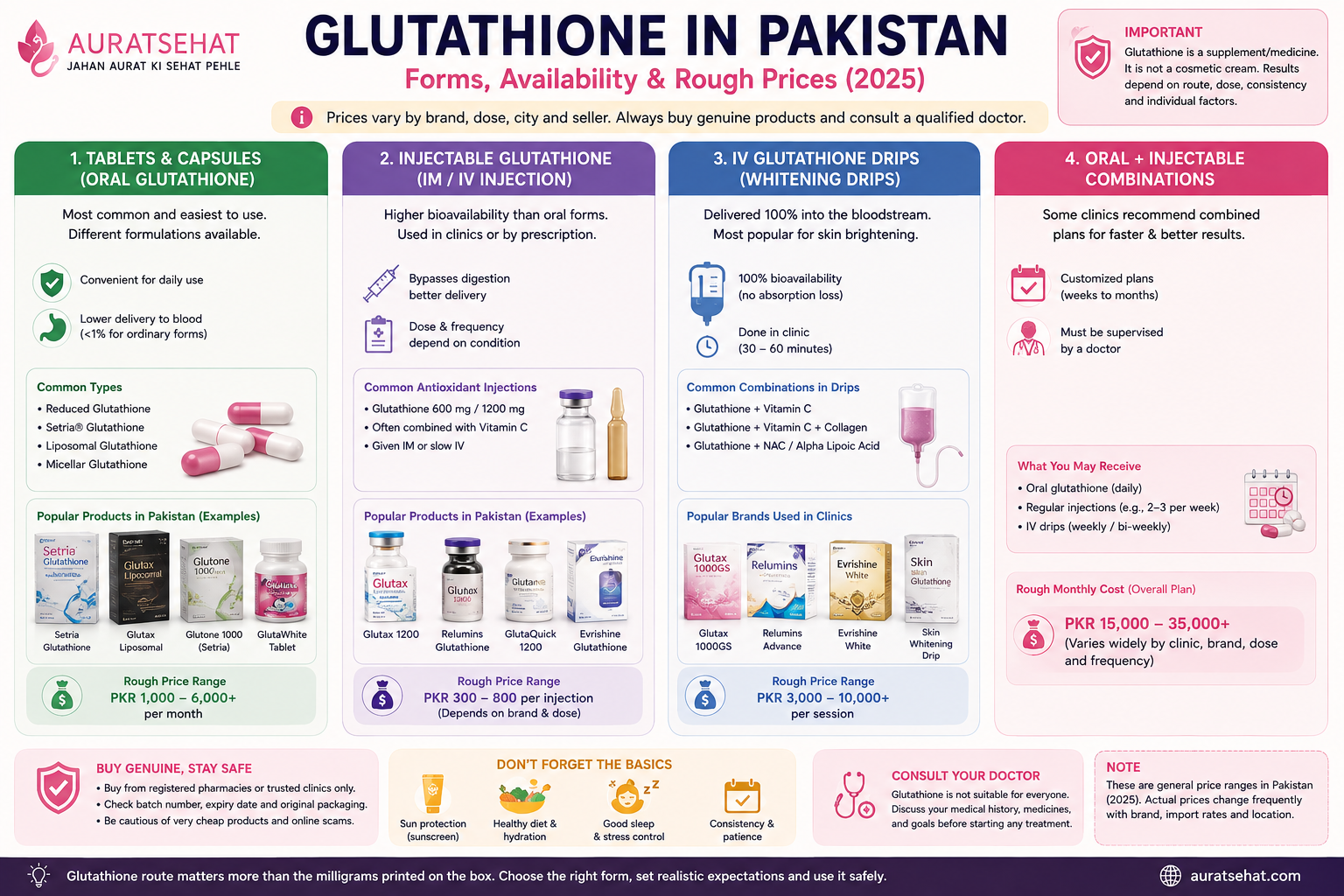
Be particularly careful with unusually cheap injections.
Injectable products create additional risks because purity, sterility, storage, authenticity and administration technique matter.
An attractive box or imported-looking label is not proof that an injectable product is genuine.
Is glutathione safe?
Oral glutathione
Short-term oral studies have generally reported relatively mild adverse effects. Possible problems can include gastrointestinal discomfort and intolerance.
However, long-term cosmetic use has not been studied as extensively as the popularity of glutathione supplements might suggest.
IV glutathione
IV use deserves much more caution.
Intravenous administration creates risks associated both with the substance itself and with IV treatment: allergic reactions, contamination, infection, dosing errors and complications related to venous access.
Published reviews have raised concerns including severe hypersensitivity reactions and liver-related adverse events, while long-term safety data for cosmetic IV use remain inadequate.
IV glutathione is not simply an oral supplement delivered “better.”
Once a treatment is injected directly into the bloodstream, the safety threshold should be much higher. Better bioavailability does not automatically make a treatment a better cosmetic choice.
Pregnancy, breastfeeding and medical conditions
Cosmetic skin-lightening with glutathione has not been adequately established as safe during pregnancy or breastfeeding.
For a treatment being used for cosmetic rather than medically necessary reasons, the absence of reassuring evidence matters.
Women with significant kidney, liver or other medical conditions — or anyone taking multiple medicines — should discuss supplementation with their doctor rather than assuming that an antioxidant is automatically harmless.
Injectable or IV glutathione should especially not be treated as a casual beauty treatment.
Should you use glutathione for skin whitening?
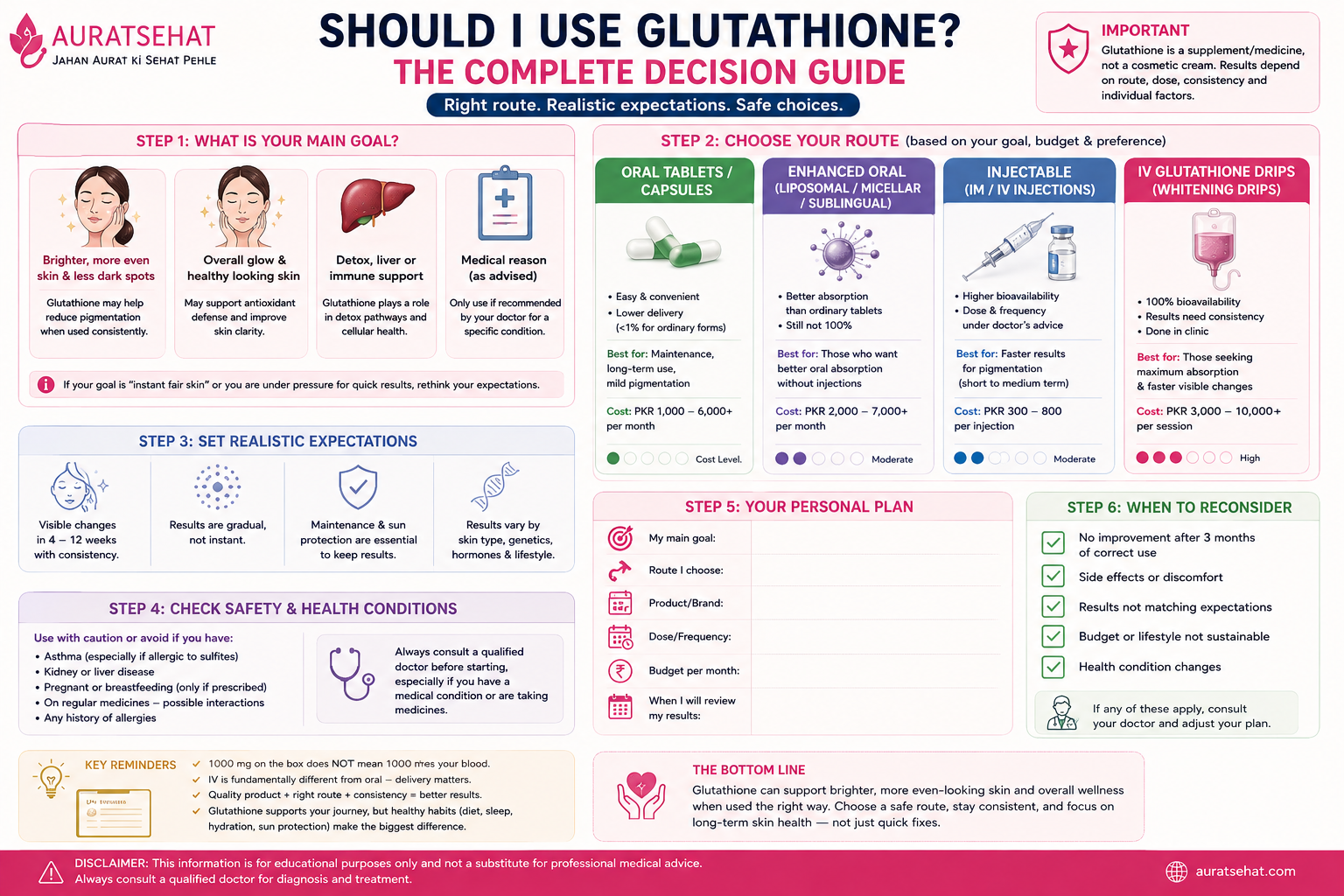
An oral product may be reasonable to discuss if:
- you understand that results are usually modest and variable;
- you are not expecting dramatic permanent whitening;
- you choose a reputable product;
- you understand that formulation matters;
- and you do not have a medical reason to avoid supplementation.
Think much more carefully before choosing IV glutathione if:
- the main reason is simply faster or stronger whitening;
- the clinic guarantees several shades of improvement;
- you cannot verify the injectable product;
- the provider treats it like a routine salon procedure;
- or there is little discussion of risks and alternative pigmentation treatments.
For many women, the better first question is not “How can I make my whole body fairer?”
It is:
Melasma, sun exposure, post-acne pigmentation, irritation and acanthosis nigricans all require different approaches. Explore the AuratSehat Skin Care section if pigmentation — rather than your natural skin colour — is what is bothering you.
Glutathione skin whitening FAQs
Does glutathione permanently whiten skin?
No permanent degree of whitening has been established. Improvements can fade after treatment stops, particularly when sun exposure and other triggers continue.
Is 1000 mg glutathione better than 500 mg?
Not necessarily. The number of milligrams does not tell you how much reaches systemic circulation. Formulation and absorption matter, and a larger oral dose is not automatically a better product.
Does liposomal glutathione absorb better?
Human studies suggest liposomal delivery can improve systemic glutathione exposure compared with ordinary formulations, but there is no universal absorption percentage that applies to every liposomal product.
Does IV glutathione absorb completely?
IV administration has 100% systemic bioavailability because the drug is delivered directly into the circulation. That does not mean it produces 100% whitening or that its whitening effect is proportional to its bioavailability.
Is IV glutathione better for skin whitening?
It provides far greater systemic delivery, but good evidence has not established a corresponding advantage in cosmetic skin lightening. Safety concerns also make IV use much harder to justify for a cosmetic purpose.
Can glutathione remove melasma?
Glutathione has been studied in melasma and may help pigmentation to some extent, but melasma is complex and usually requires targeted treatment and sun protection rather than relying on glutathione alone.
Can I take glutathione while pregnant?
Cosmetic glutathione supplementation has not been adequately established as safe in pregnancy. Skin-whitening treatment is generally not a reason to accept uncertain exposure during pregnancy.
Understand your pigmentation before treating it
Medical references
- Yin N, et al. Enhancing the Oral Bioavailability of Glutathione Using Innovative Analogue Approaches. Pharmaceutics. 2025;17(3):385. Full paper . This paper reports native glutathione oral bioavailability as below 1%.
- Sarkar R, Yadav V, Yadav T, et al. Glutathione as a skin-lightening agent and in melasma: a systematic review. International Journal of Dermatology. 2025;64(6):992–1004. PubMed .
- Dilokthornsakul W, Dhippayom T, Dilokthornsakul P. The clinical effect of glutathione on skin color and other related skin conditions: a systematic review. Journal of Cosmetic Dermatology. 2019. PubMed .
- Sinha R, et al. Oral supplementation with liposomal glutathione elevates body stores of glutathione and markers of immune function. PubMed Central .
- Davids LM, Van Wyk JC, Khumalo NP. Intravenous glutathione for skin lightening: inadequate safety data. South African Medical Journal. 2016;106(8):782–786. PubMed .