
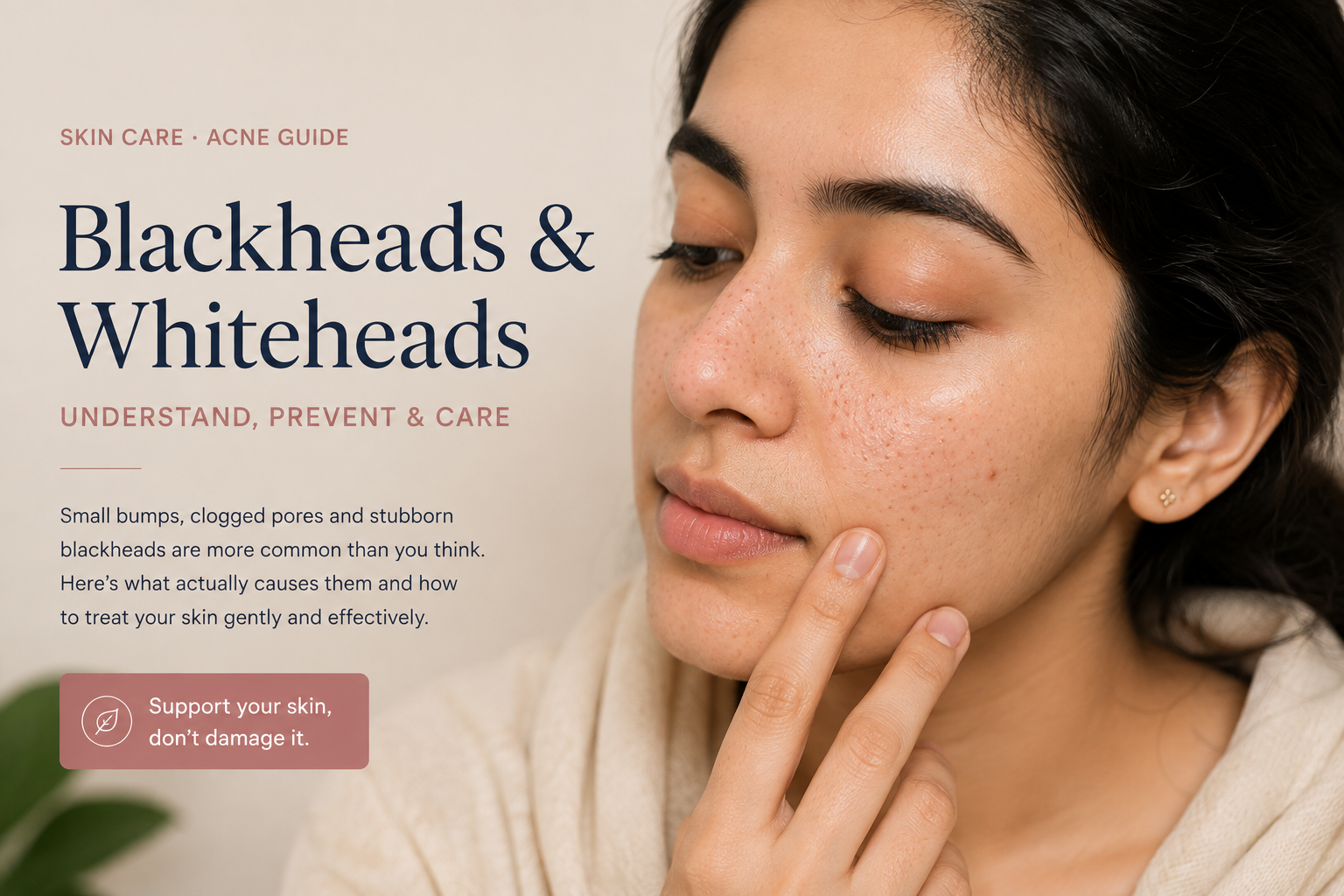
Both start with a clogged pore.
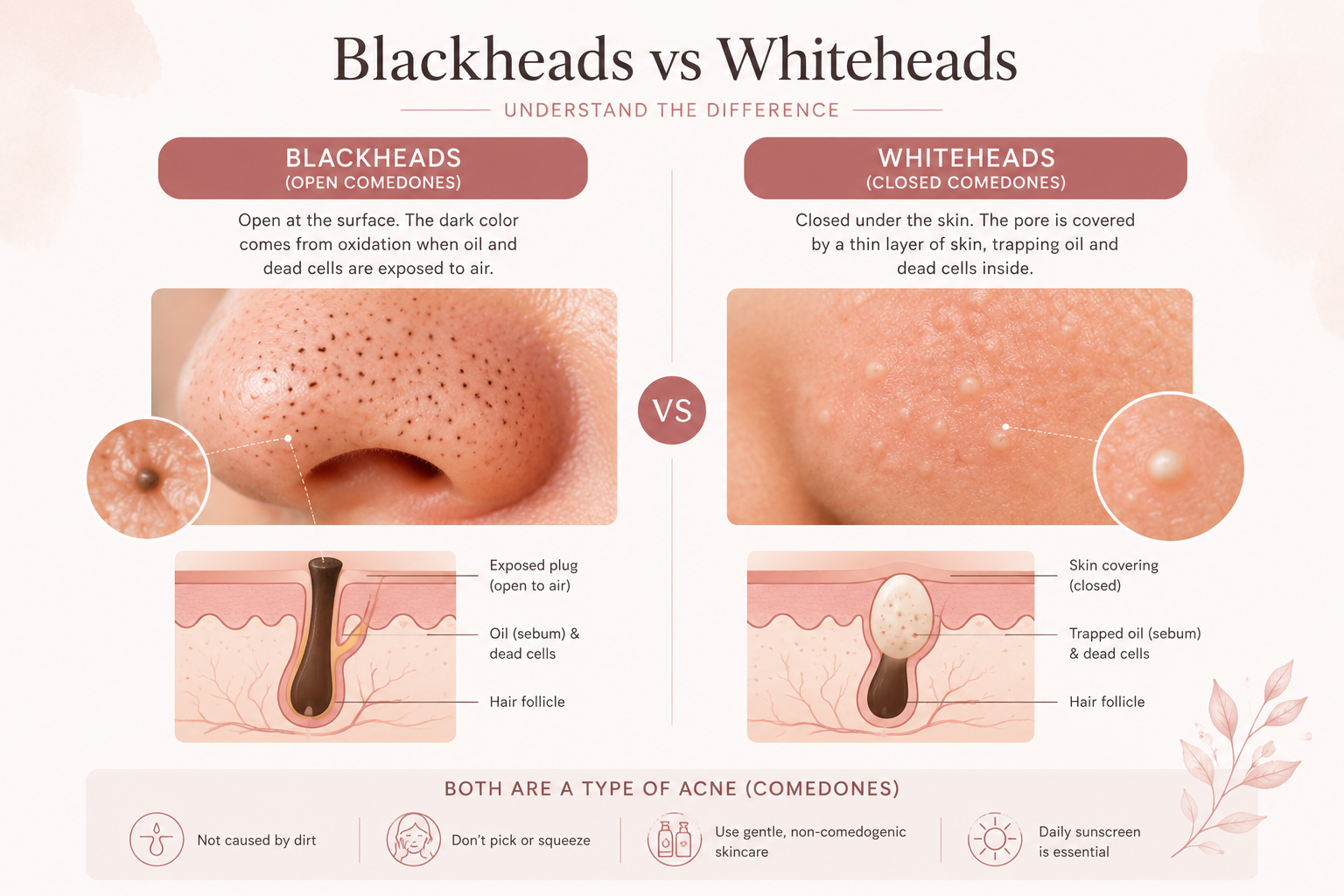
Blackheads and whiteheads are both comedonal acne. A blackhead forms when the clogged follicle remains open at the surface. A whitehead forms when the opening is closed by skin. Neither means your face is dirty.
Know what you’re looking at
Blackhead or whitehead?
They develop through a similar process, but the opening of the clogged follicle determines how they look.
Blackheads
Open comedonesA blackhead is a clogged follicle that remains open to the surface. The material inside is exposed to air and undergoes oxidation, giving the surface its dark appearance.
- Flat or slightly raised dark plugs
- Common around the nose, forehead and chin
- Usually not painful unless inflammation develops
- The dark colour is not trapped dirt
Whiteheads
Closed comedonesA whitehead develops when the clogged follicle remains closed at the surface, producing a small skin-coloured or whitish bump.
- Small closed bumps
- May be white or close to your natural skin colour
- Often occur on the forehead, cheeks and chin
- Can sometimes become inflamed
Inside your skin
How does a pore become clogged?
Your follicles naturally contain sebaceous glands that produce sebum. When excess sebum and dead skin cells accumulate inside a follicle, they can form a plug — the beginning of a comedone.
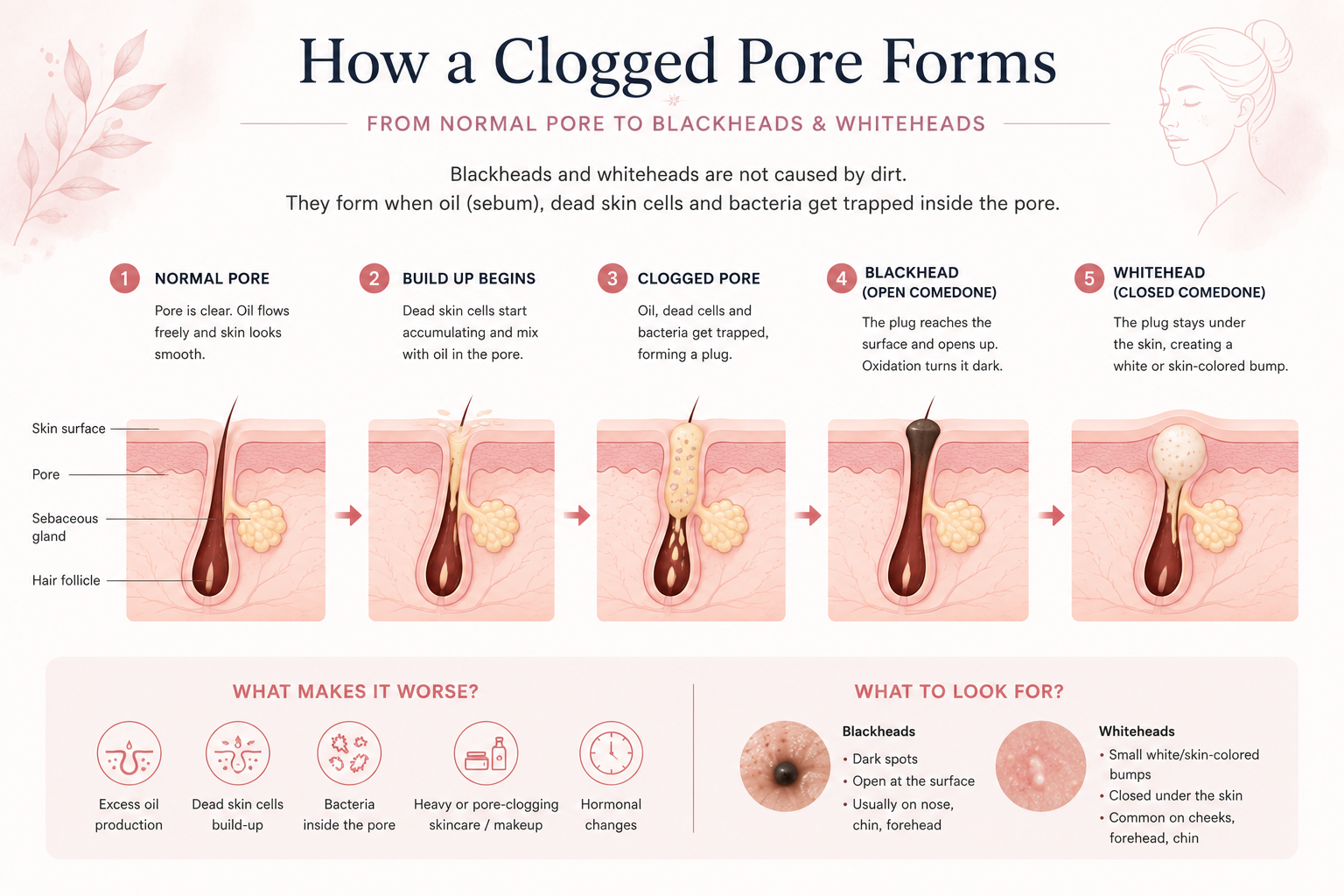
Simplified educational illustration. Comedones primarily form from follicular plugging involving sebum and dead skin cells; bacteria become more important in inflammatory acne.
Scrubbing harder will not “clean” the black colour away. Aggressive scrubbing can instead irritate your skin and damage the skin barrier.
Why me?
Why do some people get more clogged pores?
There usually isn’t one single cause. Oil production, the way skin cells shed, hormones and the products used on your skin can all influence comedonal acne.
Oil production
More sebum can make follicular plugging more likely, particularly in naturally oily skin.
Dead skin cells
Abnormal accumulation of cells inside the follicle contributes to the formation of comedones.
Hormones
Androgens and hormonal changes can influence sebaceous gland activity and acne.
Cosmetics & hair products
Some heavier or pore-clogging products may contribute to breakouts in acne-prone skin.
Genetics
Your tendency to develop acne is partly influenced by genetic and individual factors.
Friction & occlusion
Repeated friction or occlusion from certain clothing, equipment or products can worsen acne in some areas.
Treatment
What actually helps blackheads and whiteheads?
The goal isn’t to scrub pores clean. Good treatment helps prevent follicular plugging while keeping the skin barrier comfortable enough for you to stay consistent.
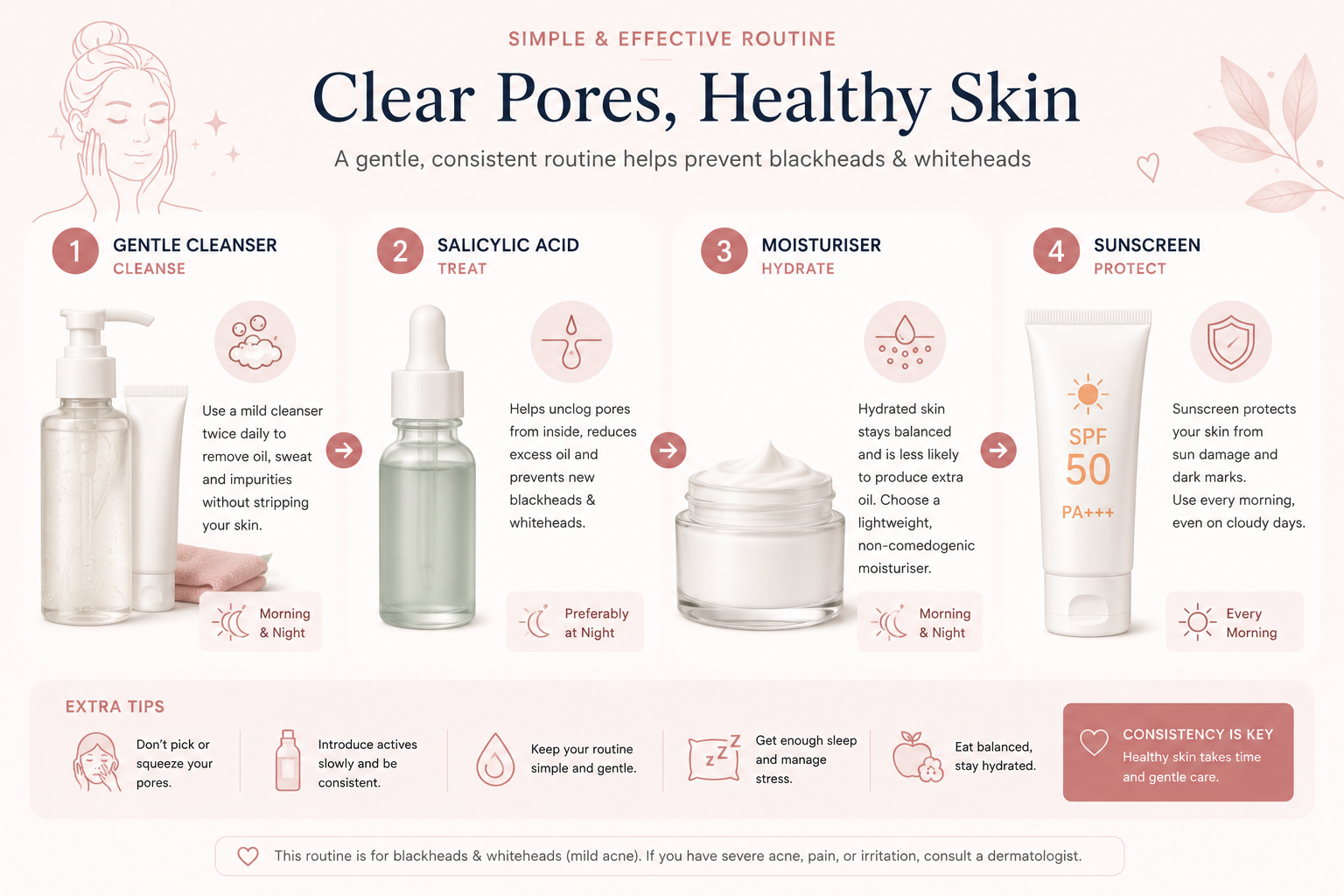
Cleanse gently
Use a mild cleanser rather than repeatedly scrubbing, brushing or trying to physically empty every pore.
Unclog pores
Salicylic acid can help exfoliate within pores and may be useful for comedonal acne.
Protect the barrier
A suitable non-comedogenic moisturiser can reduce dryness and irritation from acne treatments.
Protect from sun
Use broad-spectrum sunscreen during the day, particularly when using acne treatments that may irritate the skin.
What about salicylic acid?
Salicylic acid is a beta-hydroxy acid commonly used in acne products. It can help reduce follicular plugging and is particularly relevant to blackheads and whiteheads.
Start according to the product instructions and reduce frequency if your skin becomes excessively dry or irritated. More frequent use is not automatically better.
What about topical retinoids?
Topical retinoids such as adapalene can be very effective for comedonal acne because they help prevent new comedones from forming.
They can initially cause dryness or irritation and require appropriate guidance. Retinoids require special consideration during pregnancy or when trying to become pregnant, so discuss treatment with a healthcare professional in that situation.
Protect your skin
Four things that can make matters worse
Constant squeezing
Picking can traumatise the skin and increase irritation, inflammation and post-acne marks.
Harsh scrubbing
Blackheads are not dirt that needs to be scrubbed out. Aggressive exfoliation can damage the barrier.
Using everything at once
Starting several strong active ingredients together makes irritation more likely and troubleshooting harder.
Changing routines constantly
Acne improvement takes time. Constantly switching products can make it difficult to know what is helping.
When skincare isn’t enough
When should you see a doctor?
A few blackheads or whiteheads can often be managed with appropriate skincare, but acne deserves medical attention when the pattern changes or isn’t responding.
- You are developing painful or deep acne
- Your acne is leaving scars or persistent marks
- Appropriate over-the-counter care isn’t helping
- Your skin is becoming very irritated from treatments
- You aren’t sure whether the bumps are actually acne
- Acne is affecting your confidence or wellbeing
AuratSehat Acne Finder
Not sure these bumps are blackheads or whiteheads?
Answer a few questions about what your spots look like, where they appear and how they behave to explore which acne pattern may fit you most closely.
Explore the Acne Hub
Learn more about your acne
Acne can involve clogged pores, inflammation, hormones, deeper lesions and changes that remain after the breakout heals.
Keep exploring
Your acne doesn’t have to be a guessing game.
Explore the complete Acne Hub, identify your acne pattern, or ask a doctor if you’re unsure what your skin needs.