
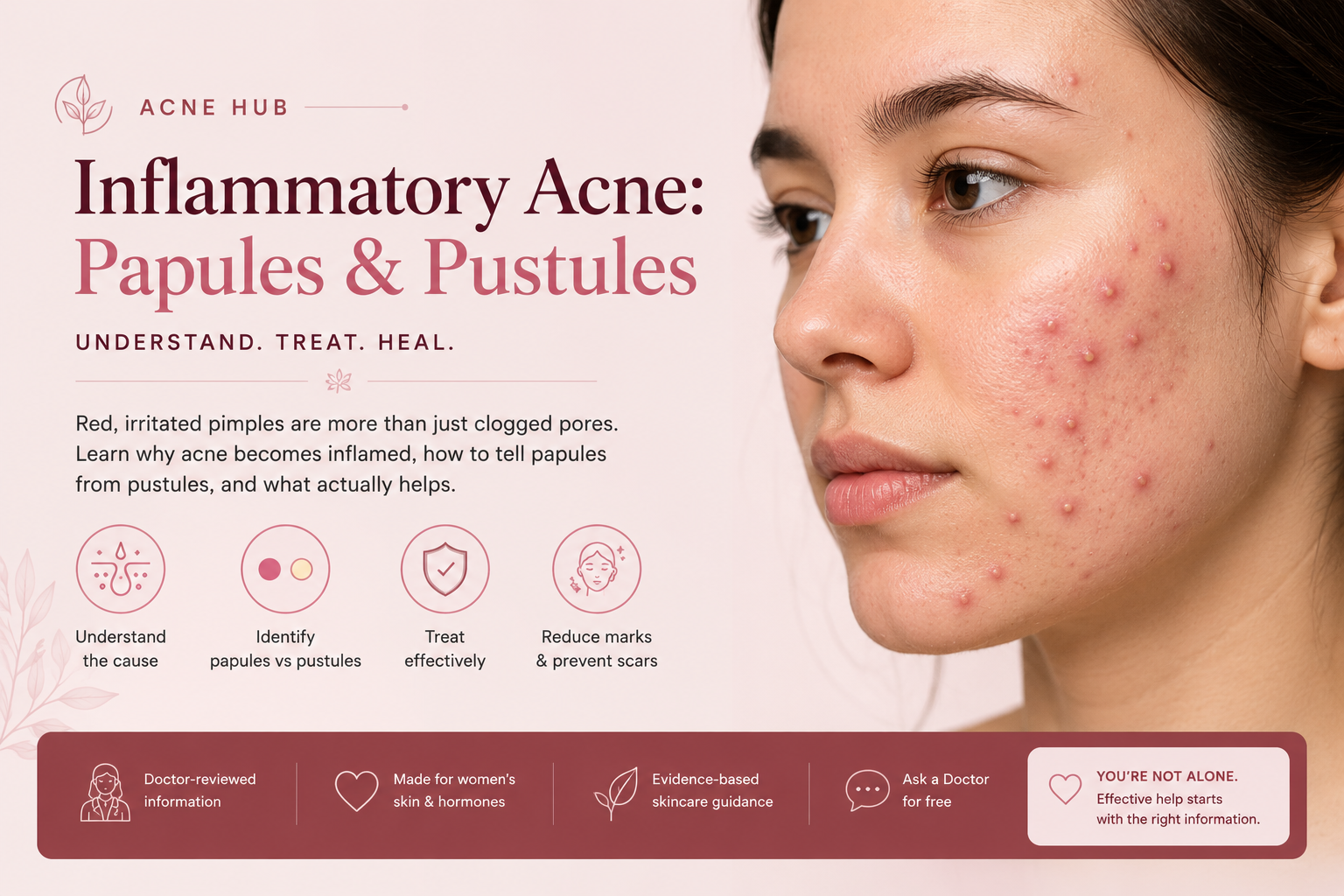
Inflammatory Acne: Papules & Pustules
Red, angry-looking pimples are different from simple clogged pores. Learn how to tell papules from pustules, why acne becomes inflamed, and what can actually help.
What is inflammatory acne?
Having a pustule does not mean your skin is dirty, and the presence of pus does not mean that squeezing the spot is the right treatment.
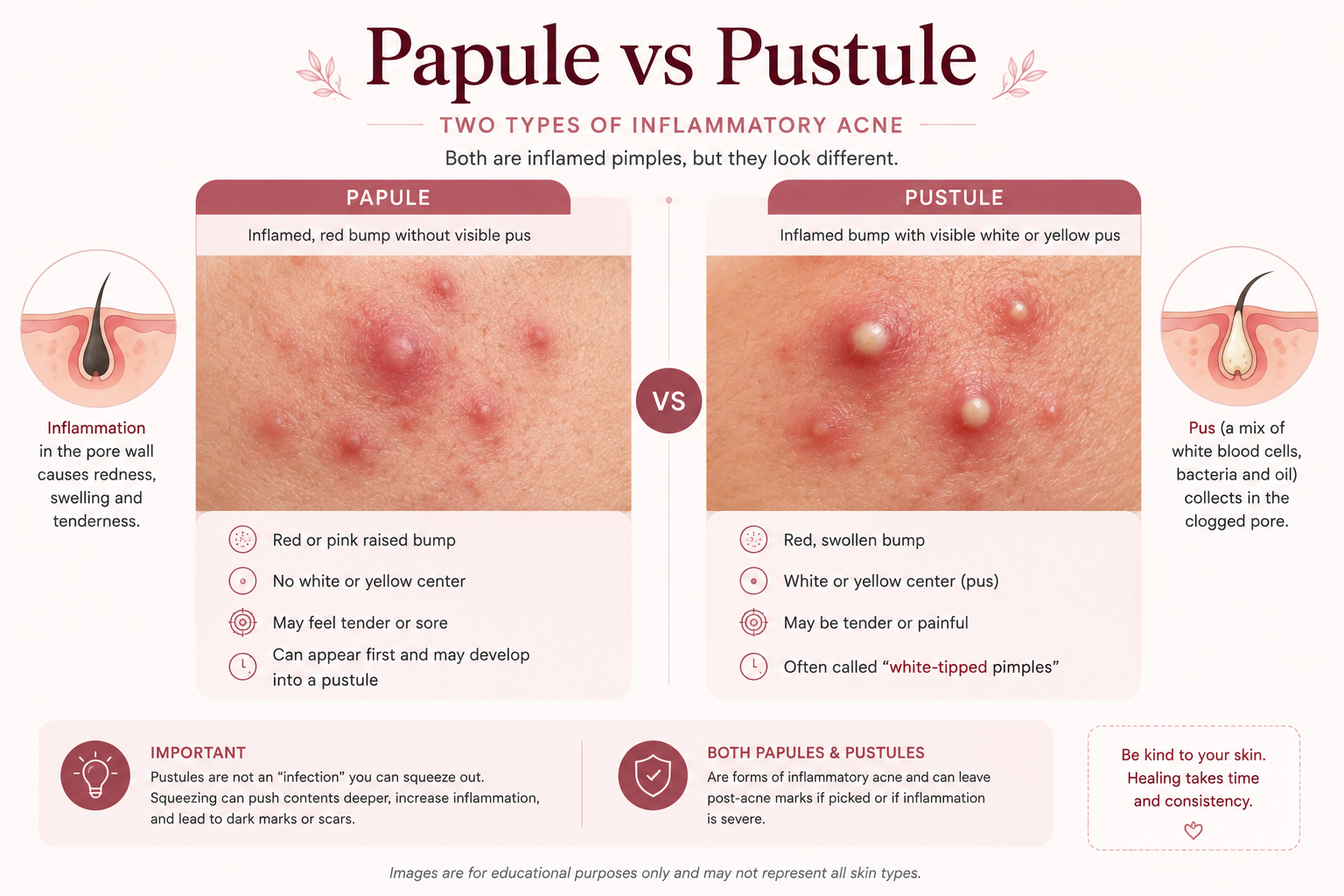
Papule or pustule?
They are both inflammatory acne lesions, but their appearance is slightly different.
Red, raised & inflamed
- Usually red, pink or inflamed-looking
- No obvious white or yellow pus-filled centre
- May feel tender when touched
- Often develops when a clogged follicle becomes inflamed
Inflamed with a visible centre
- Raised inflammatory acne lesion
- Usually has a visible white or yellowish centre
- Often surrounded by redness
- Commonly described as a pus-filled pimple
How does a clogged pore become inflamed?
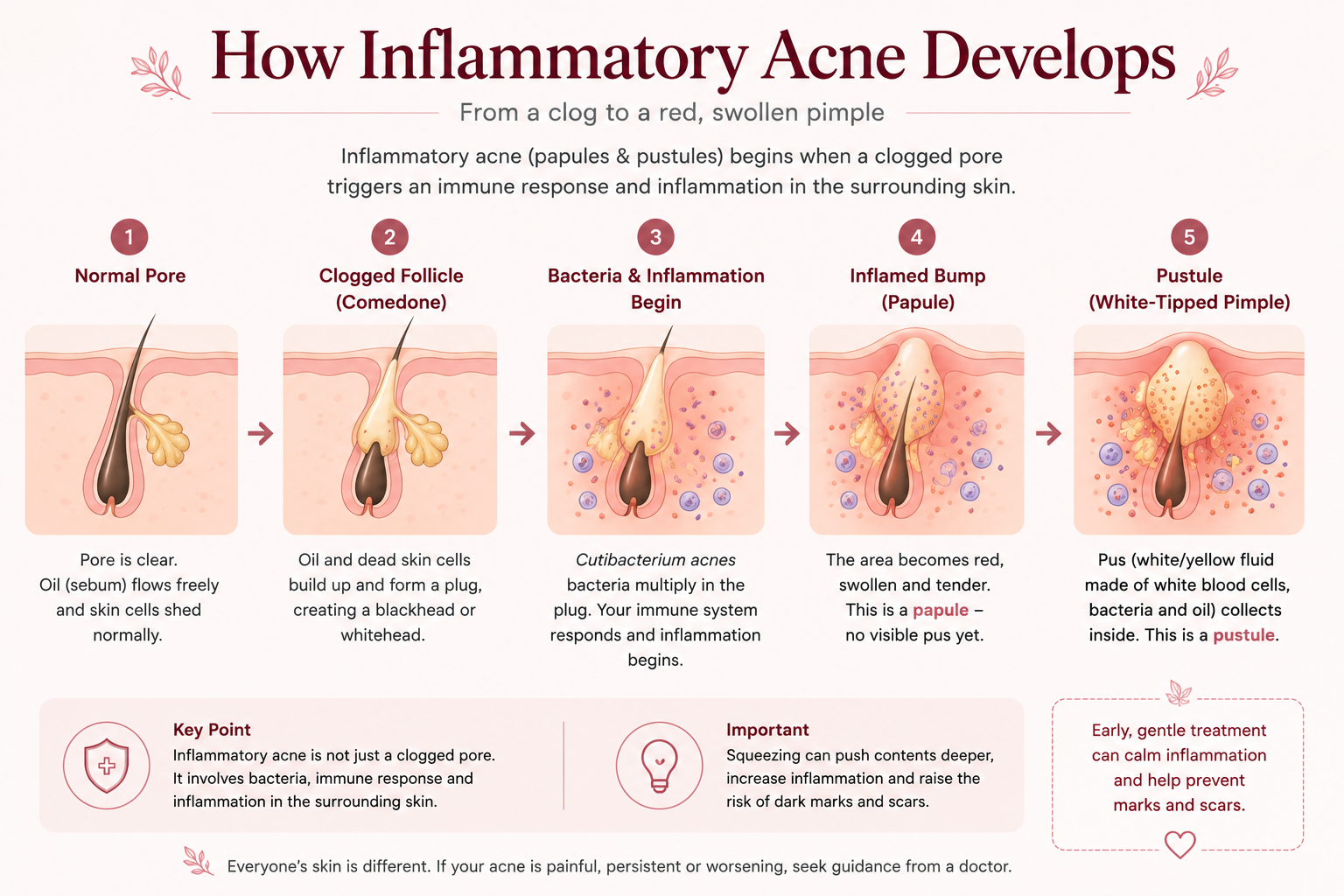
Acne often begins when oil and dead skin cells contribute to blockage of a hair follicle.
In inflammatory acne, changes within that clogged follicle, acne-associated bacteria such as Cutibacterium acnes, and your immune response contribute to inflammation.
This is why inflammatory pimples can look red, swollen and feel more tender than a simple blackhead or whitehead.
If your main problem is clogged pores rather than inflamed pimples, start with our Blackheads & Whiteheads guide →
Why am I getting inflammatory acne?
Usually there isn’t one single cause. Several factors can work together to make inflammatory breakouts more likely.
Oil & clogged follicles
Excess sebum and dead skin cells can contribute to follicle blockage, creating the environment in which acne develops.
Inflammation
Your immune response plays an important role in the redness, swelling and tenderness of inflammatory acne.
Acne-associated bacteria
Cutibacterium acnes normally lives on skin but also participates in the inflammatory process involved in acne.
Hormonal influences
Hormonal changes can influence oil production and may contribute to recurring acne in some women.
Genetics
Your tendency to develop acne can partly run in families.
Individual triggers
Occlusive products, friction, certain medications and other individual factors may contribute to breakouts in some people.
How severe is your inflammatory acne?
The number, depth and persistence of lesions matter when deciding how acne should be treated.
A few inflamed spots
Occasional papules or pustules affecting a limited area, sometimes alongside blackheads and whiteheads.
Recurrent inflammation
More numerous papules and pustules, repeated outbreaks or acne affecting several areas.
Painful deeper lesions
Deep, firm or painful lumps suggest a different level of inflammatory acne and carry a greater risk of scarring.
What actually helps inflammatory acne?
Good treatment targets acne while protecting the skin barrier. More irritation does not mean better results.
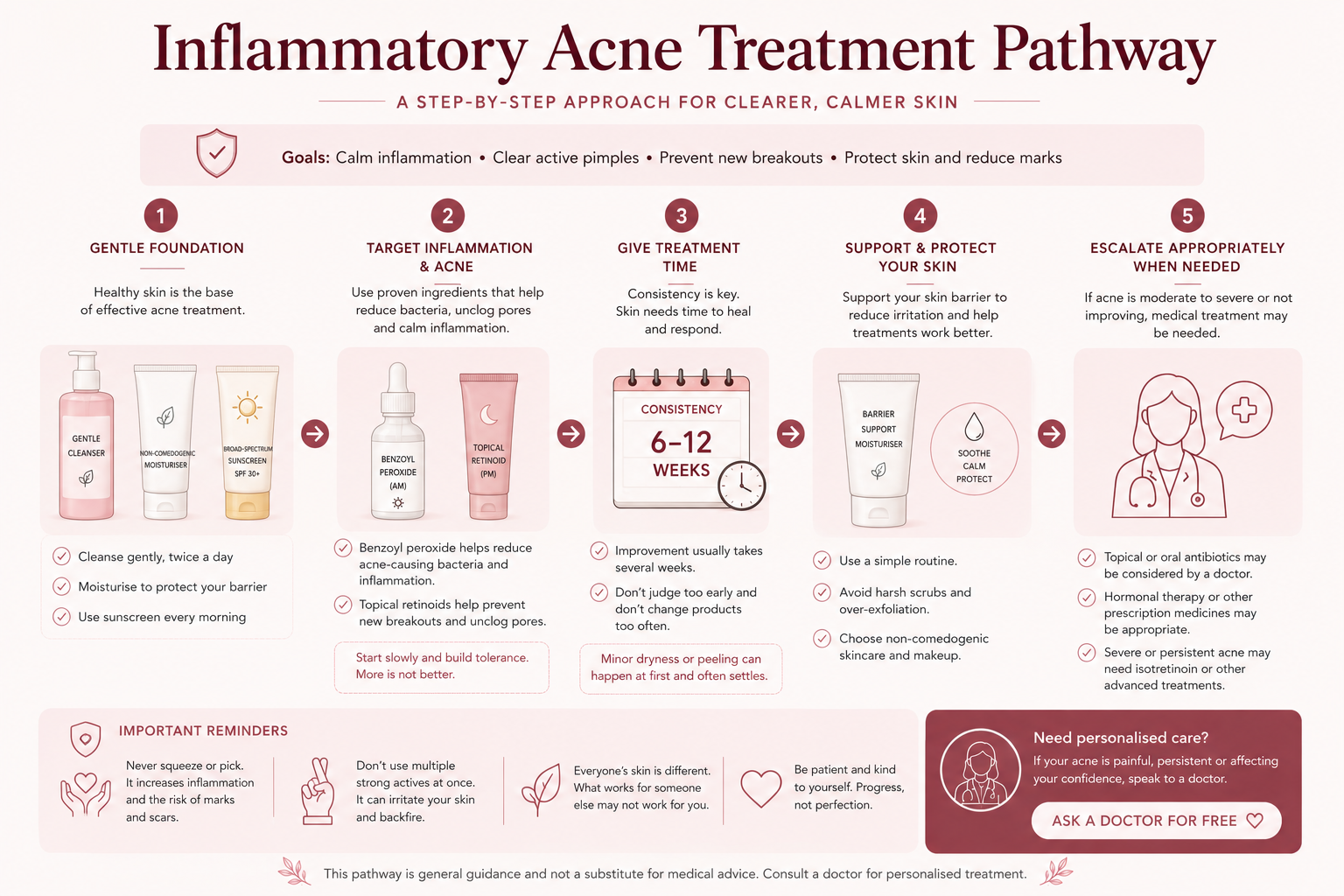
Start with a gentle foundation
Use gentle cleansing, a suitable non-comedogenic moisturiser and daily sun protection. Harsh scrubbing is not necessary to treat acne.
Target the acne
Evidence-based topical treatments can include benzoyl peroxide and topical retinoids. The best choice depends on your acne, skin tolerance and individual circumstances.
Give treatment time
Acne usually does not improve overnight. Consistent treatment over weeks is more useful than repeatedly changing products every few days.
Escalate when necessary
Moderate, persistent, scarring or severe inflammatory acne may need prescription treatment and medical assessment.
Pregnant or trying to conceive? Some common acne medicines, particularly topical and oral retinoids, are not appropriate during pregnancy. Discuss acne treatment with a qualified healthcare professional if you are pregnant or planning pregnancy.
Should I pop a pustule?
It can be tempting to squeeze a visible white-tipped pimple, but picking or squeezing can increase inflammation and physically damage the surrounding skin.
That can increase the chance of persistent marks and, particularly with deeper inflammation, scarring.
Why does acne leave a dark mark?
Inflammation can trigger extra pigment production in the skin. This can leave a flat brown or darker area after the active pimple has settled.
This is called post-inflammatory hyperpigmentation and is not necessarily the same thing as an acne scar.
Learn about Acne Marks & Dark Spots →When should you see a doctor?
You do not need to wait until acne becomes severe before asking for professional advice.
- Numerous or persistent inflammatory pimples
- Deep, painful lumps or nodules
- Acne that is starting to scar
- Persistent dark marks after breakouts
- Acne that is not improving despite appropriate care
- Acne that is affecting confidence or emotional wellbeing
- A sudden or unusual change in your acne pattern
- You are pregnant or trying to conceive and need treatment advice
Not sure if you have papules, pustules, clogged pores or deeper acne?
Answer a few simple questions about what your breakouts look and feel like. We’ll help you understand which acne pattern your answers fit most closely.
Find My Acne →Educational tool only. It does not diagnose skin conditions.
Continue learning about your acne
Different acne patterns often occur together. Explore the guide that best matches what you’re seeing.
Understand your acne before treating it.
Explore the complete Acne Hub to learn about acne types, causes, treatment, skincare and when to seek medical help.
← Back to Acne Hub