
Late or Missed Period — Why Hasn’t My Period Come?
A late period can immediately make you wonder what is happening. Pregnancy is one possibility, but it is far from the only reason a period can arrive late or not come at all.
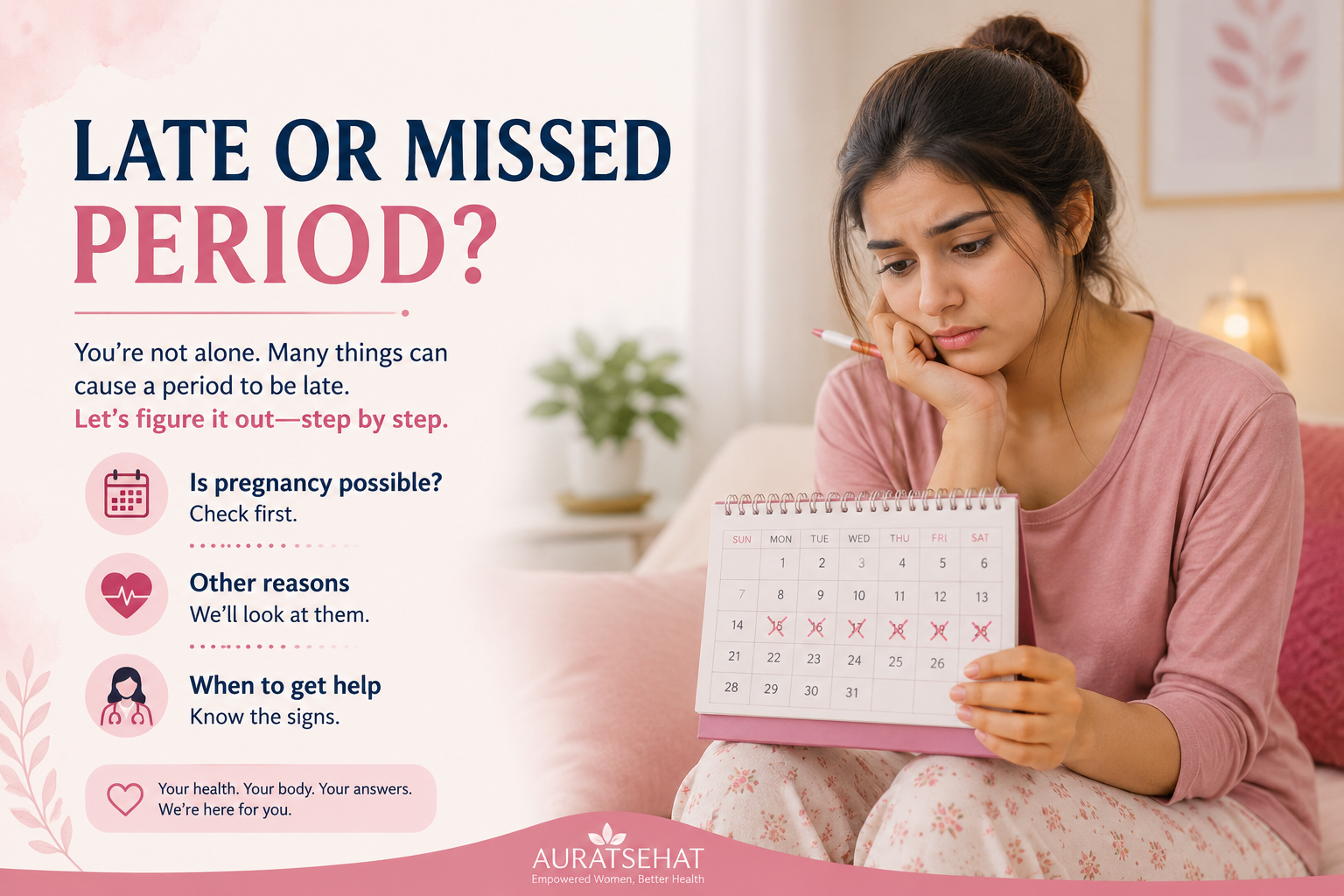
If there has been any possibility of pregnancy, check for pregnancy first. If pregnancy is not possible or appropriately timed pregnancy tests remain negative, other causes include PCOS, stress, major weight or nutrition changes, thyroid problems, high prolactin, some medicines or hormonal contraception, breastfeeding and age-related hormonal changes.
One late period does not automatically mean something is wrong. What matters most is whether this is a one-off change or part of a repeated pattern.
First, understand your cycle
How late is a period actually “late”?
Your menstrual cycle does not have to arrive on exactly the same calendar day every month. Even women who usually have predictable periods can occasionally have a cycle that is somewhat earlier or later than expected.
One common reason is simply that ovulation happened later than usual. When ovulation shifts later, the next period usually shifts later too.
This is why it is more useful to understand your usual pattern than to assume every cycle must be exactly 28 days.
The first question
Could pregnancy be possible?
When a period is late or missed, pregnancy is the first possibility that should be considered if there has been any possibility of pregnancy.
You do not need to decide whether your symptoms “feel like pregnancy.” Early pregnancy and premenstrual symptoms can overlap, and some pregnancies cause very few symptoms in the beginning.
Take a pregnancy test at an appropriate time. If you test too early, a negative result may not reliably exclude pregnancy.
You can move on to other reasons a period may be late, starting with common causes such as PCOS and changes affecting ovulation.
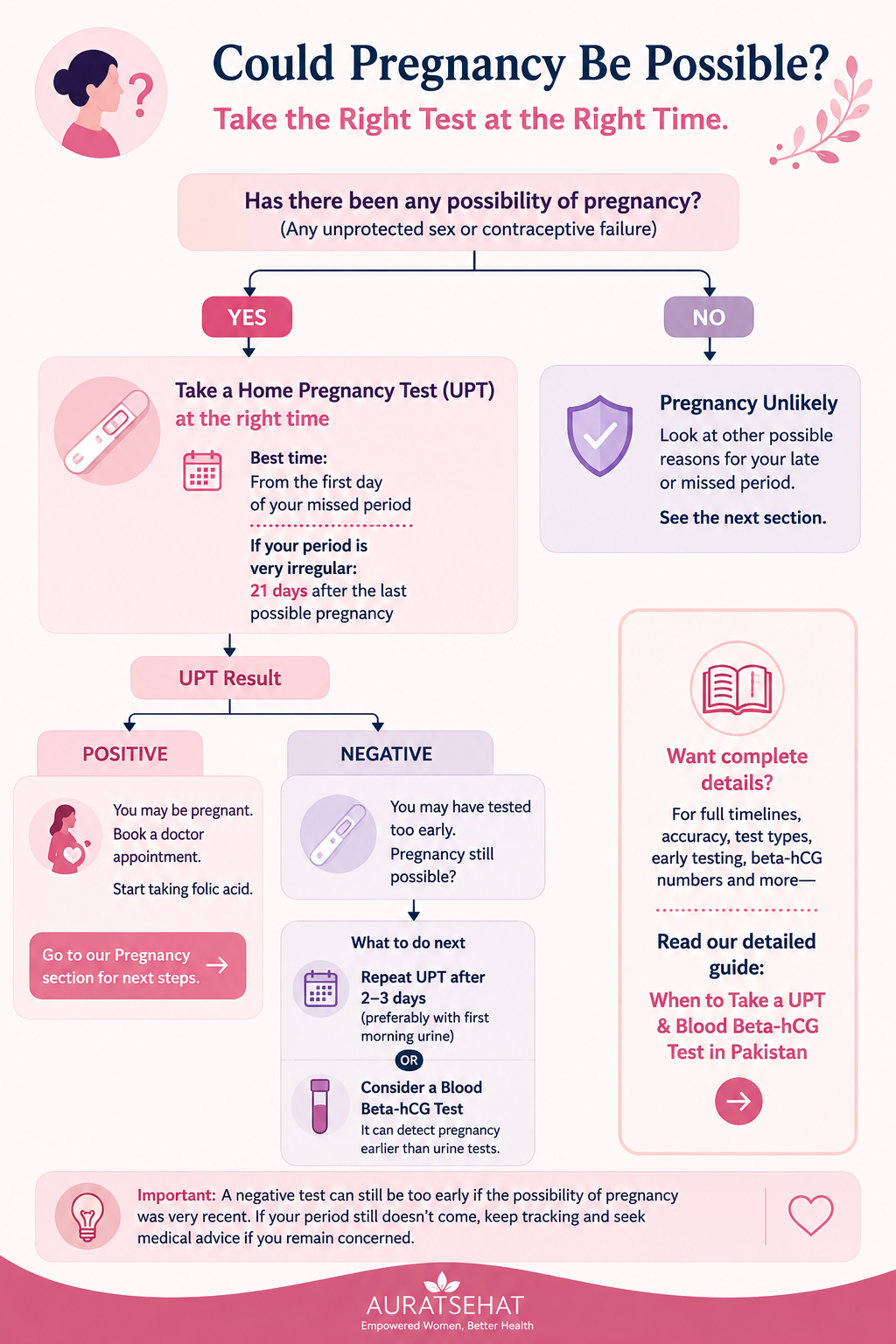
When should I take a pregnancy test?
If your period is already late, a home urine pregnancy test (UPT) can usually be taken now. Follow the instructions supplied with the particular test you are using.
A home UPT becomes much more useful around the time your period is expected or after it has been missed. Testing very early increases the chance of receiving a negative result even when a pregnancy is developing.
Pregnancy is likely. Move into appropriate early-pregnancy care rather than repeatedly testing simply because symptoms change from day to day.
Think about when you tested. If testing was early and pregnancy remains possible, repeating the test after an appropriate interval may be useful.
What if my UPT is negative but I am still worried?
A negative home test only tells you that the test did not detect enough hCG at that particular time. Later ovulation, later implantation, very dilute urine or simply testing too soon can sometimes explain an early negative result.
A quantitative blood beta-hCG test can detect smaller amounts of hCG and may become positive earlier than a urine test. It can therefore be useful when pregnancy uncertainty remains or when a clinician needs more information.
But blood testing is not magic either: if the possibility of pregnancy was very recent, even beta-hCG can be too early.
If your test is positive, you can continue into the AuratSehat Pregnancy Hub for early-pregnancy guidance, symptoms, tests and scans.
Pregnancy excluded?
What else can make a period late?
Once pregnancy is not a realistic explanation, the next question is whether something has changed the timing of ovulation or the hormonal signals controlling your menstrual cycle.
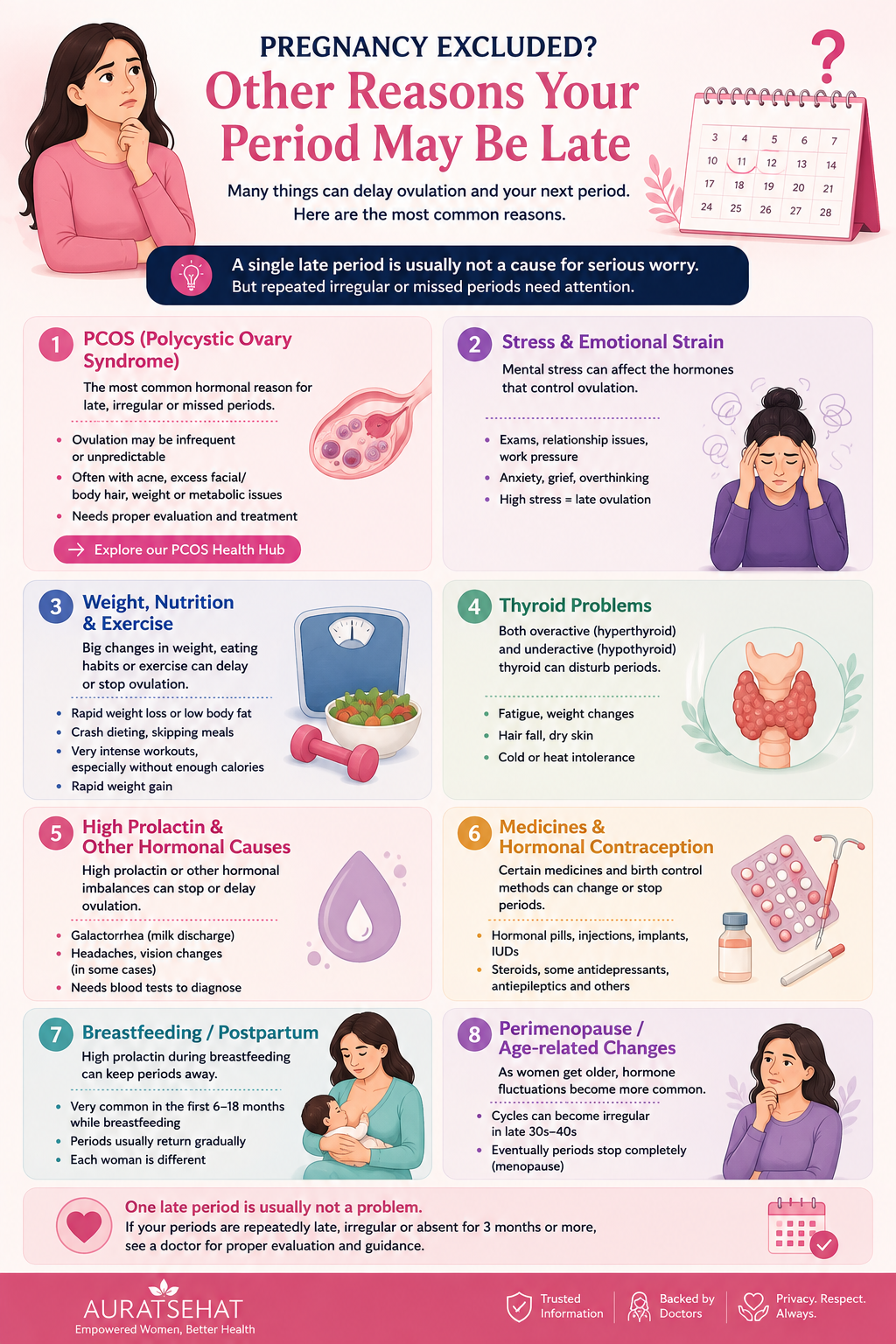
1. PCOS
Polycystic ovary syndrome (PCOS) is an important cause of repeatedly late, irregular or missed periods.
In PCOS, ovulation may happen late, happen unpredictably or sometimes not happen during a cycle. When ovulation becomes irregular, the period naturally becomes irregular too.
But one late period does not mean you have PCOS. PCOS becomes more relevant when the pattern keeps happening, particularly alongside other features.
Already wondering specifically how PCOS affects your cycle? Read PCOS & Irregular Periods .
2. Stress
Significant emotional or physical stress can affect the hormonal signals controlling ovulation. If ovulation occurs later, your period will usually arrive later as well.
3. Weight, nutrition & exercise
Rapid weight loss, inadequate nutrition, very intensive exercise or major weight changes can disturb ovulation and menstrual timing.
4. Thyroid problems
Both underactive and overactive thyroid conditions can affect menstrual cycles. Other symptoms may include changes in weight, energy, temperature tolerance, skin or hair.
5. High prolactin & other hormonal causes
Raised prolactin and other endocrine conditions can interfere with ovulation. Doctors may consider these when periods remain absent or repeatedly irregular.
6. Medicines & contraception
Hormonal contraception can change bleeding patterns or make periods very light or absent. Some other medicines can also influence menstrual cycles.
7. Breastfeeding & postpartum changes
Periods may remain absent or unpredictable after childbirth, particularly during breastfeeding. The timing of their return varies substantially between women.
8. Perimenopause
As reproductive hormone patterns change approaching menopause, cycles can become less predictable. Age and the overall menstrual pattern matter when considering this possibility.
Temporary body changes
Travel, disrupted sleep, recent illness or other temporary physical changes can sometimes shift ovulation and therefore change when the next period arrives.
A common question in Pakistan
Can I take something to bring my period?
When a period refuses to come, it can be tempting to take a hormonal tablet simply to make bleeding start.
Medicines containing a progestogen, including medicines such as norethisterone in selected situations, can cause withdrawal bleeding after an appropriate prescribed course. But making bleeding happen is not the same as understanding why your period was absent.
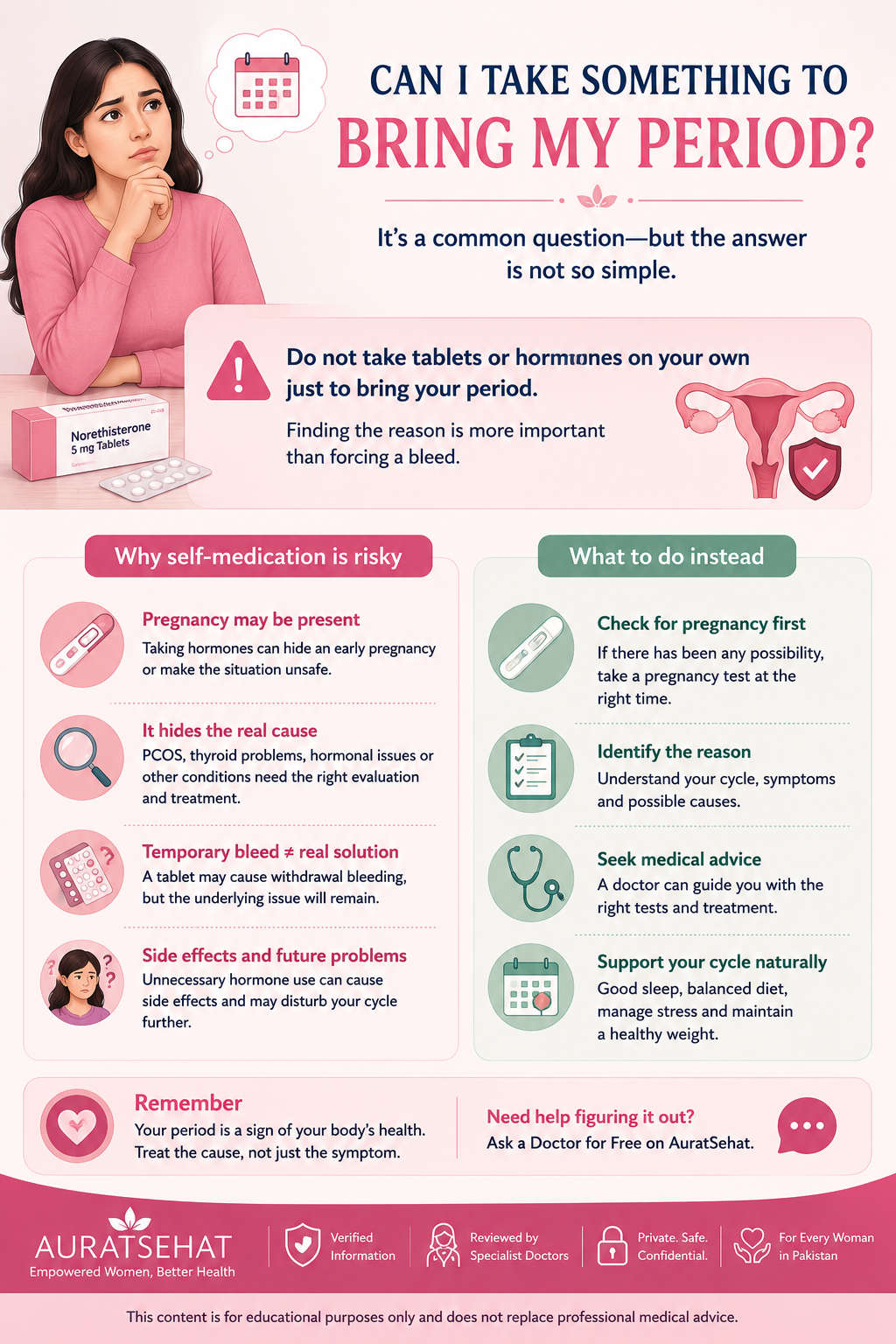
If there has been any possibility of pregnancy, pregnancy should be appropriately considered first. If periods keep disappearing or becoming very irregular, the underlying cause deserves attention rather than repeated unsupervised hormone use.
What about home remedies?
Foods, teas, herbs, spices and other traditional remedies are often recommended for “bringing periods.” There is no reliable home remedy that can guarantee an unexplained late period will safely start.
If the delay is related to PCOS, thyroid disease, pregnancy, inadequate nutrition, stress or another underlying problem, treating or understanding that cause is more useful than trying to force bleeding.
Know when to get checked
When should I see a doctor?
One unusual cycle does not necessarily mean you need extensive testing. But a recurring change deserves more attention.
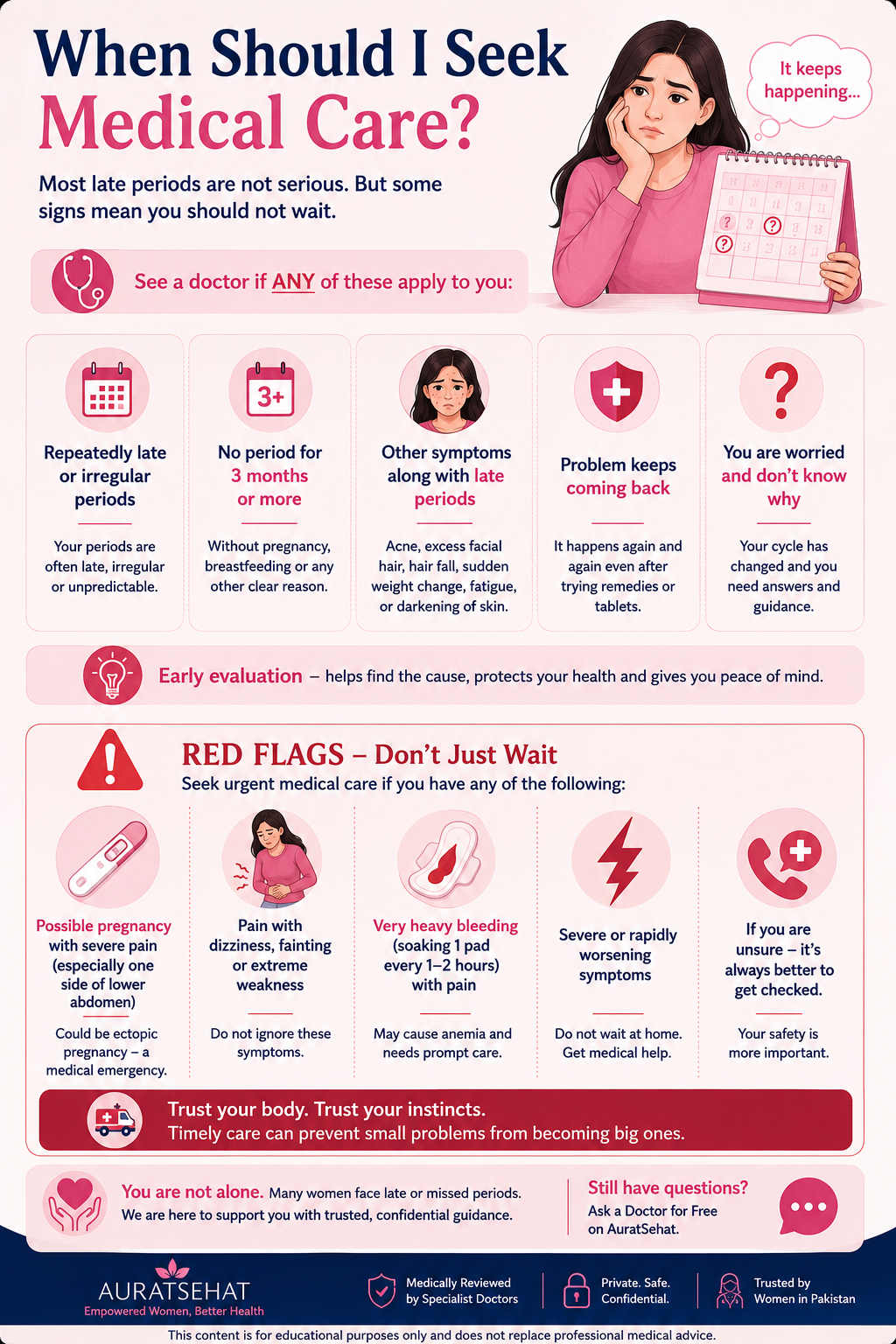
Your periods repeatedly become late, irregular or absent; you have gone around three months without a period without an expected explanation; the change is accompanied by other hormonal symptoms; or the problem keeps returning and you do not understand why.
What might a doctor check?
Not every late period needs an ultrasound and a long list of hormone tests. Evaluation depends on your age, usual cycle, symptoms, medicines, pregnancy possibility and how long the problem has been happening.
The goal is not simply to produce a bleed. It is to understand whether the cycle change is temporary or whether there is a condition that needs treatment or follow-up.
Don’t just wait for your period if you feel seriously unwell
A late period plus significant pain or bleeding can sometimes represent something more important, particularly when pregnancy may be possible.
If pregnancy may be possible and you have significant pain, bleeding, fainting or severe dizziness, do not rely only on another home pregnancy test. Early-pregnancy complications such as ectopic pregnancy need medical assessment.
Common questions
Late or Missed Period FAQs
Does one late period mean I have PCOS?
My UPT is negative. Could I still be pregnant?
Can a blood beta-hCG test detect pregnancy earlier?
Can stress really make my period late?
Can I take a tablet to bring my period?
Can a home remedy make my period come immediately?
How long without a period should make me seek medical advice?
What should I do if my pregnancy test becomes positive?
Continue learning
Where should I go next?
Need personal guidance?
Still worried about why your period hasn’t come?
If your pregnancy test is confusing, your period keeps disappearing, or you are not sure which cause fits your situation, you can send your question to AuratSehat for general medical guidance.
Ask a Doctor for Free →