
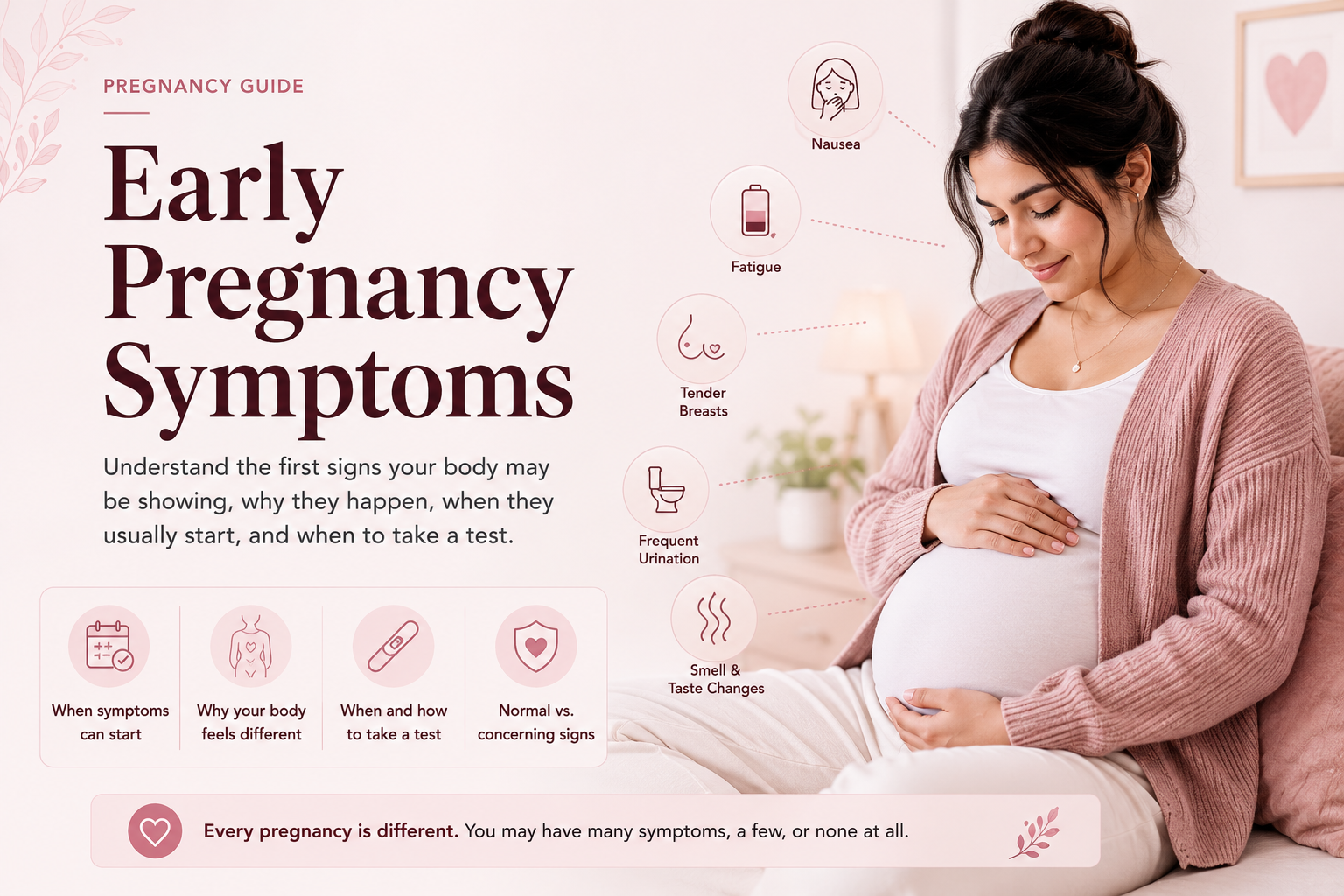
Early Pregnancy Symptoms
What the first signs of pregnancy may feel like, when they can start, why they happen, when to take a pregnancy test, and which symptoms should not be ignored.
A missed period is often the earliest reliable clue if your periods are normally regular, but early pregnancy can also cause nausea, tiredness, sore breasts, frequent urination, bloating, constipation and changes in smell or taste. You may have several symptoms, only one or two, or no noticeable symptoms at all. Symptoms alone cannot confirm pregnancy — a pregnancy test is needed.
Waiting to find out whether you are pregnant can make every small change in your body feel important.
Breast soreness may suddenly feel suspicious. You may notice smells more strongly than usual, feel exhausted for no obvious reason, or wonder whether mild cramps mean your period is coming.
The difficult part is that many early pregnancy symptoms are also common before a period. There is no single symptom that can reliably tell you, by itself, that you are pregnant.
Can symptoms really tell me if I’m pregnant?
They can provide clues, but they cannot give you a definite answer.
Early pregnancy symptoms are caused by a mixture of hormonal changes, increased blood flow and the physical changes beginning inside the uterus. But hormones also change during a normal menstrual cycle, which is why pregnancy and premenstrual symptoms can overlap so much.
If your menstrual cycles are regular, a missed period is often the earliest and most reliable sign that it is time to consider a pregnancy test.
How early can pregnancy symptoms start?
Pregnancy is dated from the first day of your last menstrual period, even though conception usually occurs roughly two weeks later in a typical 28-day cycle.
This means that during what doctors call weeks 1 and 2 of pregnancy, conception may not even have happened yet.
Fertilization and implantation are occurring around this stage. Most women do not yet have clear pregnancy symptoms.
Your expected period may not arrive. Some women begin noticing breast tenderness, fatigue, mild cramping or other subtle changes.
Rising pregnancy hormones can make symptoms more noticeable. Nausea commonly begins around this period.
Nausea, tiredness, breast changes, smell sensitivity and other first-trimester symptoms may become more obvious.
There is a huge amount of individual variation. One woman may feel pregnant before her missed period, while another may reach several weeks of pregnancy with almost no symptoms.
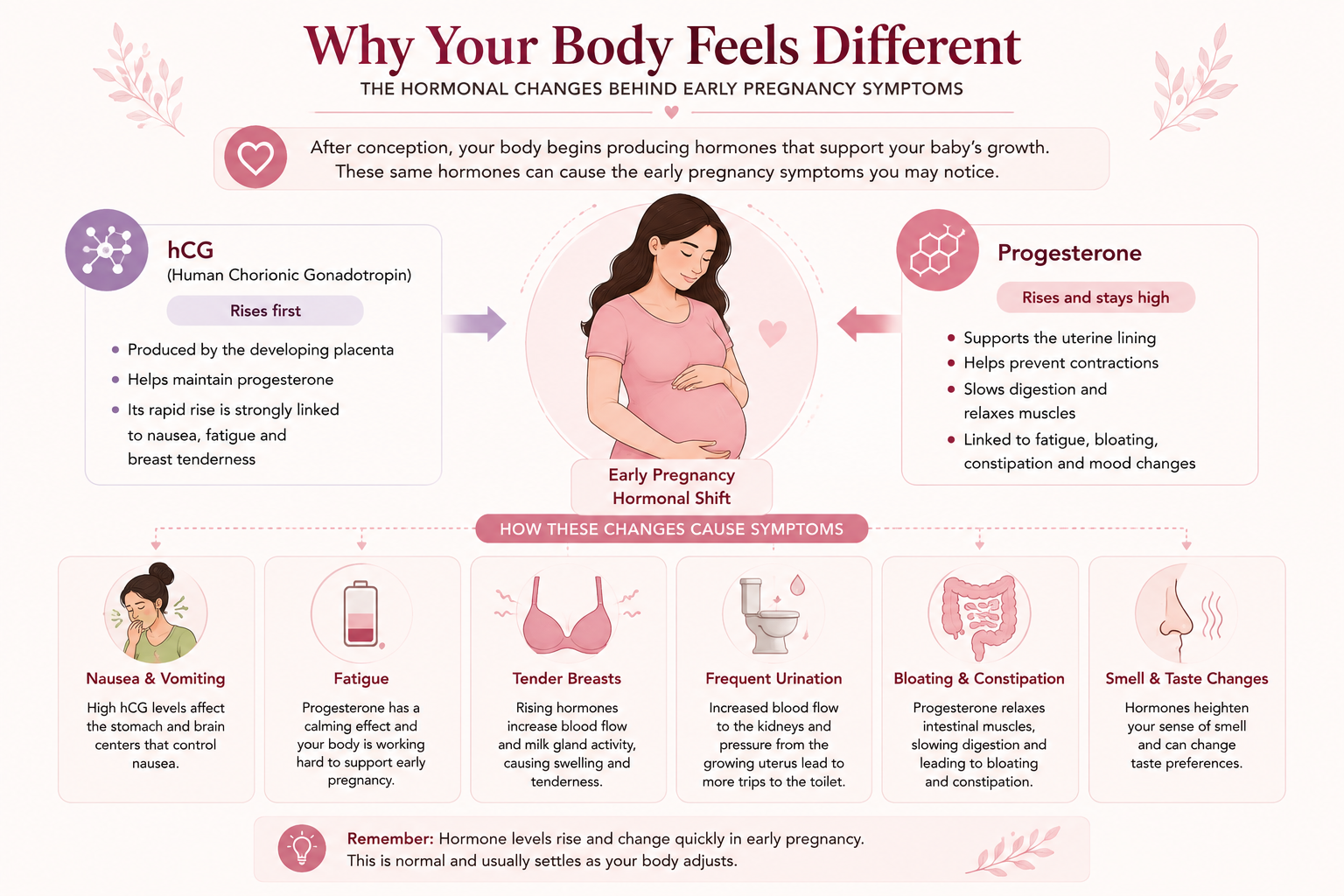
Why does your body feel different so early?
Shortly after implantation, pregnancy-related hormones begin changing rapidly. Two important hormones during this period are human chorionic gonadotropin (hCG) and progesterone.
hCG is produced after implantation and supports the hormonal environment needed for early pregnancy. Progesterone helps maintain the uterine lining, while also affecting many tissues throughout your body.
These changes help support the pregnancy, but they can also contribute to symptoms such as nausea, tiredness, breast tenderness, bloating and constipation.
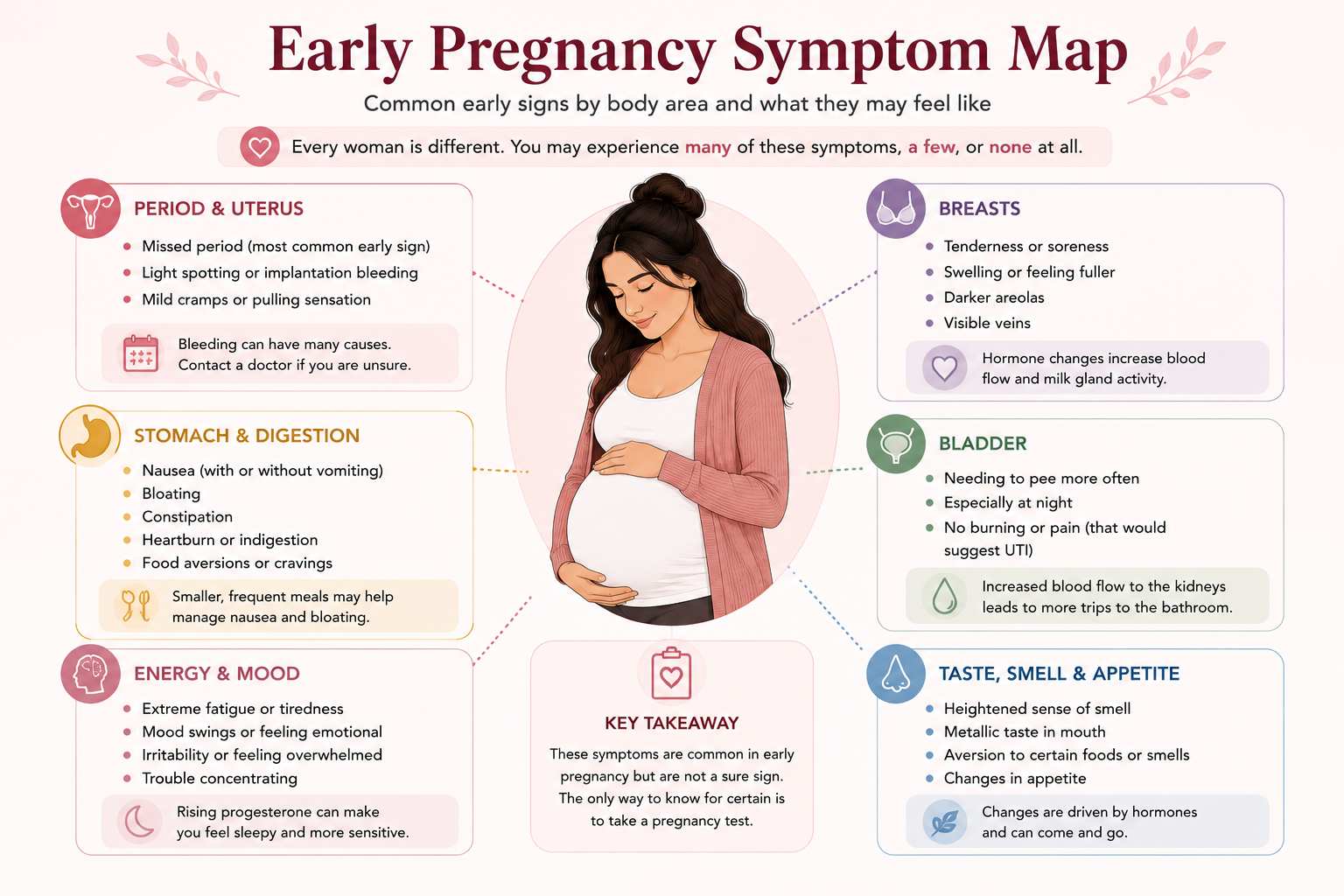
Common early pregnancy symptoms
You do not need to experience all of these symptoms to have a healthy pregnancy. Their intensity can also change from one day to the next.
Missed or lighter period
For women with regular cycles, a missed period is one of the most useful early signs. Some women have light bleeding or spotting instead.
Nausea or vomiting
“Morning sickness” can happen in the morning, afternoon, evening or overnight. It commonly begins around 4–6 weeks of pregnancy.
Feeling unusually tired
Significant fatigue is common in the first trimester. Hormonal changes and the body’s increased workload can make you feel sleepier than usual.
Tender or fuller breasts
Breasts may feel sore, heavy, swollen or sensitive. Nipples may become more prominent and the areola may gradually darken.
Needing to urinate more often
Increased blood flow through the kidneys can make you need the toilet more frequently, sometimes even before the uterus becomes noticeably larger.
Bloating or constipation
Progesterone can slow bowel movement, which may contribute to bloating, gas and constipation.
Changes in smell or taste
Some women become unusually sensitive to cooking smells, perfumes or other scents. A metallic taste can also occur.
Food aversions or appetite changes
Foods you normally enjoy may suddenly seem unpleasant, while other tastes or foods may become more appealing.
Mild cramping
Some women experience mild period-like cramps or pulling sensations in early pregnancy. Severe or persistent pain needs assessment.
Mood changes
Hormonal changes, tiredness and the emotional experience of early pregnancy can all affect mood.
PMS or early pregnancy — how can I tell?
This is one of the most difficult distinctions to make based on symptoms alone.
PMS and early pregnancy can both cause breast tenderness, bloating, mild cramps, tiredness, appetite changes and mood changes.
Overlapping symptoms
- Breast tenderness
- Bloating
- Fatigue
- Mild cramps
- Mood changes
- Food cravings
Clues that make testing useful
- Your expected period does not arrive
- Nausea develops
- You begin urinating more frequently
- New smell or taste sensitivity appears
- Symptoms persist beyond when your period was expected
Even these differences are not definitive. The practical next step is not to keep analysing symptoms — it is to test at the appropriate time.
When should you take a pregnancy test?
Pregnancy symptoms cannot confirm pregnancy. The timing of your test matters, especially if you are testing very early or your first result is negative.
Read: When to Test for Pregnancy →Can I be pregnant with no symptoms?
Yes.
Some women have very noticeable first-trimester symptoms, while others have only mild breast tenderness or a missed period. Some feel almost completely normal during the earliest weeks.
A lack of nausea, breast pain or other classic symptoms does not automatically mean something is wrong.
More symptoms do not necessarily mean a healthier pregnancy, and fewer symptoms do not necessarily mean there is a problem. Symptoms vary widely.
Is it normal for symptoms to come and go?
Yes. Early pregnancy symptoms can vary from day to day.
You may feel very nauseated one morning and relatively well the next. Breast tenderness can become stronger or weaker, and fatigue can fluctuate with sleep, hydration, food intake and hormonal changes.
A sudden change in symptoms by itself cannot diagnose a problem. If the change occurs together with significant bleeding, severe pain, fainting or another concerning symptom, however, you should seek medical assessment.
What about spotting or “implantation bleeding”?
Light spotting can occur around the time an early pregnancy is developing, and some women notice a small amount of bleeding around when their period would normally have been expected.
However, it is not possible to look at bleeding at home and confidently prove that it is caused by implantation.
Bleeding in early pregnancy can have several causes. Some are relatively harmless, while others include miscarriage or ectopic pregnancy.
Do not automatically dismiss bleeding as “implantation bleeding.” If you are pregnant or may be pregnant and have vaginal bleeding, particularly if it is increasing, recurring or associated with pain, contact a healthcare professional for advice.
Are cramps normal in early pregnancy?
Mild period-like cramping can occur in early pregnancy and does not automatically indicate a miscarriage.
The important distinction is between mild discomfort and pain that is severe, persistent, strongly one-sided or accompanied by other warning symptoms.
One-sided lower abdominal pain combined with bleeding, shoulder-tip pain, dizziness or fainting can occur with an ectopic pregnancy and requires urgent medical assessment.
What’s usually uncomfortable — and what is concerning?
Pregnancy can produce symptoms that are uncomfortable without necessarily being dangerous. The severity, combination and progression of symptoms matter.
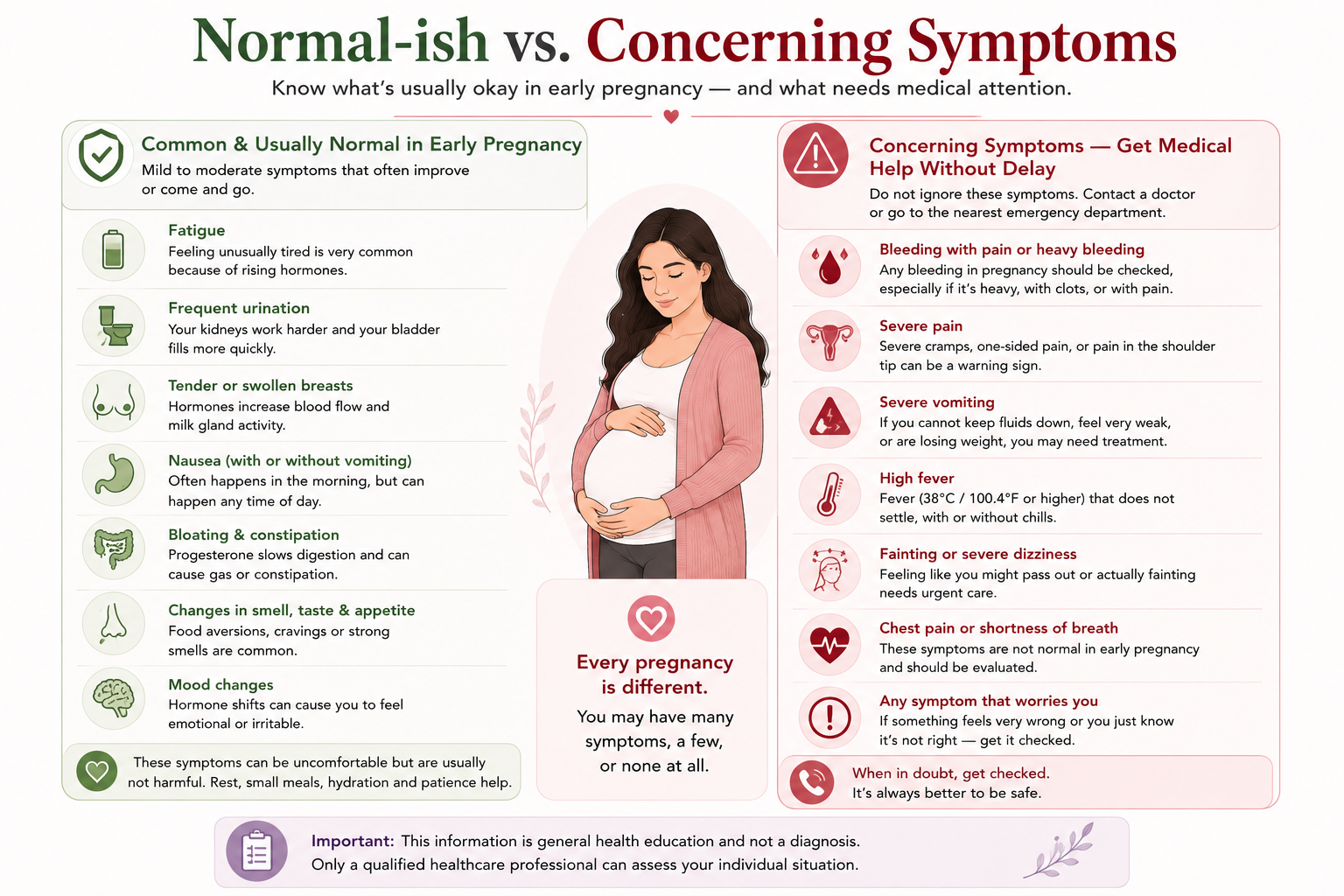
When should I not wait for symptoms to settle?
Seek urgent medical help if you are pregnant or may be pregnant and develop symptoms that could indicate a serious complication.
Especially if bleeding is increasing, soaking pads, contains clots, or occurs with pain or weakness.
Severe pain, particularly when localized to one side, should not simply be attributed to normal pregnancy cramps.
This combination can occur with internal bleeding from an ectopic pregnancy and needs urgent assessment.
Do not wait at home for these symptoms to resolve if they are significant or occur with pain or bleeding.
Severe pregnancy vomiting can cause dehydration and may require treatment.
Fever during pregnancy should be assessed, particularly when persistent or accompanied by pain, urinary symptoms or other illness.
These symptoms need prompt medical assessment and should not be dismissed as a normal early pregnancy change.
Serious pregnancy complications can occur before your first routine antenatal visit. If you have severe symptoms, seek appropriate medical care rather than waiting for a scheduled appointment.
What should I do after a positive pregnancy test?
Once a home pregnancy test is positive, the next step is to begin thinking about early pregnancy care rather than repeatedly testing based on symptoms.
Important early steps include taking appropriate folic acid, reviewing medicines and supplements, planning your first antenatal assessment and knowing which symptoms should lead you to seek care earlier.
If you have an existing medical condition, use long-term medicines, have previously had an ectopic pregnancy or recurrent pregnancy loss, or develop bleeding or significant pain, your doctor may advise earlier assessment.
Turn a positive test into your pregnancy journey
Build your personalized AuratSehat Pregnancy Care Map to see where you are now, what comes next, and important pregnancy milestones as the weeks progress.
Start My Pregnancy →Frequently asked questions
What is usually the first sign of pregnancy?
If your periods are normally regular, a missed period is often the earliest reliable clue. Some women notice fatigue, breast tenderness or other changes before this, but symptoms alone cannot confirm pregnancy.
Can pregnancy symptoms start before my missed period?
Some women notice subtle symptoms before their expected period, but many of these changes overlap with PMS. Testing at the appropriate time is much more reliable than trying to diagnose pregnancy from early symptoms.
Can I be pregnant if I have no nausea?
Yes. Nausea is common but not universal. A healthy early pregnancy can occur without morning sickness or other strong symptoms.
Is morning sickness only in the morning?
No. Pregnancy nausea can occur at any time of the day or night. The term “morning sickness” can therefore be misleading.
Is frequent urination normal very early in pregnancy?
It can be. Increased blood flow through the kidneys contributes to more frequent urination. Burning, pain, fever or very cloudy or foul-smelling urine may suggest a urinary infection and should be discussed with a doctor.
Does spotting mean miscarriage?
Not necessarily. Light bleeding can occur in pregnancies that continue normally, but bleeding can also have other causes. It should not automatically be labelled as implantation bleeding. Seek medical advice, particularly if bleeding is heavy, increasing or accompanied by pain or dizziness.
Can pregnancy symptoms disappear suddenly?
Symptoms naturally fluctuate and can become milder as hormone patterns change. A reduction in symptoms alone cannot diagnose miscarriage. If you also have significant bleeding, severe pain, fainting or another concerning symptom, seek medical assessment.
When should I take a pregnancy test?
Testing is generally most useful around the time your period is due or after it has been missed, although exact timing depends on the test and your cycle. If you test too early, a negative result may not rule out pregnancy. Read our full When to Test for Pregnancy guide for a more detailed testing timeline.
Ask a Doctor for Free
Worried about a symptom or unsure what it means? Send your question to AuratSehat for general medical guidance. Severe or emergency symptoms should be assessed in person without delay.
Ask a Doctor for Free →Medical references
- NHS. Signs and symptoms of pregnancy. Guidance on missed periods, nausea, fatigue, breast changes, frequent urination, constipation, vaginal discharge and taste or smell changes in early pregnancy.
- NHS. Pregnancy symptoms you need to get help for. Guidance on symptoms during pregnancy that require medical assessment, including severe vomiting, fever and significant pain.
- NHS. Vaginal bleeding in pregnancy. Guidance on assessment of bleeding and associated warning symptoms.
- American College of Obstetricians and Gynecologists. Bleeding During Pregnancy. Patient guidance on bleeding during pregnancy and when medical assessment is needed.
Medical Content & Editorial Team, AuratSehat
Obstetrics & Gynaecology
AuratSehat medical content is created for health education and reviewed for clinical accuracy where appropriate. It does not replace an individual consultation, examination, diagnosis or treatment plan from your own doctor.