
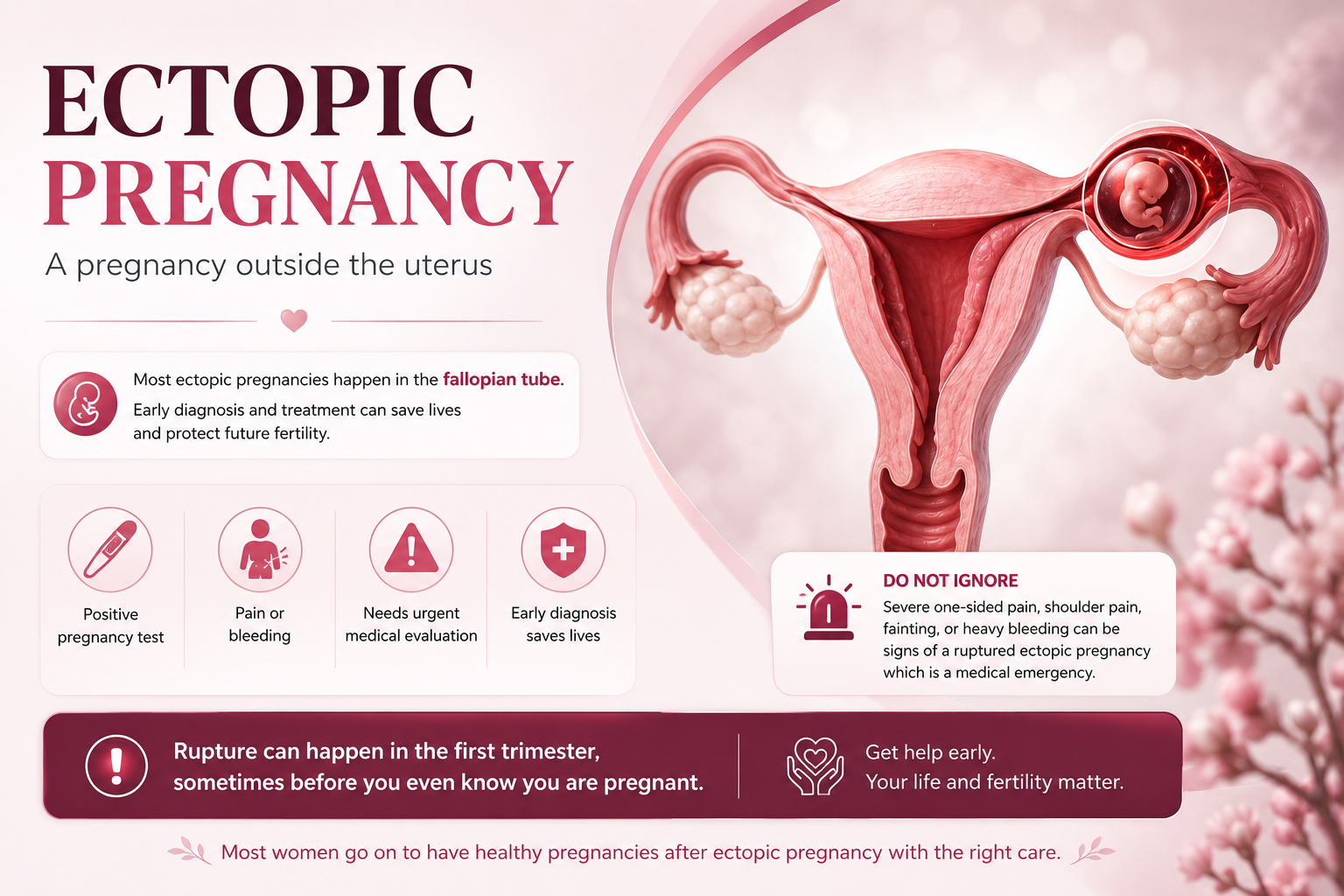
An ectopic pregnancy happens when a fertilised egg implants somewhere outside the normal cavity of the uterus. More than 90% occur in a fallopian tube.
A pregnancy cannot safely continue growing in a fallopian tube. If the tube tears or ruptures, blood can collect inside the abdomen and cause life-threatening internal bleeding.
Most importantly, an ectopic pregnancy can become dangerous during the first trimester. A woman does not need to be many months pregnant before rupture can occur.
What is an ectopic pregnancy?
In a normal pregnancy, the fertilised egg travels through the fallopian tube and implants inside the main cavity of the uterus, where there is enough space and blood supply for pregnancy to develop.
In an ectopic pregnancy, implantation happens somewhere else. Most commonly, the pregnancy becomes lodged inside a fallopian tube.
Unfortunately, an ectopic pregnancy cannot be moved from the tube into the uterus. Once the diagnosis is confirmed, treatment or careful monitoring is needed because continuing growth can eventually damage the surrounding tissue and cause serious bleeding.
of ectopic pregnancies occur in the fallopian tube.
trimester rupture can occur — ectopic pregnancy is not only a later-pregnancy emergency.
diagnosis can prevent severe internal bleeding and may help protect future fertility.
Where can an ectopic pregnancy implant?
The fallopian tube is by far the commonest location, but ectopic pregnancy can occur at several other sites.
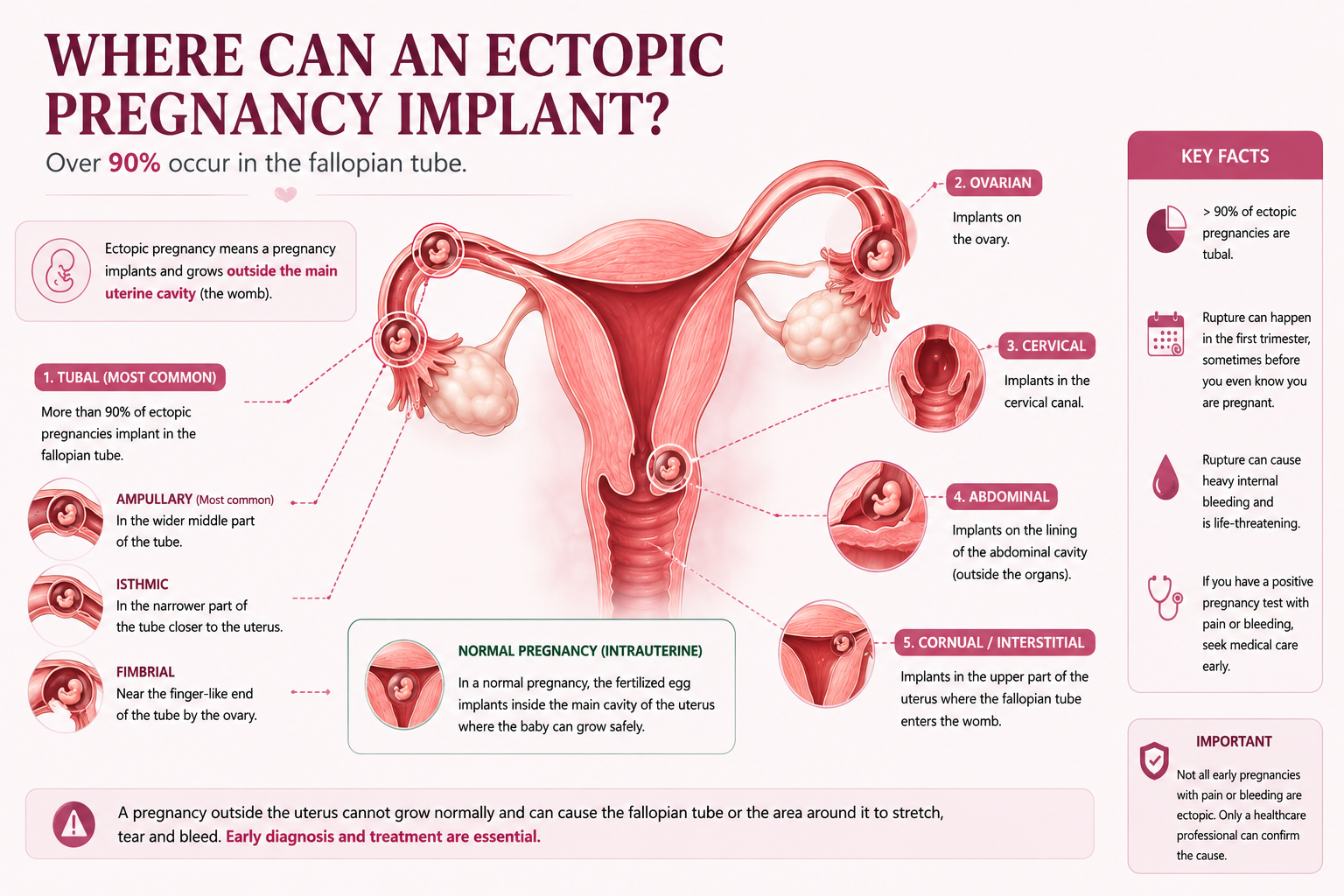
A tubal pregnancy may implant in different parts of the tube. The ampulla, the wider middle portion of the fallopian tube, is the most frequent location.
Less commonly, ectopic pregnancy may occur in the ovary, cervix, abdominal cavity or the interstitial portion where the tube enters the uterus.
How can an ectopic pregnancy rupture?
A fallopian tube is narrow and is not designed to expand like the uterus. As pregnancy tissue grows, the tube becomes stretched.
Small blood vessels can begin to tear and bleed. Eventually the wall of the tube itself may tear open — this is called a ruptured ectopic pregnancy.
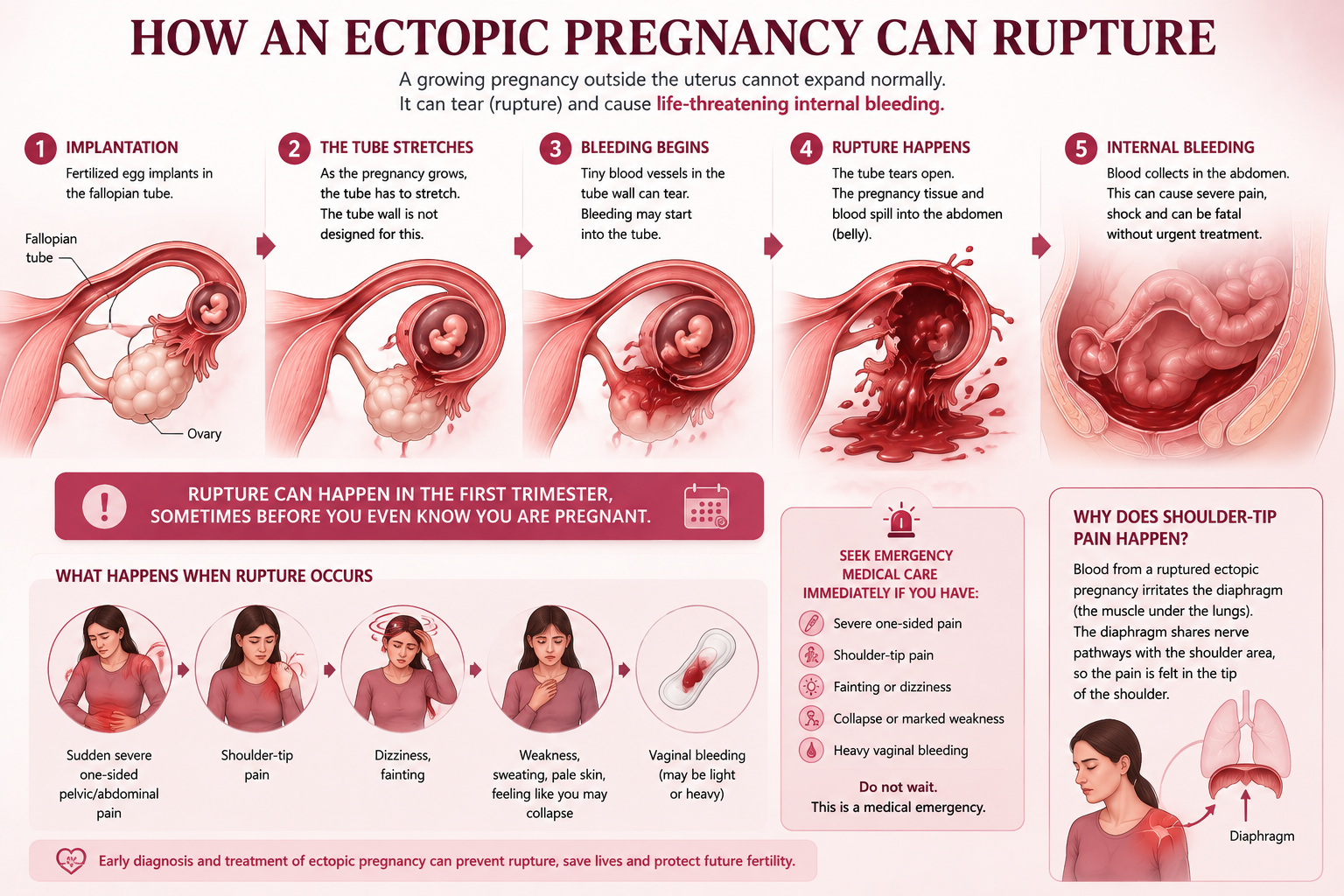
Rupture can happen in the first trimester
Do not assume that an ectopic pregnancy is safe simply because the pregnancy is only a few weeks along.
A tubal pregnancy can rupture during early pregnancy, including before some women fully realise that they are pregnant.
This is why severe pain, fainting, shoulder-tip pain or collapse in early pregnancy must never be ignored.
Why can an ectopic pregnancy cause shoulder-tip pain?
This symptom can seem strange because the pregnancy is in the pelvis, not the shoulder.
When internal bleeding collects inside the abdomen, blood can irritate the diaphragm — the large muscle underneath the lungs. Nerves carrying sensation from the diaphragm share pathways with nerves serving the shoulder area.
The brain may therefore interpret irritation near the diaphragm as pain felt at the tip of the shoulder. This is called referred pain.
Symptoms of ectopic pregnancy
Some women have obvious symptoms. Others have mild symptoms or no symptoms at first.
Early symptoms may overlap with a normal pregnancy, miscarriage, urinary problems or gastrointestinal conditions, which is why symptoms alone cannot diagnose an ectopic pregnancy.
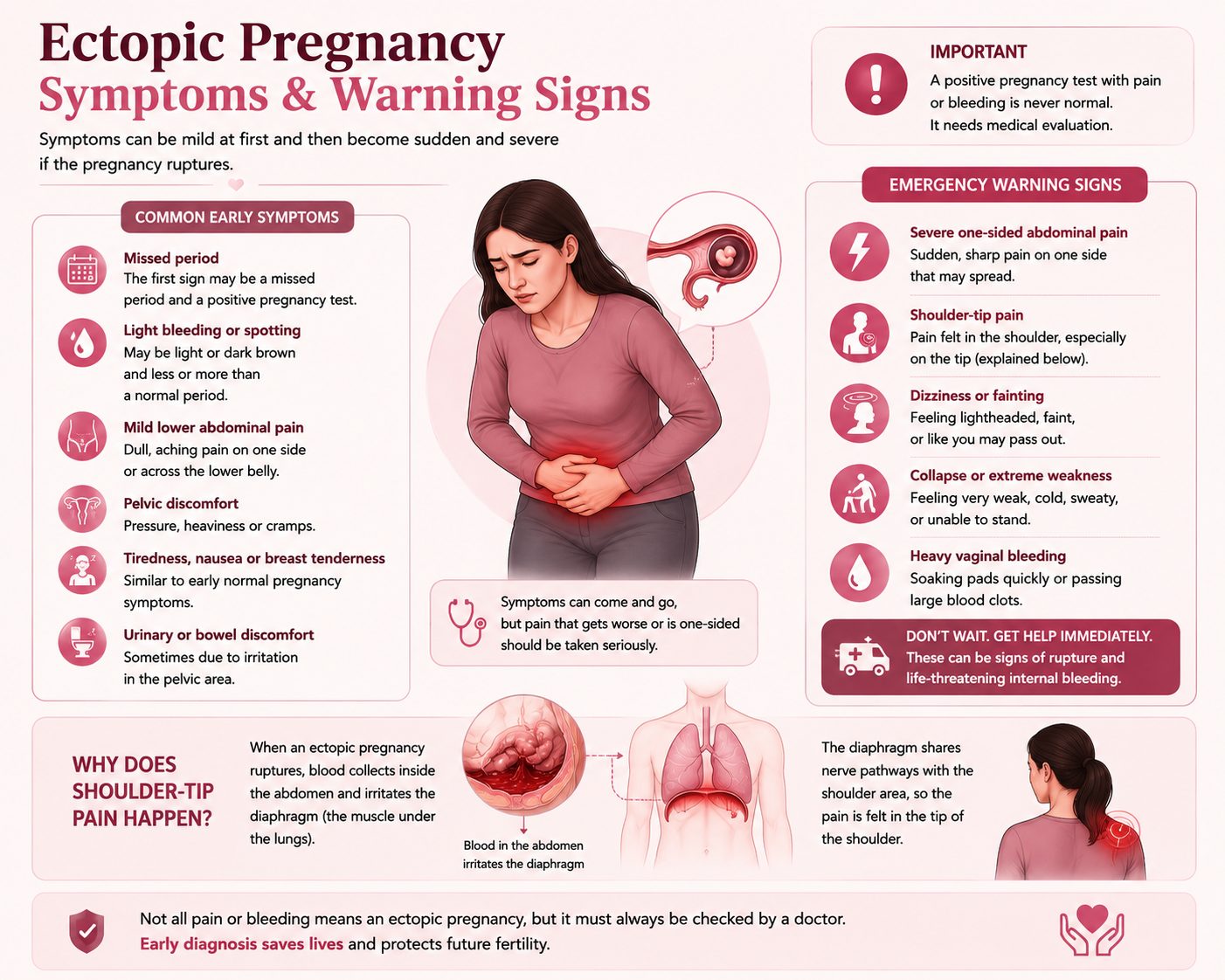
Possible early symptoms include
- a missed period or positive pregnancy test
- vaginal spotting or bleeding
- lower abdominal or pelvic pain
- pain that is more noticeable on one side
- pelvic pressure or discomfort
- pain or pressure when passing urine or stool in some women
- ordinary early-pregnancy symptoms such as nausea or breast tenderness
Get urgent medical help immediately if you have
- sudden or severe one-sided abdominal or pelvic pain
- shoulder-tip pain
- dizziness or feeling as though you may faint
- actual fainting
- marked weakness, cold sweating or pallor
- collapse or difficulty standing
- heavy vaginal bleeding
- severe pain together with a positive pregnancy test
A woman with a ruptured ectopic pregnancy may be bleeding heavily inside the abdomen even when vaginal bleeding is not very heavy.
In Pakistan, go to the nearest hospital emergency department rather than waiting for a routine clinic appointment if these symptoms occur.
Why does ectopic pregnancy happen?
In many women there is no single identifiable reason.
Anything that damages a fallopian tube or interferes with the normal movement of a fertilised egg through the tube can increase risk.
- a previous ectopic pregnancy
- previous infection or inflammation affecting the fallopian tubes
- previous surgery involving the fallopian tubes or pelvis
- damaged or scarred fallopian tubes
- pregnancy conceived through assisted reproductive treatment
- increasing maternal age
- smoking
You can still have an ectopic pregnancy without any risk factor
A woman should not dismiss symptoms simply because she has never had pelvic infection, surgery or a previous ectopic pregnancy.
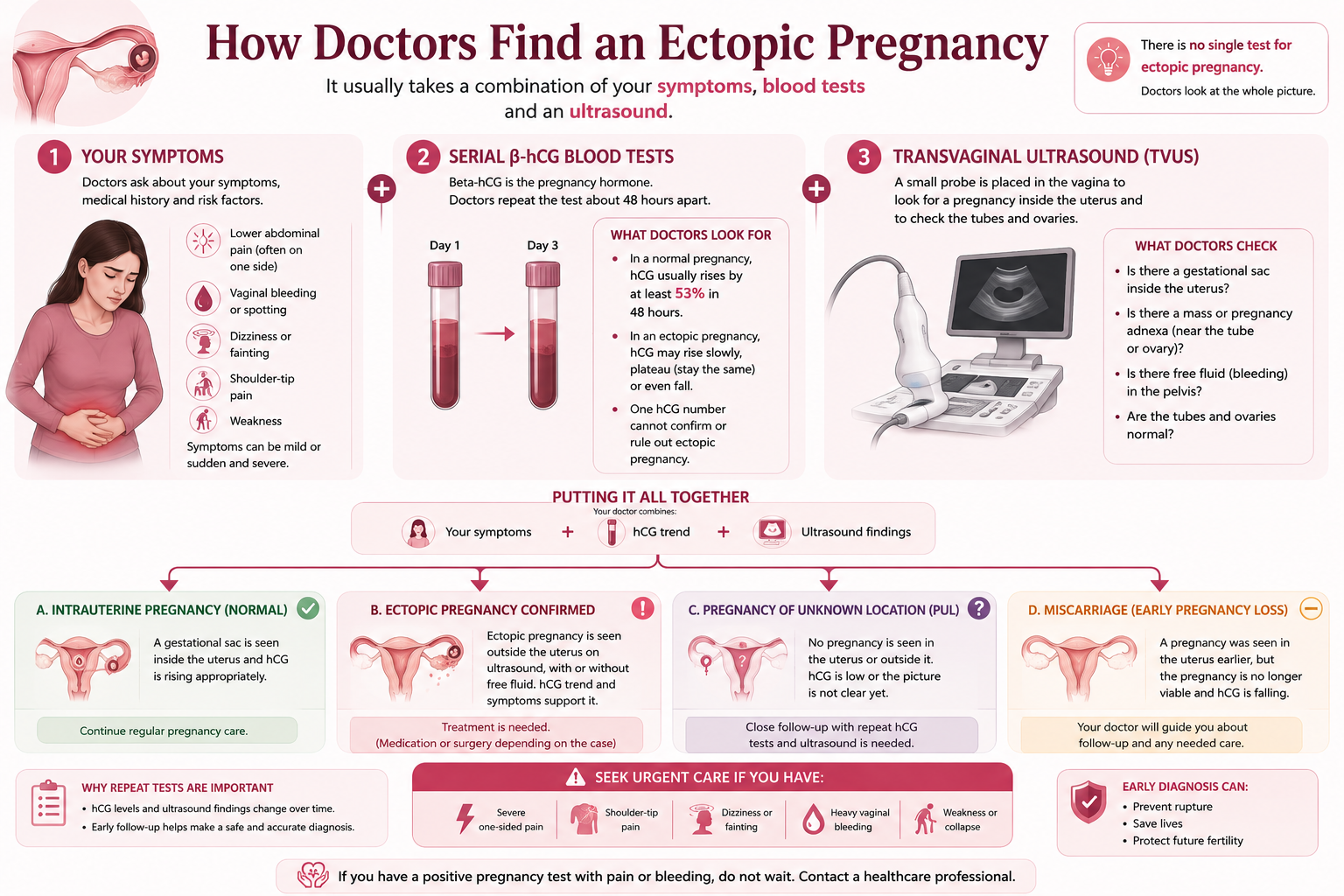
How do doctors find an ectopic pregnancy?
There is no single blood test or symptom that independently confirms every ectopic pregnancy.
Doctors usually combine your symptoms, serial beta-hCG results and transvaginal ultrasound.
Pregnancy test
A urine or blood test establishes that pregnancy hormone is present, but it cannot tell where the pregnancy is located.
Beta-hCG
Quantitative beta-hCG may be measured more than once. The trend is more useful than one isolated result.
Transvaginal ultrasound
A vaginal ultrasound gives a close view of the uterus, fallopian tubes, ovaries and surrounding pelvis.
Your condition matters
Severe pain, fainting, low blood pressure or signs of internal bleeding may require urgent treatment rather than waiting for repeat blood tests.
What does beta-hCG tell the doctor?
Beta-hCG is the pregnancy hormone. In early pregnancy, doctors are often more interested in how the level changes over time than in one number.
An abnormal rise, plateau or fall can suggest that a pregnancy may not be developing normally, but hCG alone cannot reliably tell whether the pregnancy is ectopic.
This is why ultrasound and clinical symptoms remain essential.
What if the pregnancy cannot be seen anywhere?
Sometimes a pregnancy test is positive but transvaginal ultrasound does not yet show a pregnancy inside the uterus or outside it.
Doctors call this a Pregnancy of Unknown Location — PUL.
PUL is not itself a final diagnosis. It may eventually turn out to be:
- a normal pregnancy that was simply too early to see
- an early pregnancy loss
- an ectopic pregnancy
Why follow-up matters
Until the location and outcome of the pregnancy are clear, repeat beta-hCG tests and/or ultrasound may be needed.
If pain becomes severe, you become dizzy or faint, or your condition worsens, do not wait for the next scheduled blood test.
How is ectopic pregnancy treated?
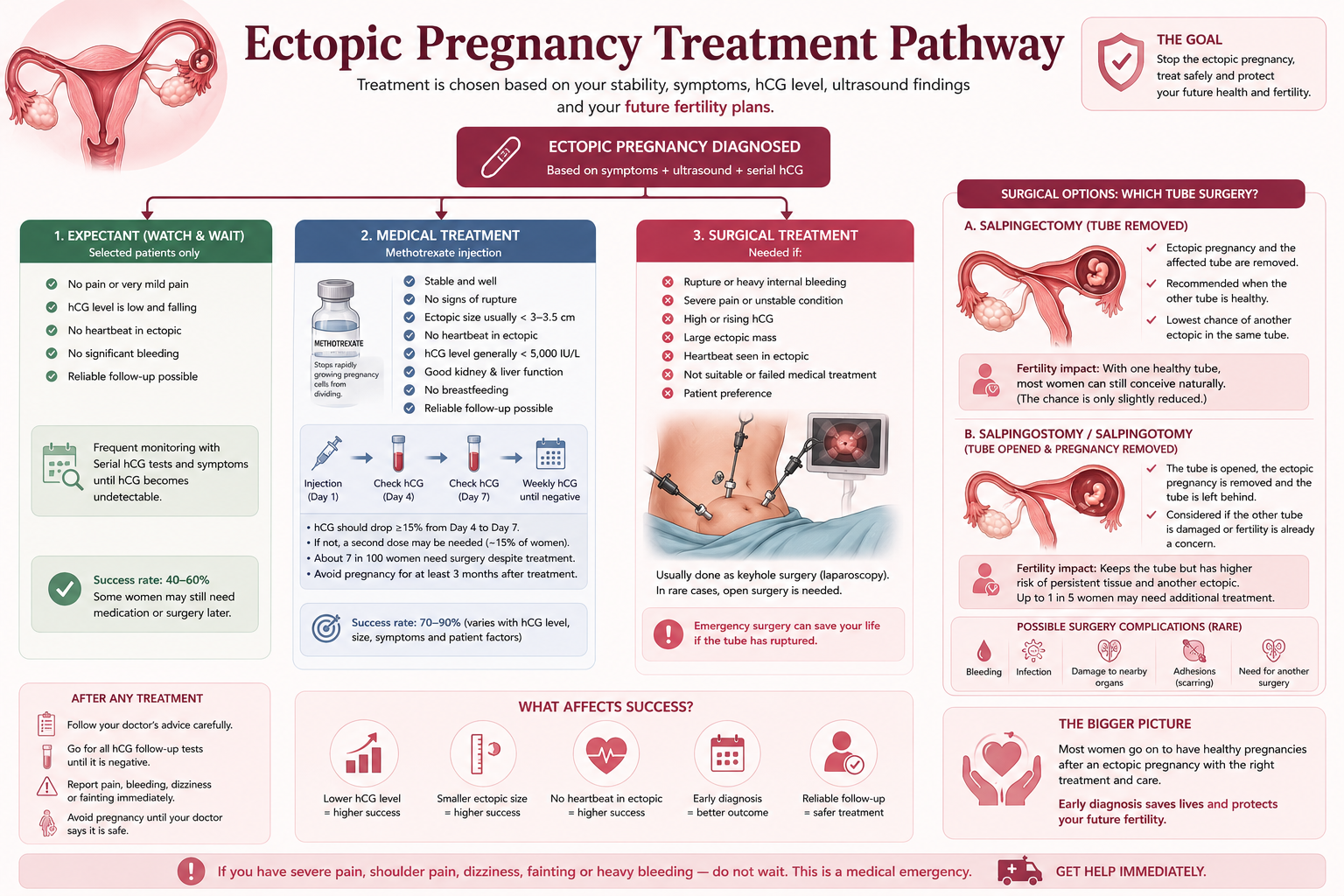
Treatment depends on whether you are medically stable, your symptoms, beta-hCG level, ultrasound findings, size and appearance of the ectopic pregnancy, risk of rupture, ability to return for repeated follow-up and your fertility considerations.
The three broad approaches are: expectant management, methotrexate or surgery.
1. Expectant management — careful observation
A small number of ectopic pregnancies resolve without medication or surgery.
Expectant management may therefore be considered when a woman is clinically well, has little or no pain, there are no signs of rupture, beta-hCG is already low and falling, and reliable follow-up is possible.
Blood tests are repeated until the pregnancy hormone reaches the target set by the treating team.
“Watch and wait” does not mean “do nothing”
Expectant treatment requires proper follow-up. If beta-hCG stops falling, symptoms appear or the woman’s condition changes, medication or surgery may become necessary.
2. Methotrexate treatment
What does methotrexate actually do?
Methotrexate can treat selected unruptured ectopic pregnancies without removing the fallopian tube.
Methotrexate is a folate-antagonist medicine. It interferes with folate-dependent cell division and stops rapidly growing pregnancy tissue from continuing to develop.
It is not an anti-progesterone medicine. Drugs such as mifepristone belong to a different drug class and are not the standard established treatment for tubal ectopic pregnancy.
Who may be suitable?
Methotrexate is generally considered when the ectopic pregnancy is unruptured, the woman is medically stable, significant pain is absent, the ectopic is relatively small and there is reliable access to follow-up.
Beta-hCG concentration and ultrasound findings matter because treatment success decreases as the pregnancy becomes more advanced or hCG becomes higher.
In a common single-dose protocol, methotrexate is given by intramuscular injection after appropriate assessment and blood tests.
The hCG level may not have fallen yet. It can sometimes temporarily rise, which does not automatically mean treatment has failed.
Doctors compare the Day 4 and Day 7 values. In the commonly used single-dose pathway, a fall of at least about 15% is generally expected between these measurements.
If the response is satisfactory, beta-hCG is usually checked weekly until it becomes negative or reaches the target defined by the treating team.
Your doctor reassesses you. Another methotrexate dose or surgery may be required depending on symptoms, hCG behaviour and ultrasound findings.
How often is another treatment needed?
RCOG patient guidance reports that approximately 15 in 100 women receiving methotrexate need a second injection.
About 7 in 100 ultimately need surgery despite medical treatment.
These figures are population estimates, not a prediction for one individual woman. Success depends strongly on beta-hCG level, symptoms, ectopic size and how advanced the pregnancy is.
What is “folinic-acid rescue”?
Methotrexate works partly by blocking folate metabolism. In some specialist multi-dose methotrexate protocols, doctors give folinic acid (also called leucovorin or calcium folinate) between methotrexate doses to reduce toxicity to healthy cells.
This is different from taking your usual folic-acid pregnancy supplement.
Do not start folic acid or folinic acid yourself during methotrexate treatment. Take only what your treating gynaecology team specifically prescribes.
Rupture is still possible after the injection
Methotrexate does not make the ectopic pregnancy disappear immediately.
Until treatment has fully resolved the pregnancy, severe or increasing pain, shoulder-tip pain, dizziness, fainting or collapse require urgent medical assessment.
Can you take folic acid during treatment?
Because folate can interfere with the action of methotrexate, routine folic-acid supplements are generally avoided while methotrexate is actively treating an ectopic pregnancy unless the treating specialist has specifically advised otherwise.
When can you try to conceive afterward?
Do not try to conceive immediately after methotrexate. Follow the waiting period given by your gynaecologist. RCOG advises avoiding pregnancy for at least 3 months after methotrexate treatment.
3. Surgical treatment
Surgery may be the safest treatment when there is suspected rupture, significant internal bleeding, severe pain, a larger ectopic pregnancy, visible fetal cardiac activity, higher hCG levels, inability to complete reliable follow-up, failed medical treatment or another clinical reason why methotrexate is unsuitable.
What happens during ectopic pregnancy surgery?
When possible, surgery is usually performed by laparoscopy — keyhole surgery.
Small cuts are made in the abdomen. A camera is inserted so the surgeon can inspect the uterus, both fallopian tubes, ovaries and pelvis.
Blood inside the abdomen can be removed, active bleeding controlled and the affected tube treated.
In severe internal bleeding or situations where keyhole surgery is not safe or practical, a larger abdominal incision may occasionally be needed.
Salpingectomy — tube removed
The ectopic pregnancy and the affected fallopian tube are removed together.
If the other fallopian tube appears healthy, this is commonly the preferred operation because it completely removes the affected tube and pregnancy tissue.
Salpingotomy — tube preserved
The surgeon opens the affected tube and removes the ectopic pregnancy while leaving the tube in place.
This may be considered when the other tube is damaged or future natural fertility would otherwise be particularly difficult.
Why isn’t the tube always saved?
A tube containing an ectopic pregnancy may already be damaged. Keeping that tube does not necessarily produce better fertility, especially when the other tube is healthy.
Tube-preserving surgery also carries a greater risk that small amounts of pregnancy tissue remain behind.
Why is beta-hCG followed after salpingotomy?
When the tube is left behind, microscopic pregnancy tissue can occasionally remain and continue producing hCG.
NICE advises beta-hCG testing after salpingotomy until a negative result is obtained. Up to 1 in 5 women having salpingotomy may require additional treatment, which can include methotrexate or further surgery.
What are the possible complications of surgery?
Most operations are completed safely, but possible complications include:
- bleeding
- infection
- injury to nearby organs or blood vessels
- need for further surgery
- anaesthetic complications
- pelvic or tubal adhesions/scarring
Can surgery or scarring increase future ectopic risk?
This needs to be understood carefully.
Pelvic inflammation, previous tubal disease and surgery can all be associated with scarring or adhesions. Adhesions are bands of scar tissue that can cause tissues or organs that normally move separately to stick together.
If a remaining fallopian tube is damaged or its normal movement is disturbed, transport of a fertilised egg through the tube may become more difficult.
However, it would be inaccurate to say that surgery automatically causes another ectopic pregnancy. The tube may already have been abnormal before the first ectopic occurred.
The important idea
Tubal damage is a risk factor for ectopic pregnancy. Previous infection, previous ectopic pregnancy, existing tubal disease and previous surgery can all contribute to that risk.
Can you become pregnant with one fallopian tube?
Yes.
If the remaining tube is healthy, many women conceive naturally after salpingectomy. RCOG notes that the chance of conceiving is only slightly reduced when one healthy fallopian tube remains.
Removing one tube also does not mean that one ovary stops working. Both ovaries remain capable of releasing eggs unless there is another ovarian problem.
What is the chance of another ectopic pregnancy?
After one ectopic pregnancy, the chance of another ectopic pregnancy is approximately 7–10 in 100.
That means another ectopic is more likely than it was before — but a normal pregnancy inside the uterus is still much more likely than another ectopic pregnancy.
What should you do in your next pregnancy?
Contact your doctor or gynaecologist soon after your next positive pregnancy test and tell them that you have had a previous ectopic pregnancy.
An early transvaginal ultrasound at around 6–8 weeks may be arranged to confirm that the pregnancy has implanted inside the uterus.
Recovery after an ectopic pregnancy
An ectopic pregnancy is not simply a medical emergency. It is also a pregnancy loss, and treatment may involve unexpected surgery, hospital admission or anxiety about future fertility.
Physical recovery and emotional recovery do not always happen at the same speed.
Give yourself time
Follow your doctor’s advice about recovery, bleeding, wound care, medicines, follow-up hCG testing and when it is medically safe to try for pregnancy again.
If sadness, anxiety or fear about another pregnancy is becoming difficult to manage, speak with someone you trust or a healthcare professional.
Frequently asked questions
Can an ectopic pregnancy rupture at 6 or 7 weeks?
Yes. Ectopic pregnancy can rupture during the first trimester. Gestational age alone cannot guarantee that the tube is safe.
Can you have an ectopic pregnancy without bleeding?
Yes. Vaginal bleeding is not present in every case. Pain, dizziness or other symptoms can occur even without substantial vaginal bleeding.
Does low beta-hCG mean the tube cannot rupture?
No single hCG value can guarantee that rupture will not occur. Symptoms and clinical condition always matter.
Can methotrexate save the fallopian tube?
Methotrexate treats pregnancy tissue without surgically removing the tube. However, future tube function also depends on whether that tube was already damaged by previous disease or by the ectopic pregnancy itself.
Does methotrexate affect future fertility?
The limited methotrexate treatment used for ectopic pregnancy is not known to permanently reduce the ovaries’ ability to produce eggs. Follow your doctor’s instructions about how long to avoid pregnancy after treatment.
If one tube is removed, can I still become pregnant naturally?
Yes. If the remaining tube is healthy, many women conceive naturally and later have a normal pregnancy.
Can an ectopic pregnancy be moved into the uterus?
No. Current treatment cannot move an implanted ectopic pregnancy from the fallopian tube into the uterus.
Suspected rupture is a medical emergency
Seek emergency care immediately for severe one-sided pain, shoulder-tip pain, fainting, dizziness, collapse, marked weakness or heavy bleeding.
Do not wait for the next beta-hCG test or ultrasound appointment if you suddenly become unwell.
My Pregnancy
Follow pregnancy information according to where you are now and what comes next.
Open My PregnancyAsk a Doctor for Free
Ask about early pregnancy pain, bleeding, beta-hCG, ultrasound results or ectopic-pregnancy follow-up.
Ask a DoctorRelated Pregnancy guides
Medical references
- National Institute for Health and Care Excellence (NICE). Ectopic pregnancy and miscarriage: diagnosis and initial management — management of tubal ectopic pregnancy.
- Royal College of Obstetricians and Gynaecologists (RCOG). Ectopic pregnancy — patient information.
- American College of Obstetricians and Gynecologists (ACOG). Ectopic Pregnancy FAQ.
AuratSehat provides educational medical information for women in Pakistan. This guide does not replace assessment by your own doctor. Suspected ectopic pregnancy, severe early-pregnancy pain, fainting or symptoms of internal bleeding require urgent medical evaluation.